
Choose a template below and:
1. Select Download Free Template to save it to your device.
2. Open it in Microsoft Word, Google Docs, Apple Pages, or LibreOffice Writer.
For Google Docs, upload the file to Drive, then open it with Google Docs to start editing.
Professional Word estimate templates for quoting products, sales, and general projects. Open them in Microsoft Word, Google Docs, Apple Pages, or LibreOffice on Windows, Mac, and mobile.
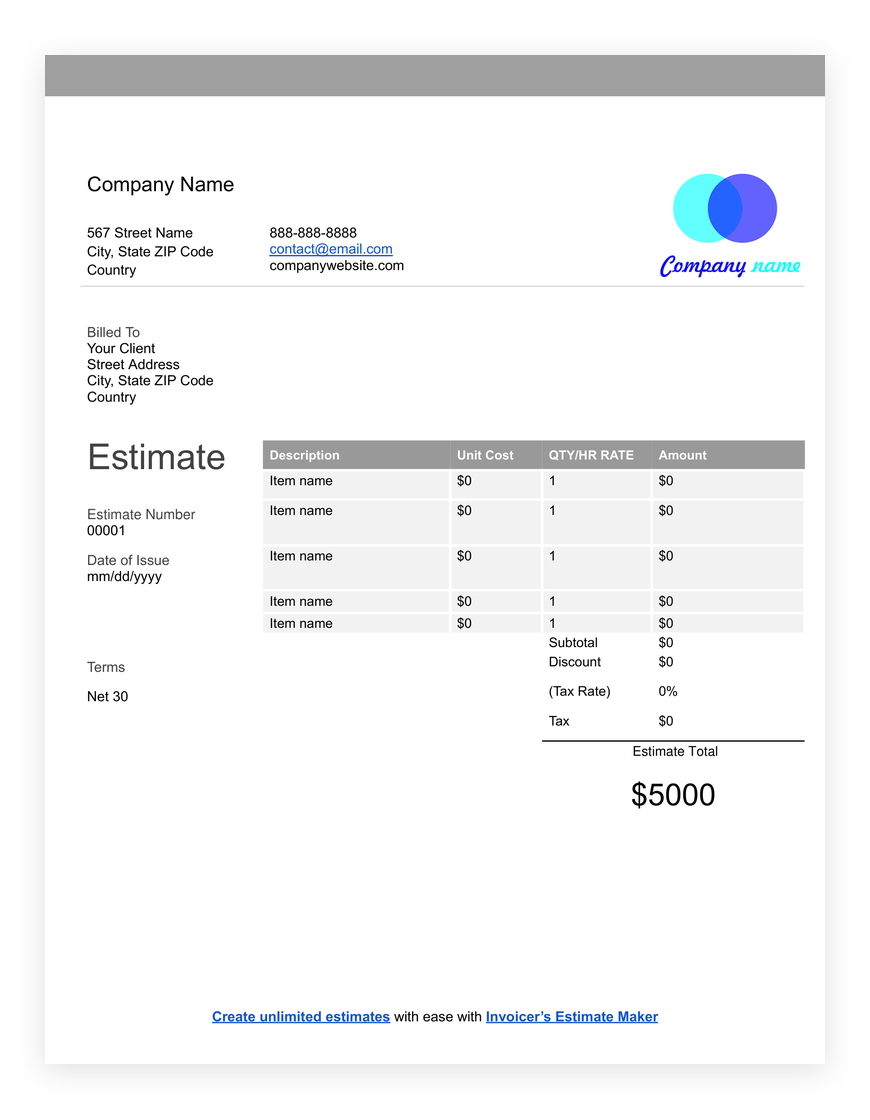
A simple grey estimate with space for your business and client details, followed by a full cost analysis. Add the quantity and unit cost for each item, plus any discount, tax, and payment terms.

A simple estimate that works for most types of jobs and projects. Add your business and client details, list the work or products you’re quoting, and include the estimated total and any notes or terms.

Use this template when you’re quoting products or goods for a business customer. Add each item, quantity, and unit price, along with your logo and the final estimated total.

A simple estimate for product orders and one-off sales. List the products, quantities, and prices, then add any notes or terms the customer should know.

Use this template when you need to show tax separately. Add your products or services, subtotal, tax, and final estimated amount.
Skip the template. Create, send, and track estimates with Invoicer.
Create Your EstimateWord estimate templates for service businesses, contractors, and freelancers who quote by task, hour, or job.

A simple estimate for a single service job. List the work you plan to complete, the estimated cost for each service, and any notes or terms.

Made for work that’s priced by the hour. Add the estimated hours and hourly rate for each task so the client can see how the total is calculated.

A service estimate with a green header for a little more visual style. Add the services you’re quoting, estimated prices, and any notes about the job.

A minimal estimate that keeps the focus on the work and pricing. List each service and its estimated cost in a simple line-by-line format.
Skip the template. Create, send, and track estimates with Invoicer.
Create Your EstimateWord estimate templates built for specific trades, with line items and sections that match how each job is priced.
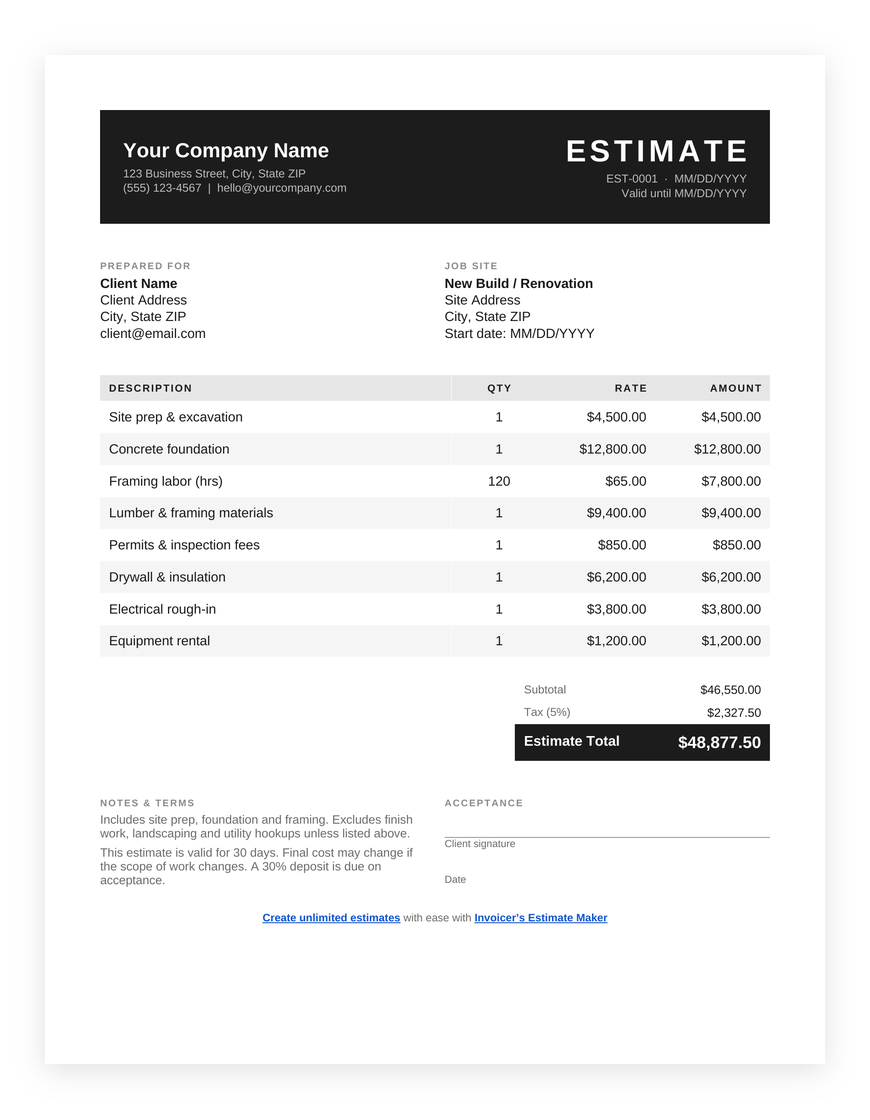
Made for construction projects that need a more detailed cost description. Add labor and materials for work such as site preparation, foundation, framing, and permits, along with project details and notes about what’s included.
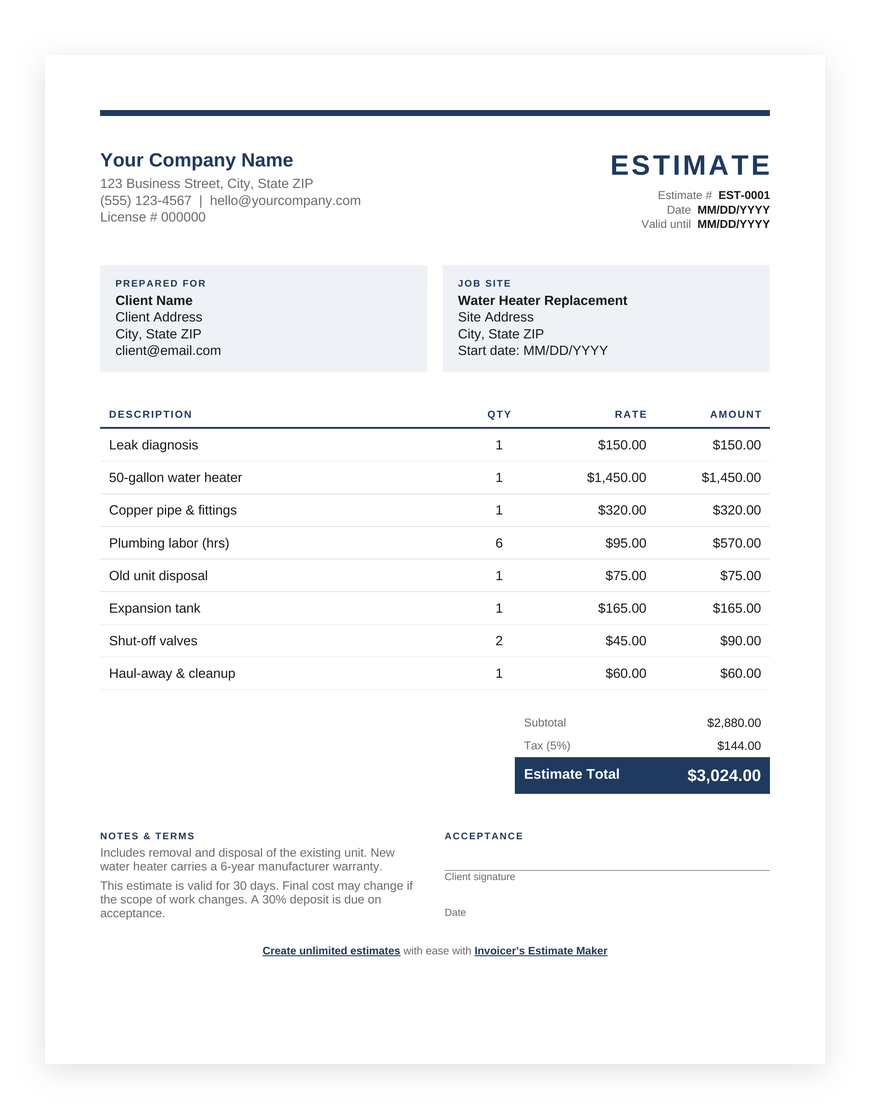
Made for plumbing repairs, installations, and replacements. List parts and fixtures separately from labor, and include the job site details so the customer can see what the estimate covers.
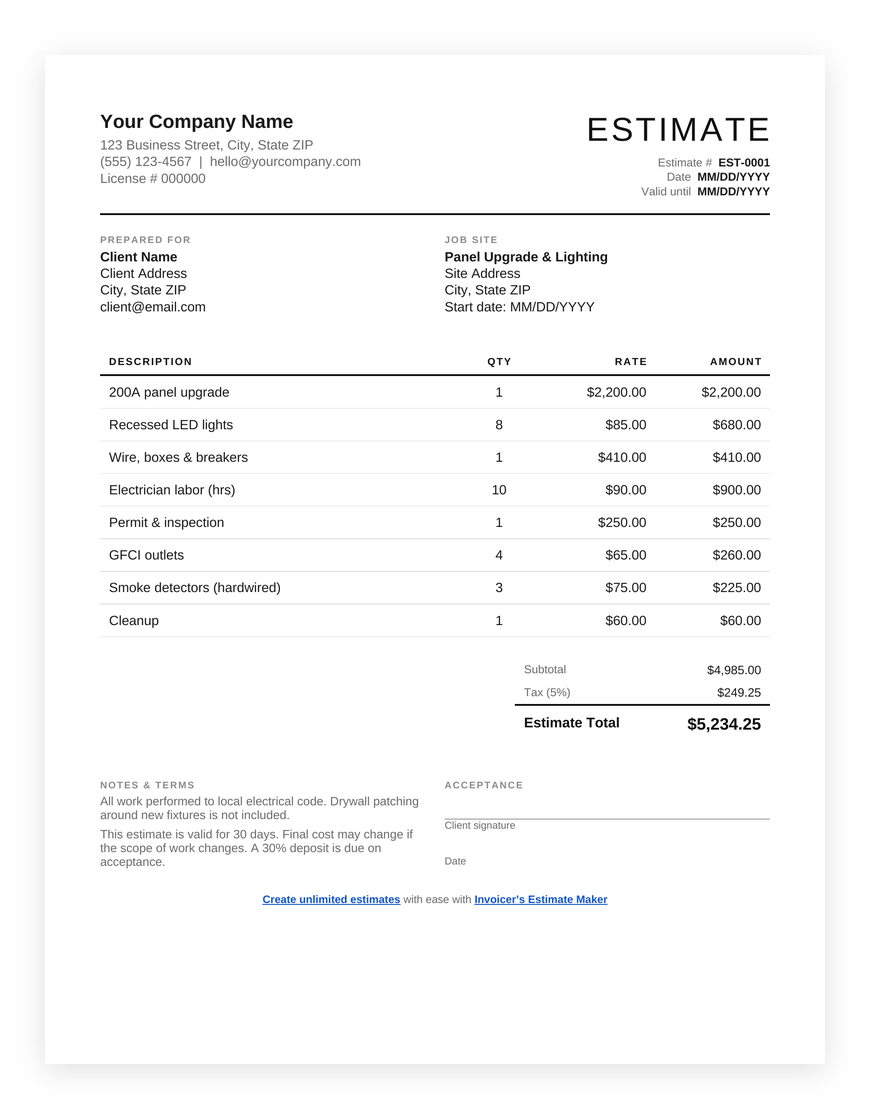
Use this template for wiring, lighting, panel upgrades, and other electrical work. Add materials, parts, labor, and any notes about permits or project terms.
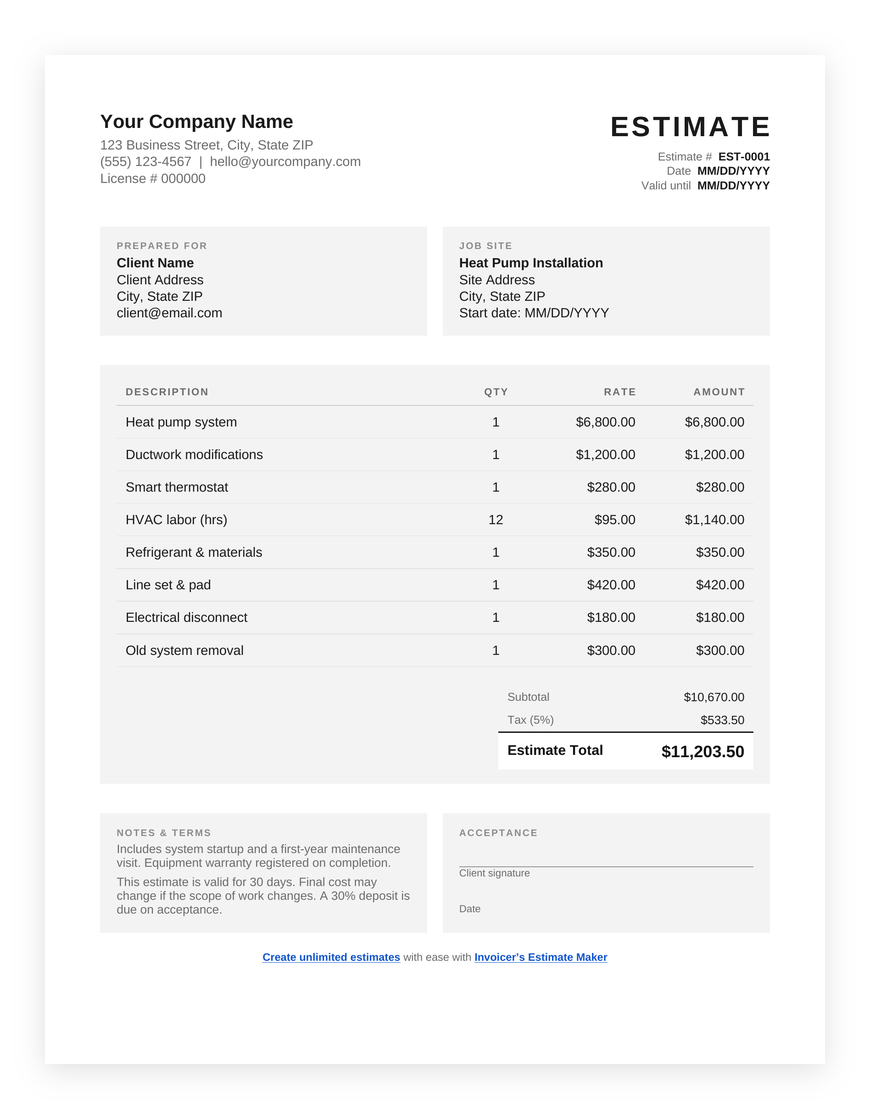
Made for furnace, heat pump, air conditioning, and other HVAC work. List equipment and parts separately from labor, with space for the service and project details.
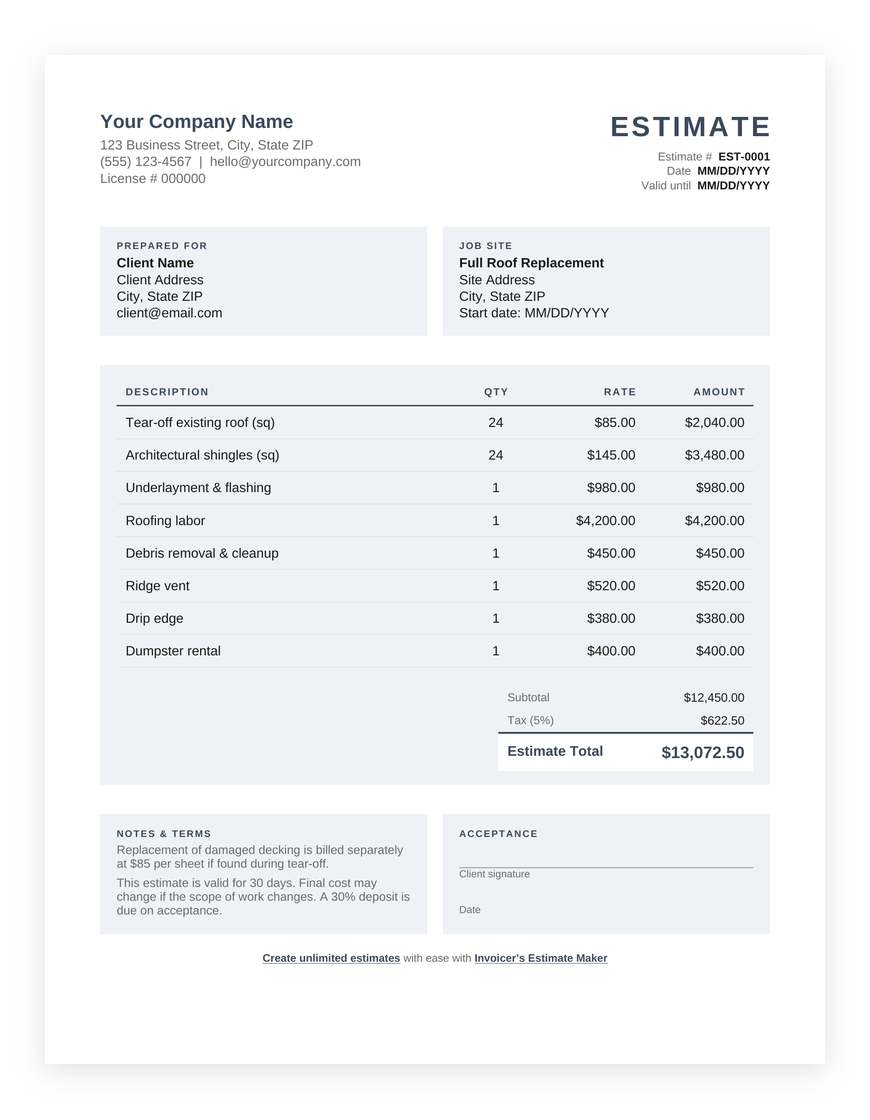
Use this template for roof repairs, replacements, and tear-offs. Add materials and labor, property details, and notes about the scope of work and warranty.
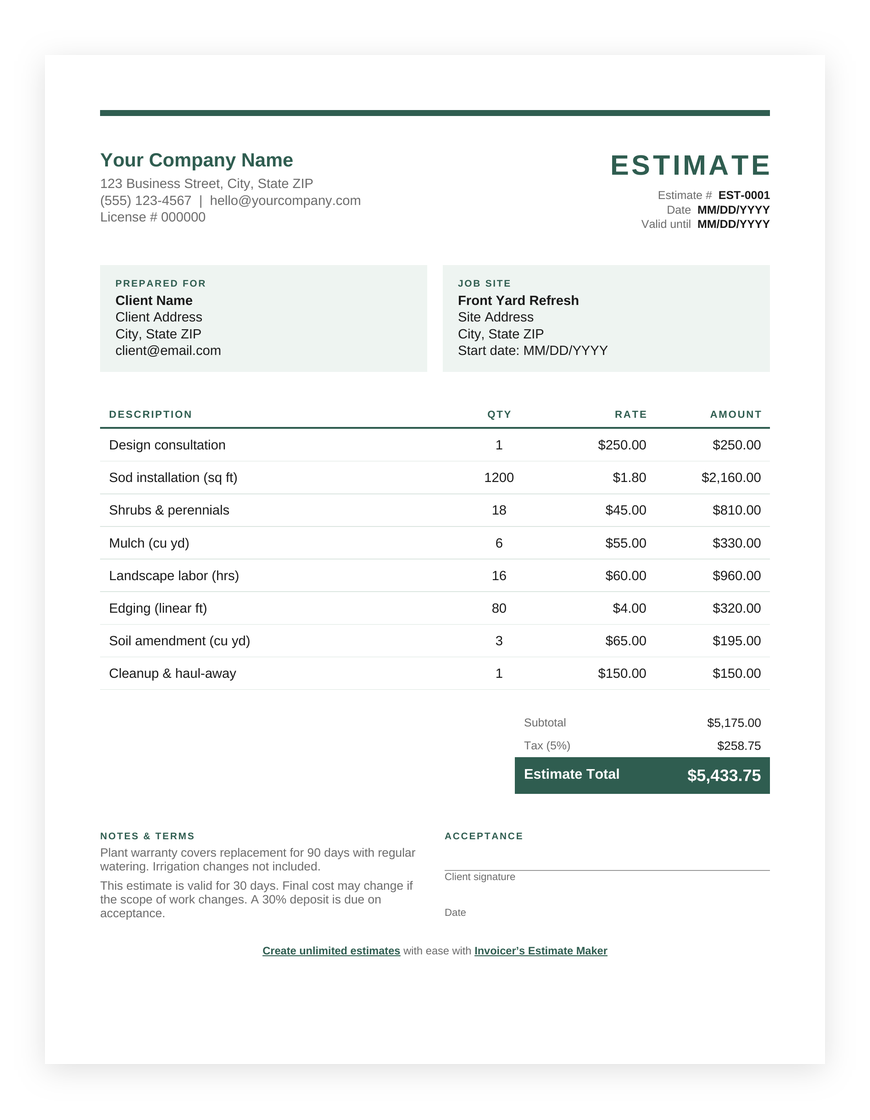
Made for landscaping, sod installation, planting, cleanup, and similar outdoor projects. List plants and materials separately from labor, along with the property details.
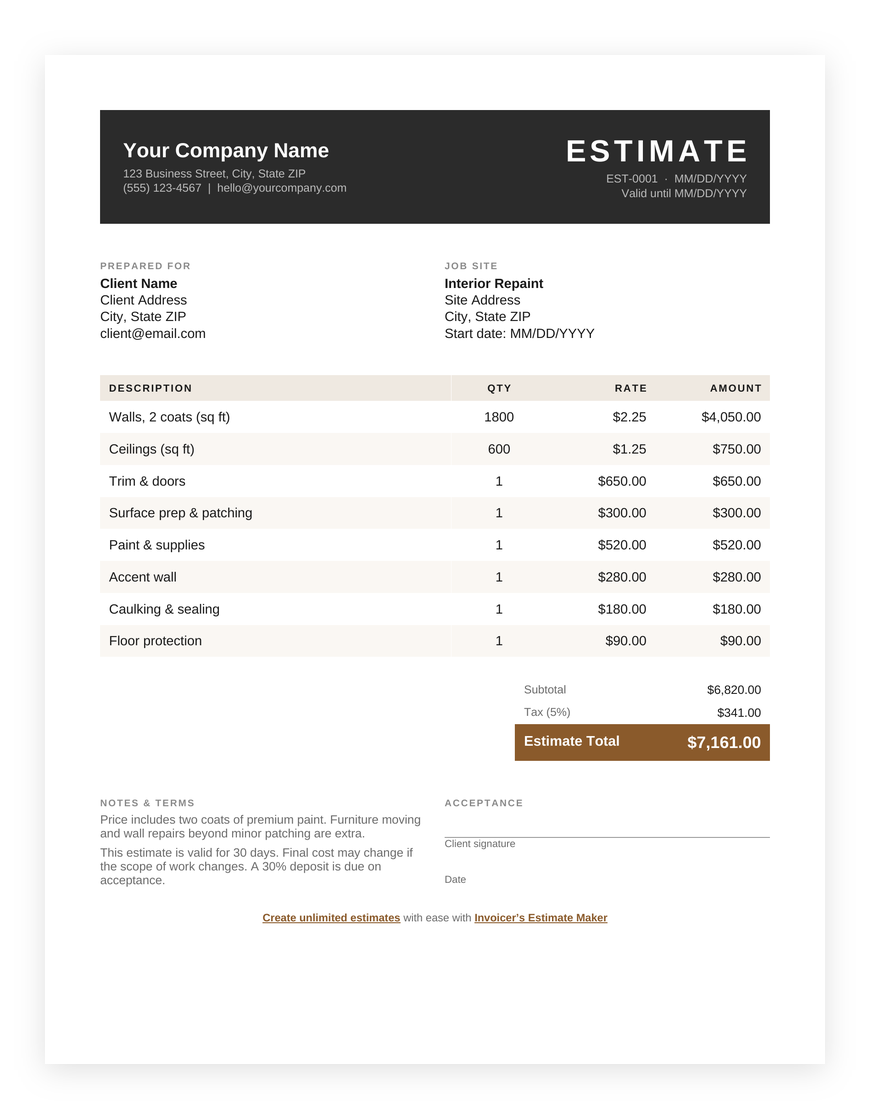
Use this template for interior or exterior painting jobs. Add paint and supplies, labor and prep work, and notes about the areas being painted and what’s included.
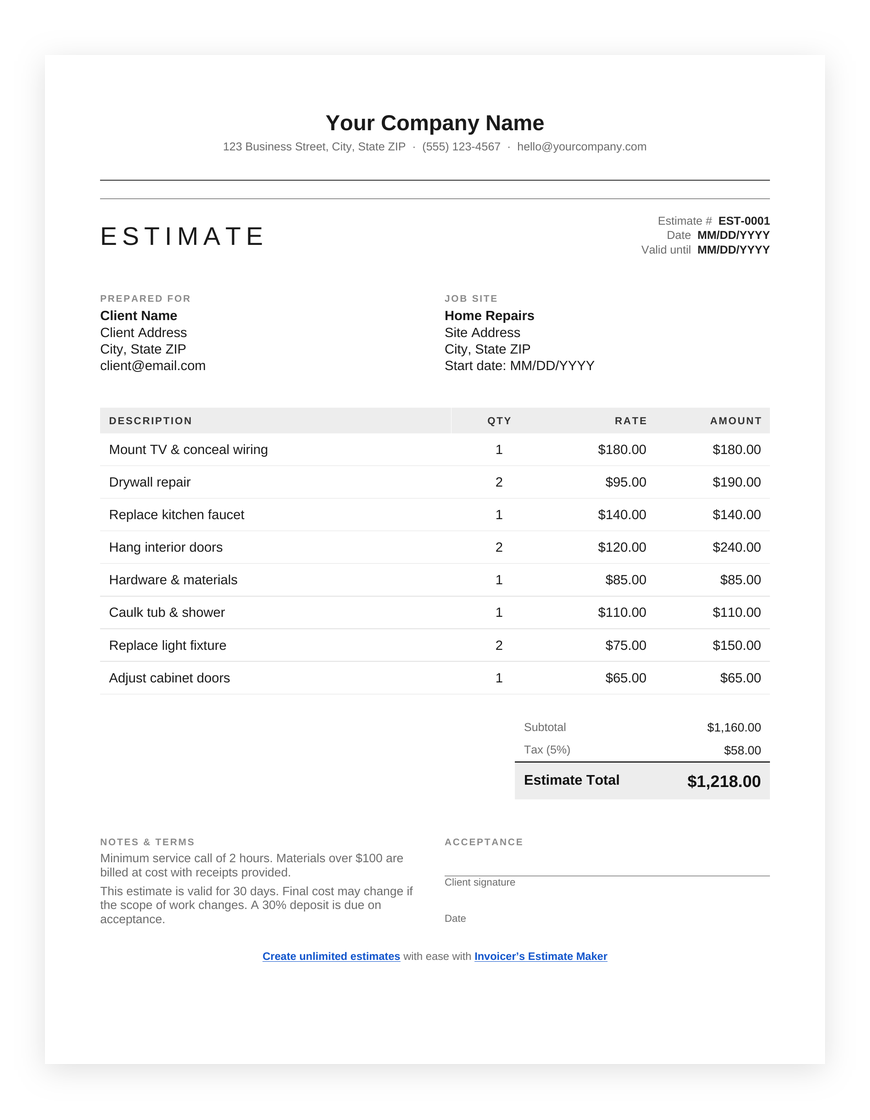
A simple estimate for small repairs, maintenance work, and odd jobs. List each task separately, along with labor, materials, and any notes or terms.
Skip the template. Create, send, and track estimates with Invoicer.
Create Your Estimate
Easy and intuitive estimate maker.

Clear and simple process for your clients to approve.

Easily customize with your brand and colors.
Word estimate templates provide a simple way to create professional estimates without designing a document from scratch. Here is everything you need to know about how Word estimate templates work, what to include, how to customize them, and when another estimating method may be a better option.
A Word estimate template gives you a ready-made document where you can enter the details of a project and its expected costs. Start by adding your business and client information, then list the services, materials, labor, quantities, rates, and any applicable taxes or discounts.
Unlike Excel or Google Sheets templates, Word templates are mainly designed for document formatting rather than calculations, so totals usually need to be calculated and entered manually. Once the estimate is complete, you can customize the design, save it as a Word document or PDF, and send it to your client.
You can create a Word estimate template in three ways: from scratch in Microsoft Word (Most time-consuming), using a template (Faster), or with an estimate generator (Quickest & most efficient).
Starting from a template is usually faster than building your own spreadsheet because the basic layout and calculations are already in place.
Open the template in Microsoft Word and add your company name, contact information, and client details. Then enter the project description and list the services, materials, labor, quantities, rates, and any applicable taxes or discounts.
Calculate the subtotal and final estimated cost carefully, then review the document for accuracy. Once finished, save a copy for your records and export the estimate as a PDF if you want to prevent accidental changes before sending it to your client.
Here's what you should always include in your Word estimate template:
Use separate sections for your business information, client details, project description, and cost breakdown. Tables can help keep descriptions, quantities, rates, and totals aligned and easy to read.
Customize the template by adding your logo, brand colors, preferred fonts, and contact details. You can also rename sections, add or remove fields, and adjust the layout depending on the type of work you provide.
Before sending the estimate, review it in print or PDF view to make sure the formatting is consistent and that tables, totals, and text appear correctly.
A Word estimate template is perfect for:
Word estimate templates work well when you only create estimates occasionally and want control over the document layout. However, they can become less practical if you prepare estimates frequently or need to calculate complex pricing.
A Word template may also not be the best option if you need automatic calculations, estimate status tracking, online client approval, or a quick way to convert an approved estimate into an invoice.
Word, Excel, and Google Sheets can all be used to create professional estimates, but they work best for different purposes.
Word is a good choice when document formatting and presentation are the priority. Excel estimate templates are better suited to estimates that require more calculations, formulas, or detailed cost breakdowns. Google Sheets estimate templates provide similar spreadsheet functionality with easier cloud sharing and real-time collaboration.
The best format depends on how complex your estimates are and how you prefer to create and manage them.
Word estimate templates are a great starting point. However, for a quicker and more automated solution, the Estimate Maker from Invoicer.ai provides built-in calculations, easy adjustments, professional estimates, and time-saving templates. Plus, you can try it free for 14 days!

