


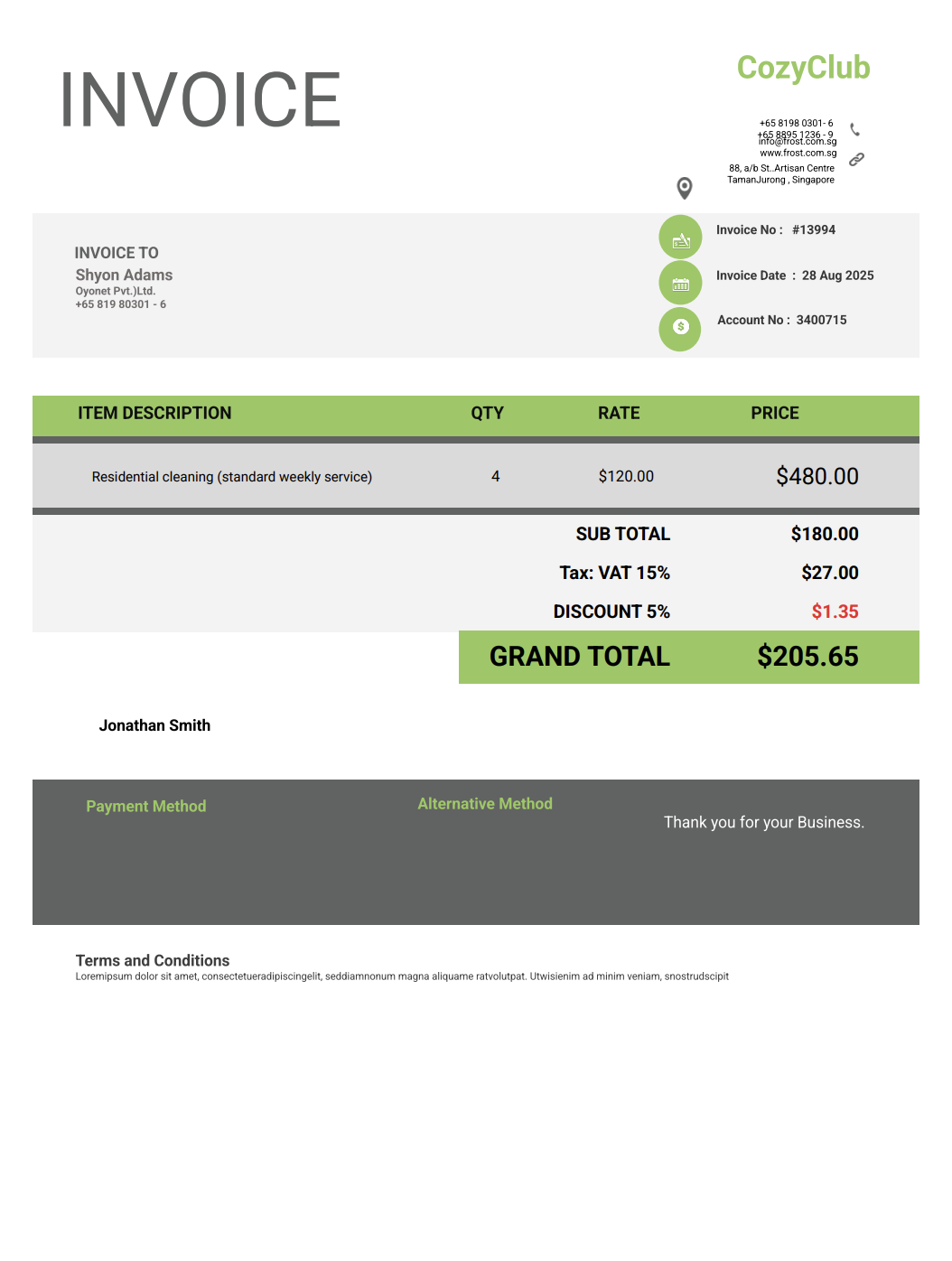
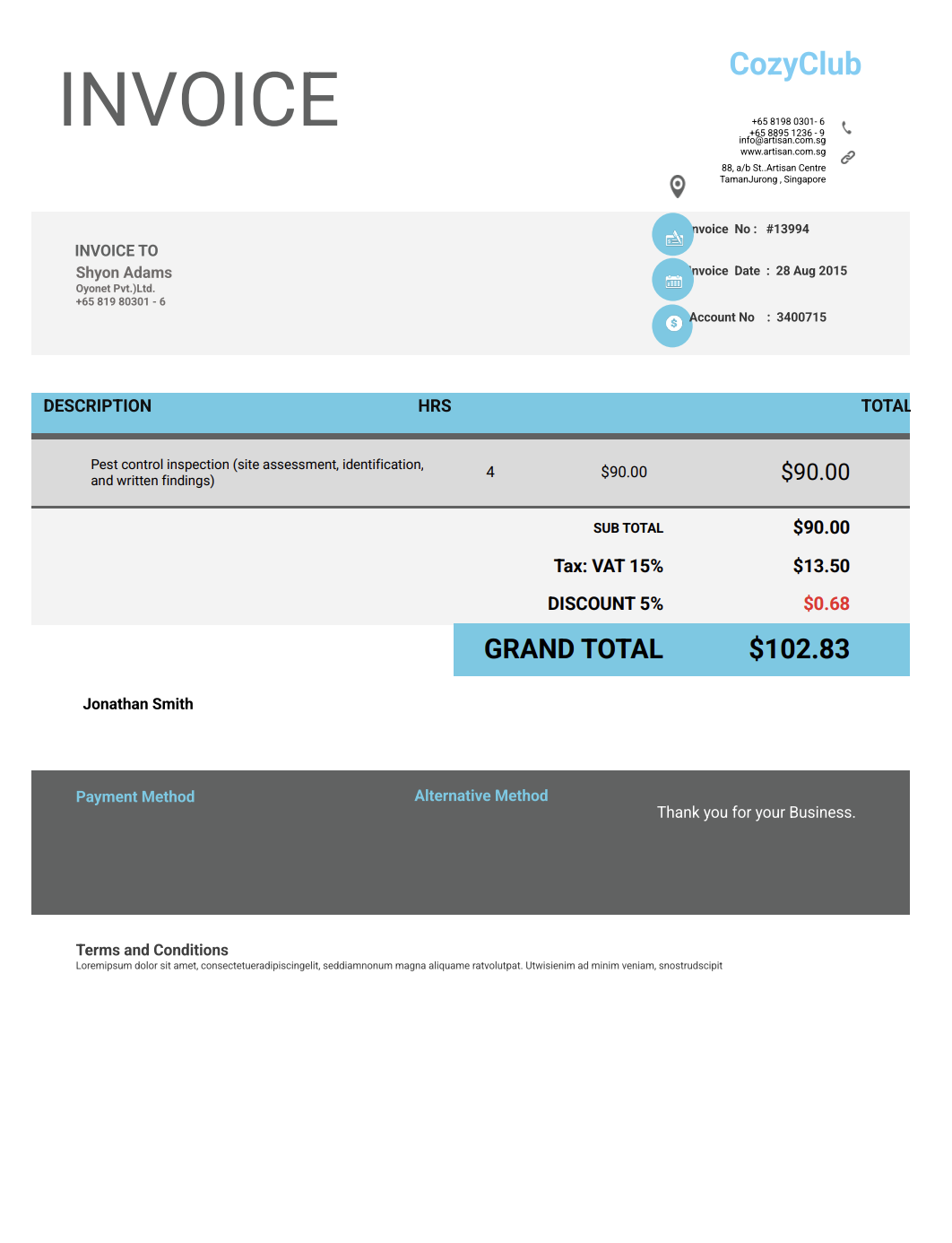

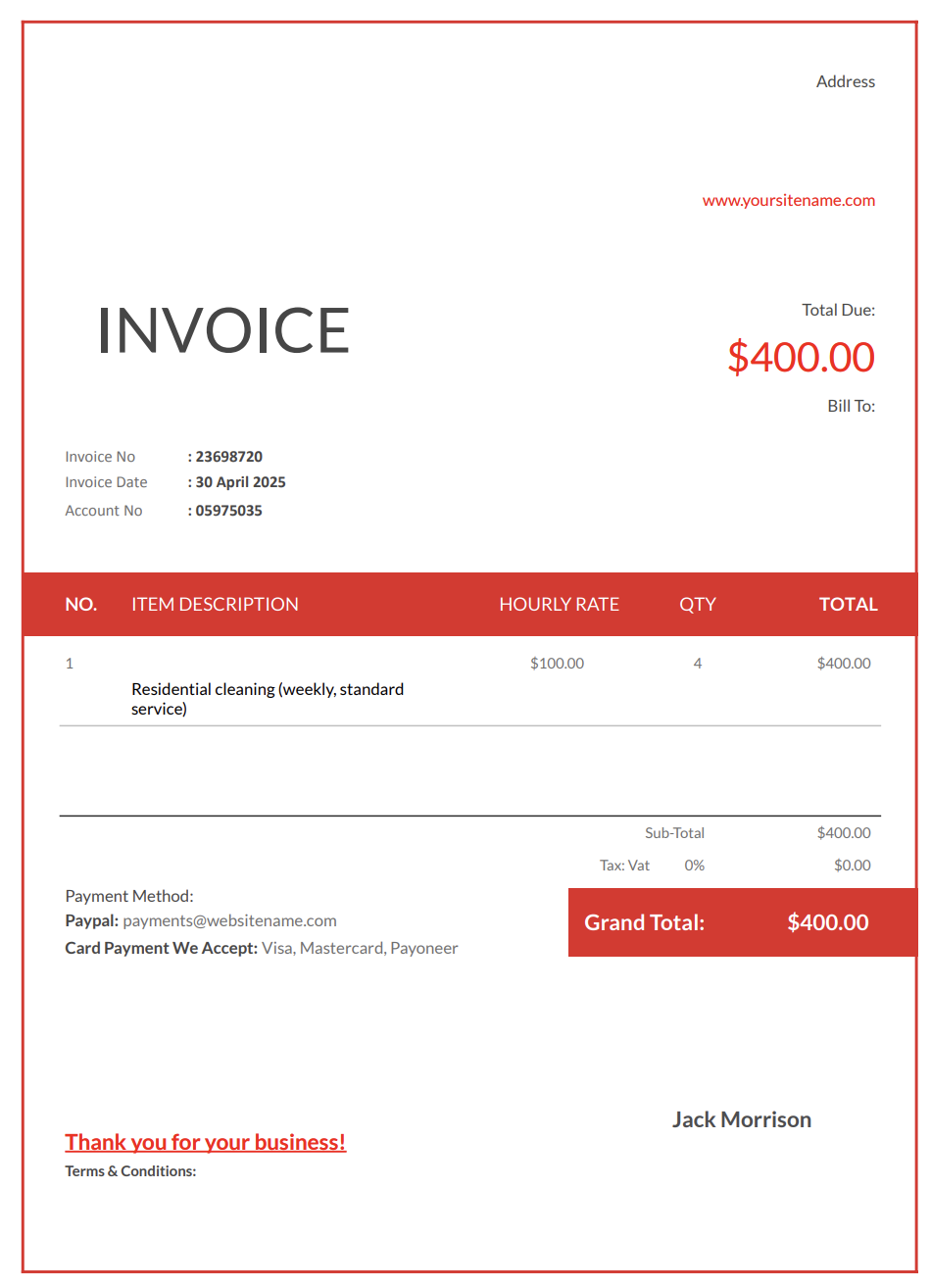
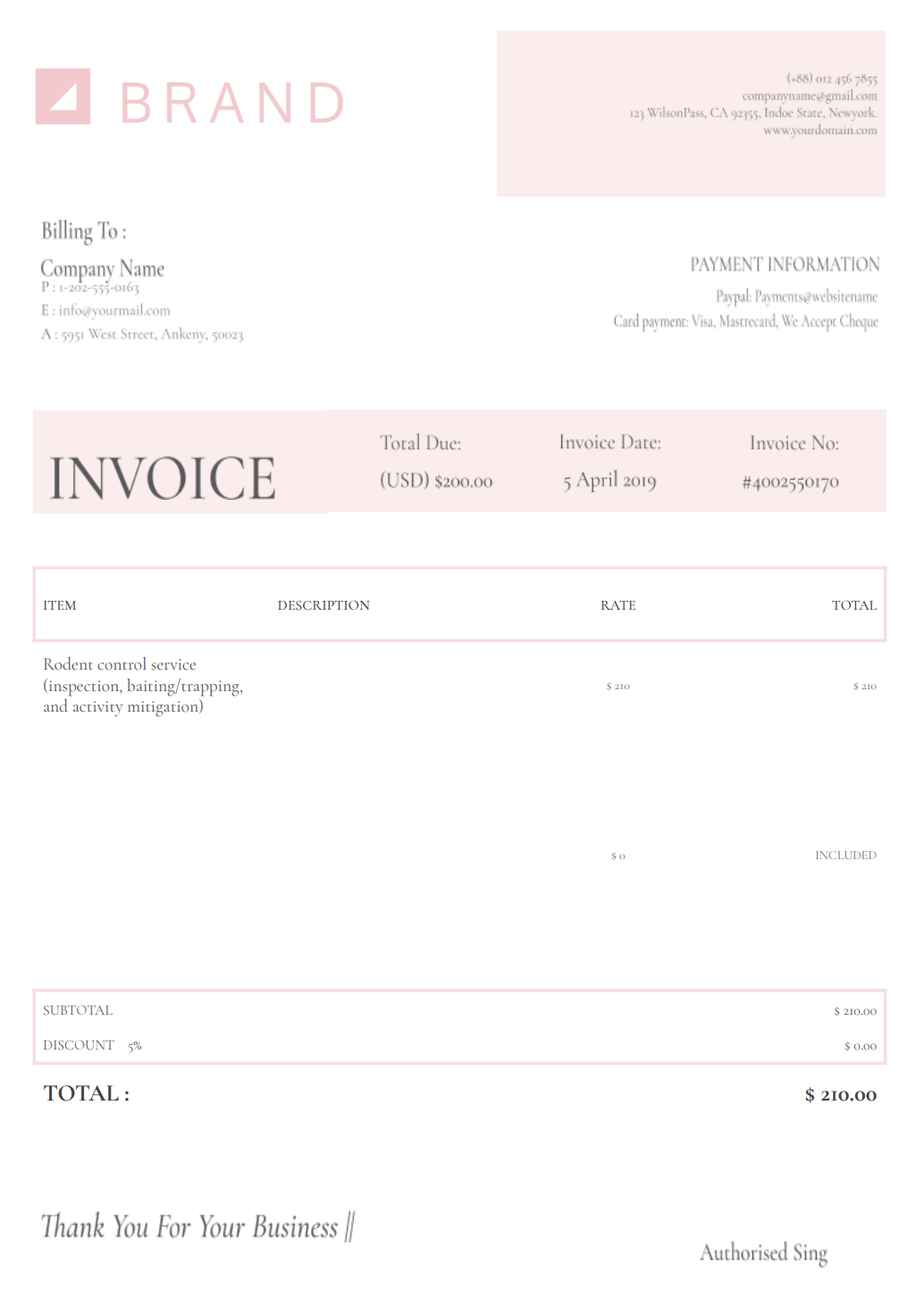
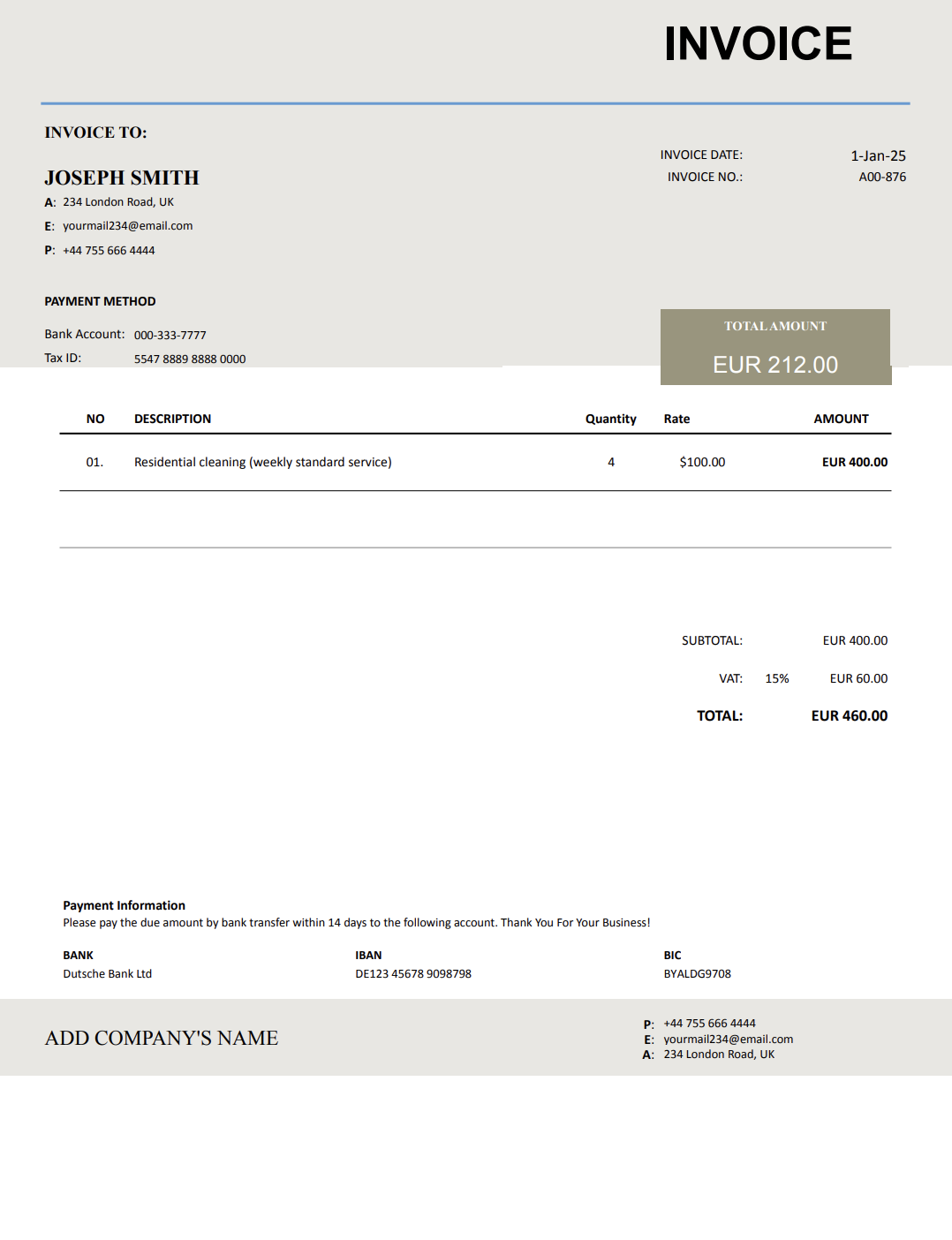
Recurring cleaning clients are what turn a cleaning business from unpredictable side work into a stable income. Weekly homes, bi-weekly apartments, monthly offices, and long-term commercial contracts all rely on one thing staying consistent: billing.
Cleaning service invoices for recurring clients are built to support ongoing relationships. They define billing cycles, recurring services, and payment expectations so clients understand exactly what they are paying for, every single time.
When invoices are predictable and professional, payments stop feeling like a conversation to clients and start feeling automatic.
Below, we'll explore how recurring cleaning invoices work, what they must include, how they differ by service type, and how to structure them to reduce delays, disputes, and unpaid balances.
With Invoicer.ai, you can create cleaning invoices in minutes, either by downloading free Word or Excel invoice templates or by customizing and sending invoices online directly through the software (which is much simpler). Once the invoice is ready, you can schedule it to send when it makes the most sense for the job or your billing routine.
A recurring cleaning service invoice is used to bill clients for cleaning services provided on a repeating schedule, such as weekly, bi-weekly, or monthly.
Instead of charging for a single cleaning visit, the invoice covers a defined service period. This type of invoice is useful when services are ongoing, and pricing is agreed in advance.
It allows clients to anticipate costs, make their accounting simpler, and reduce the need to explain charges every billing cycle.
Recurring cleaning invoices are commonly used for:
Recurring clients are paying for reliability, scheduled service, and continuity.
Dedicated recurring invoices focus on:
When recurring invoices look the same as one-time job invoices, things start to get messy. Clients wonder why the same charge keeps showing up, accounting teams hesitate because the billing isn’t transparent, and payments get pushed back, not out of bad intent, but because the invoice doesn’t clearly explain what it’s for.
A recurring cleaning invoice should answer every reasonable question before it is asked. So, if a client needs clarification, the invoice is missing something.
Your invoice should identify your cleaning business, including name, address, contact details, and any required registration or tax numbers. Client information should specify exactly who is being billed and where services are performed.
Every invoice must have a unique invoice number for tracking and accounting purposes. The billing period is just as important. Listing the start and end dates helps clients instantly see which time period they’re being billed for.
The way services are described should reflect that the work is ongoing. Instead of making it sound like a one-off job, link the service to the billing period so clients understand they’re paying for continued cleaning.
The invoice should explain how the price is worked out, whether that’s per visit, per hour, or a flat recurring rate. Even when the total never changes, being upfront helps avoid questions and disagreements.
Any applicable taxes or additional charges should be clearly itemized. If no tax applies, stating that explicitly prevents confusion. The total amount due should be prominent and easy to identify.
Recurring invoices should also always include payment terms. When due dates, payment methods, and late payment rules are clear, clients know what’s expected and pay on time without needing reminders
Recurring cleaning services are not all billed the same way. The invoice should match the service schedule.
Weekly invoices are common for residential clients who receive frequent service. These invoices usually summarize the total number of visits within the billing period rather than listing each visit separately, keeping the invoice simple and readable.
Bi-weekly invoices are widely used for homes and small offices. They balance clarity and simplicity by showing service frequency, billing period, and total charges without unnecessary detail.
Monthly invoices are ideal for offices, commercial clients, and long-term residential arrangements. These invoices focus on the billing cycle, recurring service agreement, and any adjustments made during the month, such as additional services or skipped visits.
Residential cleaning invoices should be simple. Homeowners usually just want to see what service they’re paying for, how often it’s done, and the total amount due.
Commercial invoices tend to be more detailed. Businesses often need clearer service breakdowns, defined billing periods, tax details, and reference numbers that fit their accounting systems.
Using the right invoice structure for each type of client helps invoices get approved faster and paid without delays.
Well-structured recurring invoices save time and protect revenue. Once the invoice format is established, billing becomes routine instead of a repeated administrative task.
Benefits include:
Remember, clients are far more likely to pay on time when invoices feel consistent and professional.
Most payment issues are caused by confusing invoices rather than difficult clients.
Common mistakes include:
Invoice templates are commonly used for billing and can be effective in many situations. However, recurring cleaning services often involve repeating schedules, fixed billing periods, and long-term client relationships that benefit from a more structured approach.
Invoicer.ai lets you save invoice layouts and reuse them as needed while automatically calculating totals and line items. Invoices can be created manually or with the in-line AI-powered editor, depending on how much control you want for each client.
You can also see when a client opens an invoice, which removes guesswork from follow-ups. With clients, invoices, estimates, expenses, and items managed in one place, billing stays organized and consistent without changing how you work.
Ongoing cleaning services rely on regular schedules and predictable costs. The invoice should reflect that stability. A recurring cleaning service invoice groups services by billing period, shows what’s covered, and presents charges in a way clients can quickly process.
When invoices follow a familiar structure, approvals are smoother, payments arrive without reminders, and billing stays practical instead of intrusive.
