
Current assets and current liabilities both affect short-term financial health, but they represent opposite sides of the balance sheet. This guide explains the difference, how each one works, and why comparing them helps you understand your business’s cash flow position.
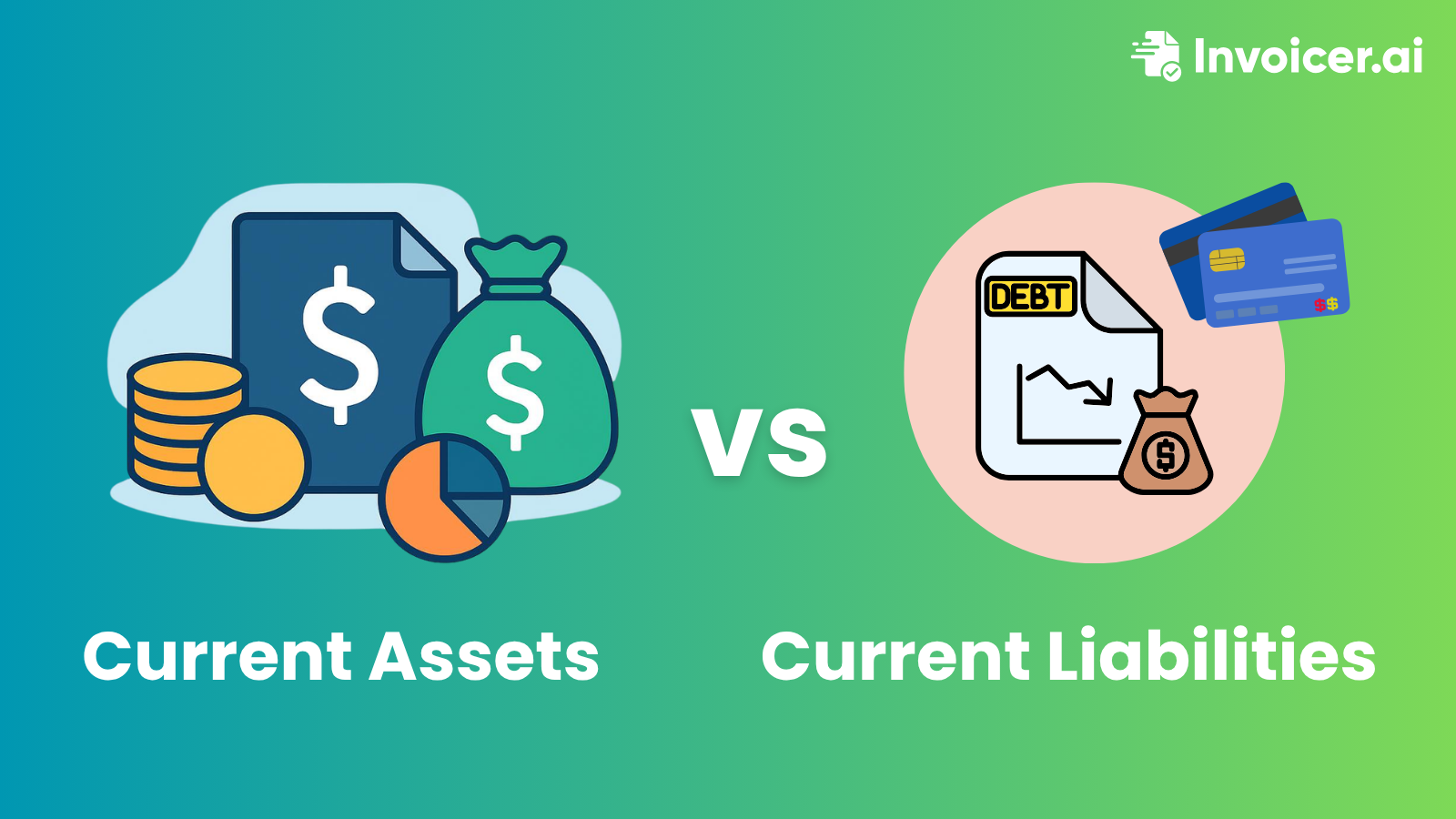
Current assets and current liabilities both shape your business’s short-term financial position, but they mean very different things. One shows what your business has available in the near term, while the other shows what it needs to pay soon. Understanding the difference helps you judge cash flow, liquidity, and whether your business can comfortably cover upcoming obligations.
Current assets are resources your business expects to use, sell, or turn into cash within 12 months. On the other hand, current liabilities are obligations your business expects to pay within 12 months.
Both matter because they show whether your business is in a strong position to cover upcoming expenses.
Current assets are short-term resources your business can use to support day-to-day operations. Common examples include cash, accounts receivable, inventory, prepaid expenses, and short-term investments.
For example, cash in the bank, unpaid customer invoices, and inventory you expect to sell soon all count as current assets. These are the resources your business can rely on in the near term.
Current liabilities are short-term obligations your business needs to pay within the next year. Common examples include accounts payable, payroll liabilities, sales tax payable, credit card balances, and short-term loans.
These amounts are important because they show what your business owes in the near term and how much pressure there may be on cash flow.
Neither matters much on its own. What matters is how current assets compare with current liabilities.
If current assets are higher, your business is usually in a better position to cover short-term obligations. If current liabilities are higher, it can be a sign of cash flow pressure.
That is why many businesses track working capital, which is the difference between current assets and current liabilities.
Imagine your business has:
Cash: $5,000
Accounts receivable: $3,500
Inventory: $1,500
Accounts payable: $2,000
Credit card balance: $1,000
Sales tax payable: $500
Your total current assets are $10,000.
Your total current liabilities are $3,500.
That leaves $6,500 in working capital, which suggests a healthy short-term position.
Current assets show what your business can use or turn into cash within a year. Current liabilities show what your business needs to pay within a year. The goal is to keep current assets strong enough to cover current liabilities comfortably.
Track outgoing costs and recurring obligations with Expense Manager to stay on top of cash flow and get a better view of your short-term finances.
Start tracking your expenses now
