
An invoice asks for payment, while a receipt confirms that payment has been made. Here’s when to use each and why knowing the difference is important.
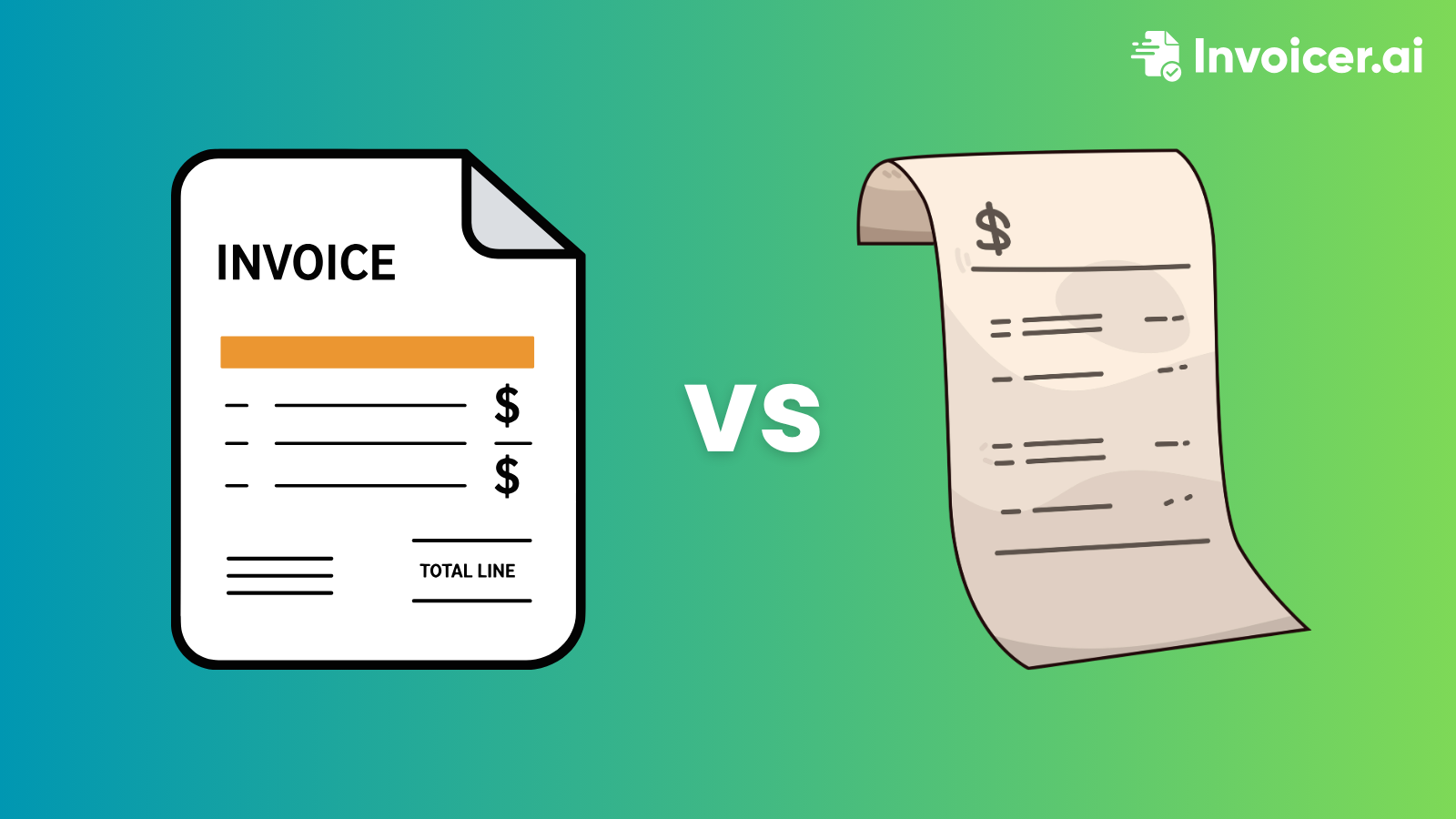
An invoice and a receipt are closely related, but they are not the same thing. One is used to ask for payment, and the other is used to confirm that payment has already been made. Knowing the difference helps you send the right document at the right time and avoid confusion for both you and your client.
An invoice is a formal request for payment. You send it before the client pays to show what was provided, how much is owed, and when payment is due.
It tells the client that payment is expected and creates a record of the amount outstanding. In accounting terms, an unpaid invoice remains open until the money is received.
If you need help getting started, learn how to create an invoice and explore invoice templates that make the process easier.
A receipt is proof that payment has been received. You issue it after the client has paid, and it confirms that the transaction has been completed.
For clients, receipts are useful for bookkeeping, expense records, reimbursements, and tax documentation. While an invoice shows what is owed, a receipt shows that nothing is still outstanding for that transaction.
In many cases, yes. If a client asks for proof of payment, you should be able to provide it. In some places, receipts are required by law for certain transactions, especially in consumer-facing businesses.
Even when they are not strictly required, sending a receipt is good business practice. It helps clients keep accurate records and reduces the chance of disputes over whether payment was received.
Sometimes. A paid invoice that is clearly marked Paid, along with the payment date and amount received, can often serve the same purpose as a receipt.
For example, if a client pays an invoice and you send back a version marked Paid on [date], that may be enough for ordinary record keeping. Still, a separate receipt is often more direct and easier for the client to file, especially for larger payments or more formal business transactions.
Common Mistakes
Send an invoice before payment to request the money. Issue a receipt after payment to confirm it was received. If needed, a paid invoice can sometimes work as proof of payment, but the two documents still serve different purposes.
Generate a professional invoice with payment terms, totals, and client details in one place. Try Invoicer free for 14 days.
Create your first invoice now
