
Outstanding and overdue invoices are both unpaid, but they don't mean the same thing. Below, we explain the difference between an outstanding invoice and an overdue invoice, when each term applies, and how using the right one can help you manage unpaid invoices more accurately.
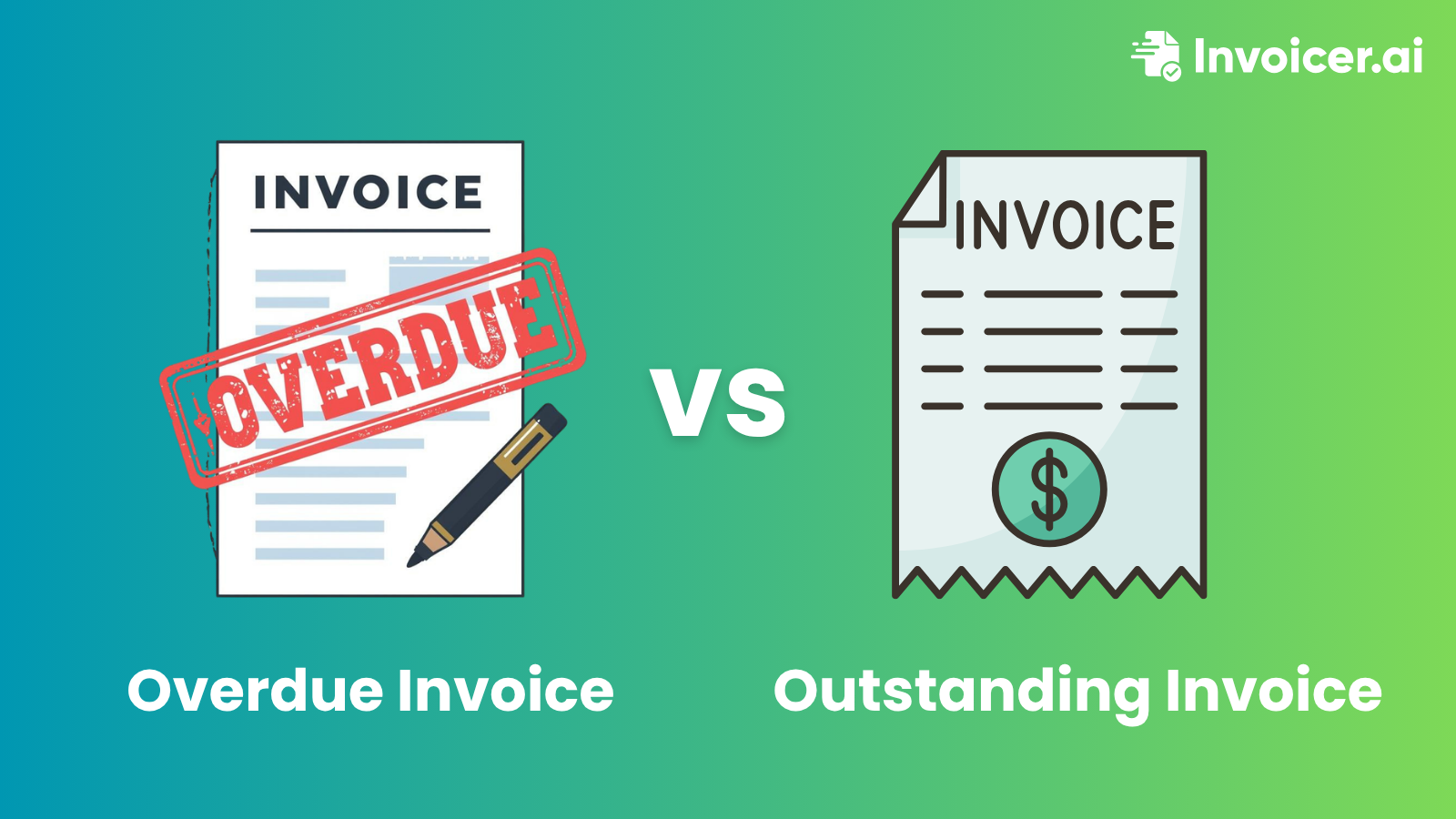
Overdue invoice and outstanding invoice are closely related, but they don't mean the same thing. Knowing the difference is important because it affects how you talk about unpaid invoices, when you follow up, and how serious the payment issue really is.
An outstanding invoice is any invoice that has been sent but not yet paid. That includes invoices that are still within the payment term as well as invoices that are past the due date. An overdue invoice is more specific. It is an unpaid invoice that has passed its due date.
Basically, both terms describe unpaid invoices, but one is broader and the other signals that payment is late.
If you need help getting started with invoice creation, learn how to create an invoice and explore invoice templates that make the process easier for you.
An outstanding invoice is simply an invoice with a balance still due. However, It doesn't automatically mean there is a problem. If you send an invoice on April 1 with Net 30 terms, it remains outstanding until the client pays or until the due date passes.
For example, if an invoice is due on April 30 and today is April 15, it is still outstanding, but it's not overdue.
This term is useful because it covers all unpaid invoices, including those that are still within the agreed payment window. It helps you track what money is still expected to come in, even when payment is not late.
Common examples of outstanding invoices include:
In other words, every overdue invoice is outstanding, but not every outstanding invoice is overdue.
An overdue invoice is an invoice that has not been paid by the due date. Once the payment deadline passes, the invoice moves from outstanding to overdue.
For example, if an invoice was due on April 30 and it is now May 5 with no payment received, that invoice is overdue.
This term matters because it signals a different stage in the payment process. Once an invoice becomes overdue, you may need to send reminders, apply late fees, follow up more firmly, or escalate collection steps.
Overdue invoices are more serious because they can start affecting cash flow, especially if late payments become a pattern.
Use outstanding invoice when you are talking about unpaid invoices in general, especially those that are still within the payment term. Use overdue invoice when the due date has passed and the client is now late.
That distinction helps keep communication accurate.
For example:
Using the right term also helps you choose the right tone. Outstanding invoices usually call for tracking and routine reminders. Overdue invoices usually call for payment follow-up.
Yes. Once an invoice passes its due date without being paid, it becomes both outstanding and overdue.
That is because overdue is really a subset of outstanding. The invoice is still unpaid, so it remains outstanding, but it has now crossed into late status as well.
This is why businesses often track both categories separately. Outstanding invoices show total unpaid revenue. Overdue invoices show the portion that needs immediate attention.
Practical Example
Imagine your business has four unpaid invoices:
All four invoices are outstanding because none has been paid yet.
But only Invoice C and Invoice D are overdue, because their due dates have already passed.
That distinction helps you decide what to do next. You may simply monitor Invoice A and Invoice B, while sending reminders or escalation notices for Invoice C and Invoice D.
An outstanding invoice is any invoice that is still unpaid. An overdue invoice is an unpaid invoice that has gone past the due date. Use outstanding for unpaid invoices in general, and overdue when payment is officially late.
Create an invoice with the right due date and terms so clients know when payment is expected. Try Invoicer free for 14 days.
Create your first invoice now
