Fashion styling rarely starts in the fitting room, and it definitely doesn’t end there. Long before a client sees the finished look, you’re researching trends, sourcing pieces from different places, coordinating with brands, building mood boards, scheduling fittings, tracking returns, noting tailoring changes, steaming garments, and juggling deadlines that love to move at the last minute.
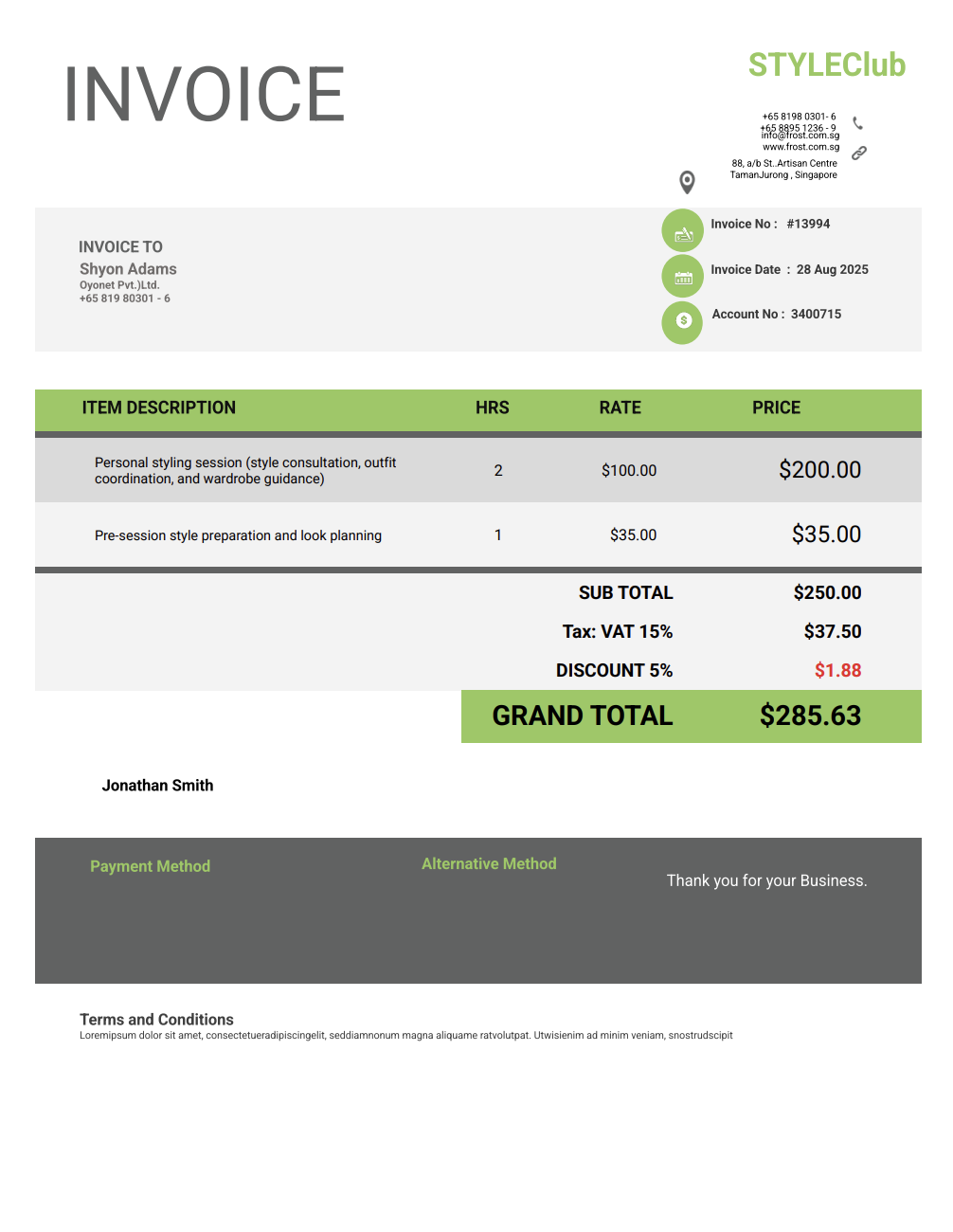
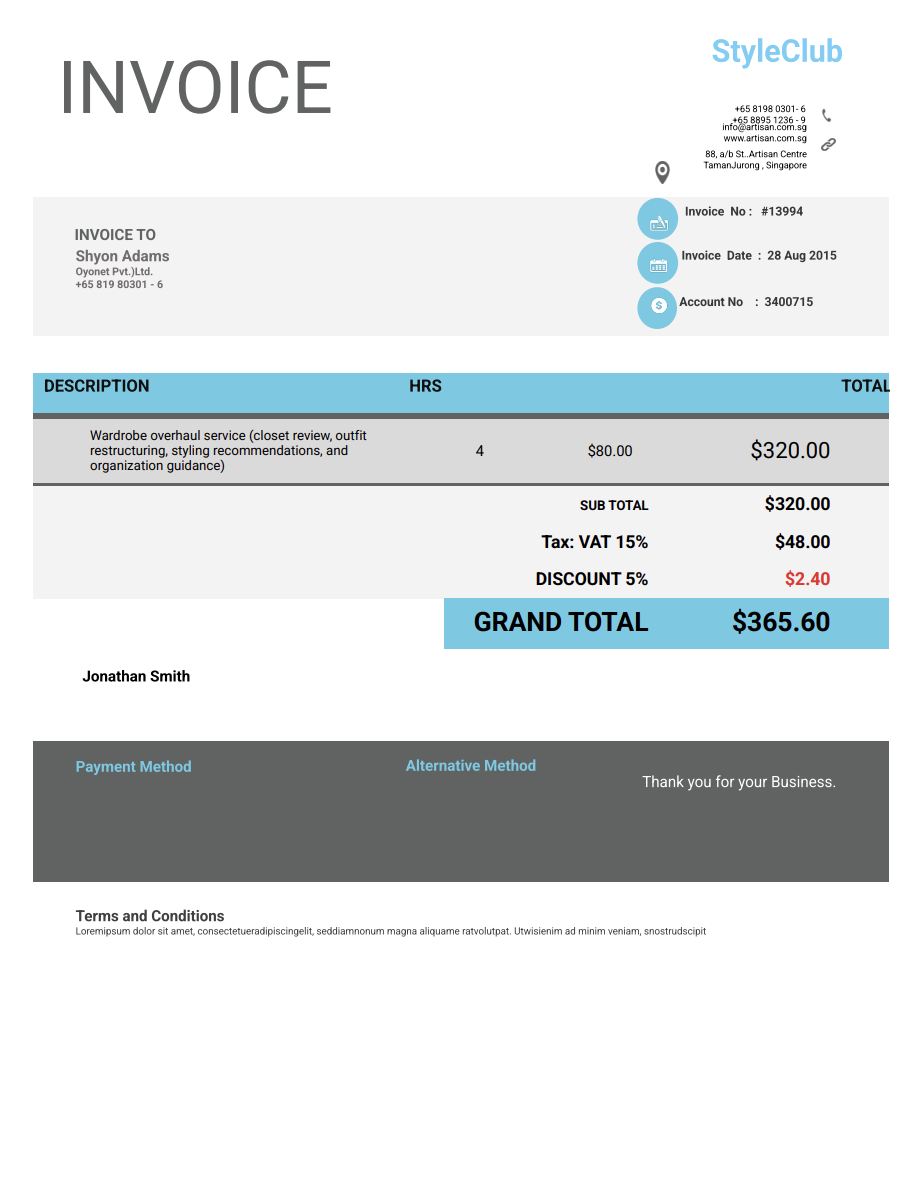
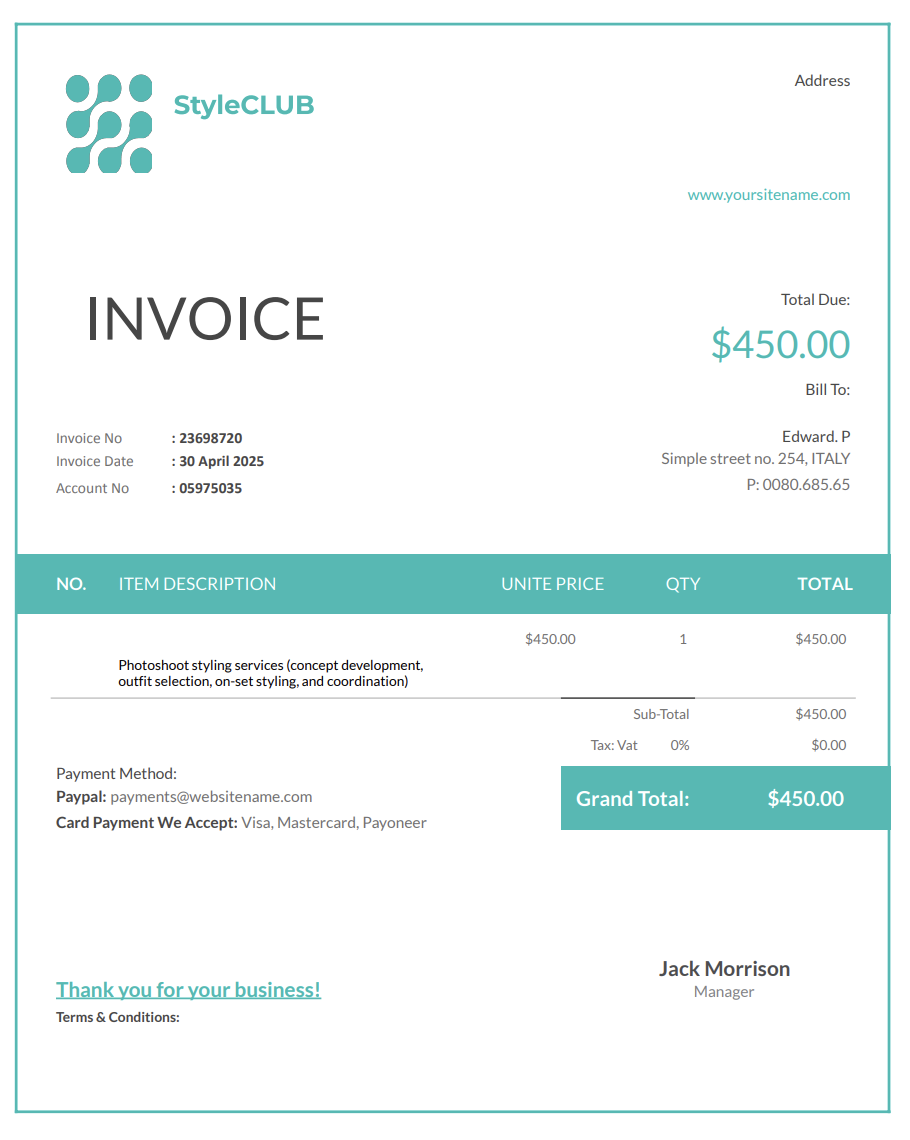
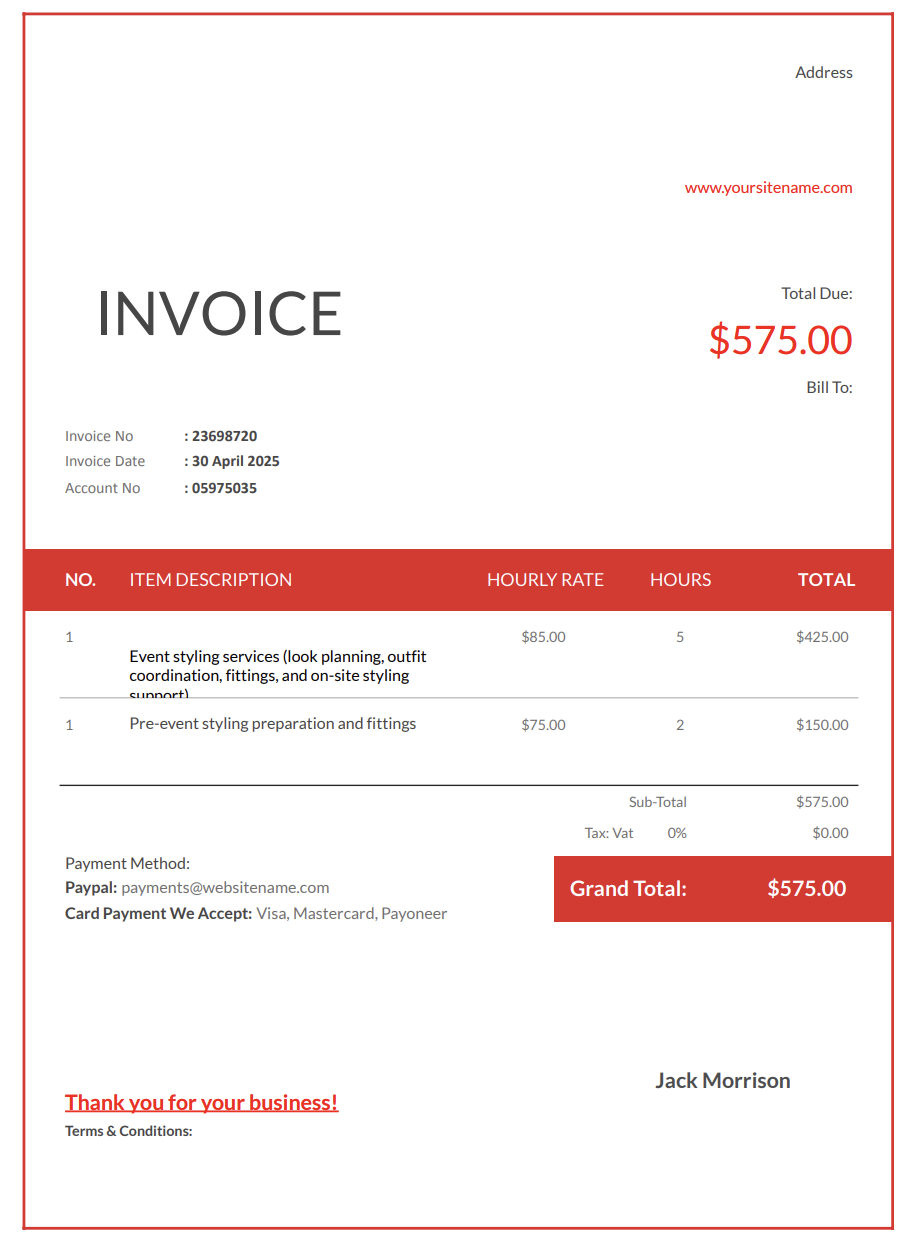
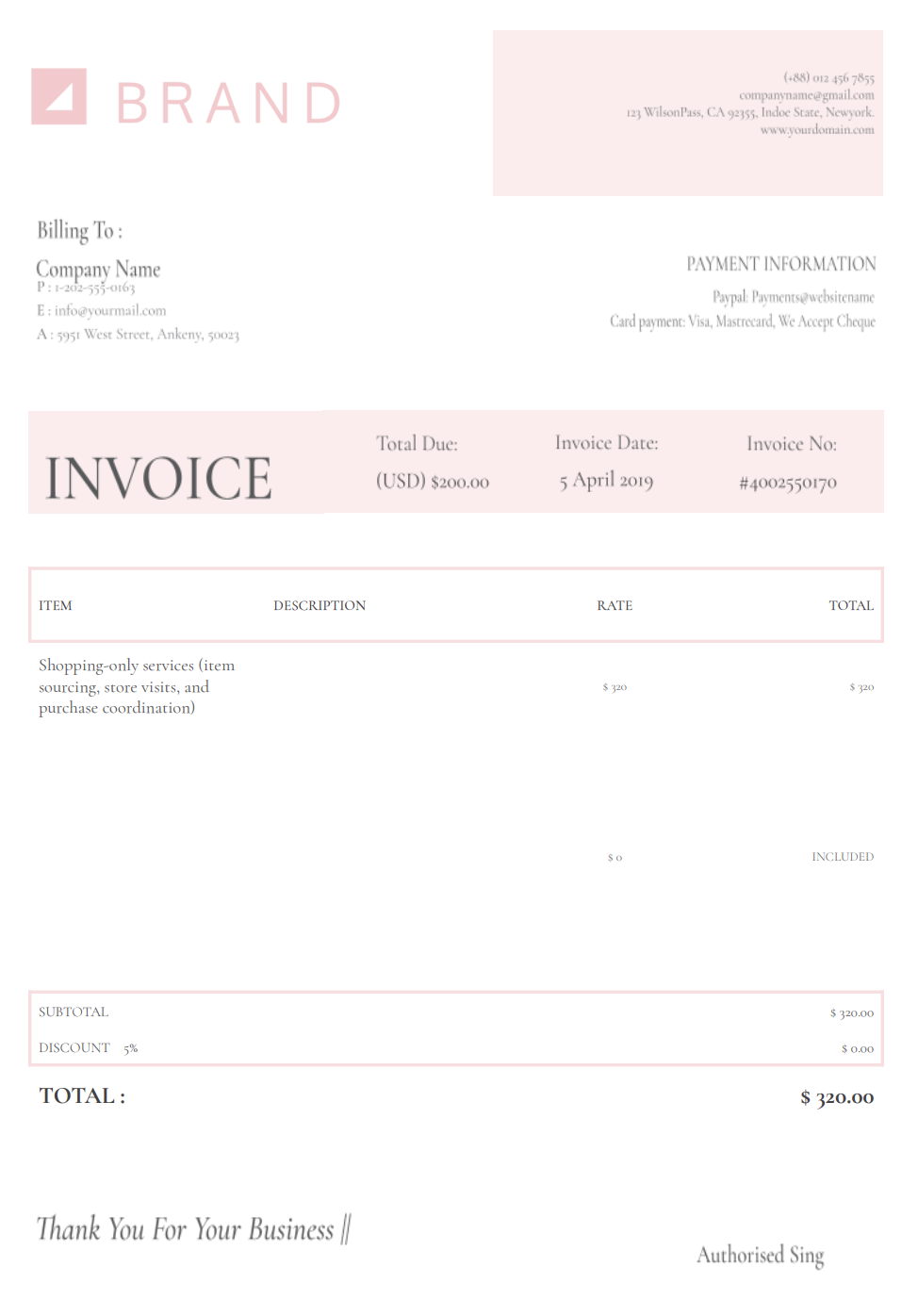
A fashion stylist invoice template gives all of that invisible work a place to exist on paper. It lets you document the research, prep, coordination, and adjustments that shape the final result, so clients understand the full scope of what they’re paying for, not just the moment they step in front of the mirror.
With Invoicer.ai, you can create fashion stylist invoices in minutes, either by downloading free Word or Excel invoice templates or by customizing and sending invoices online directly through our invoicing software (which is much simpler).
Styling lives at the intersection of creative vision and nonstop coordination.
When invoicing is vague, the details tend to vanish somewhere between fittings, wardrobe pulls, and endless client messages.
Here’s why clear, structured invoicing matters in styling work:
They see the outfit, not the hours spent sourcing pieces, arranging tailoring, steaming garments, packing looks, and keeping everything on schedule. An invoice makes that unseen effort visible and easier to appreciate.
Designer rentals, vintage finds, boutique pieces, alterations, and accessories all follow different pricing rules. Itemized billing reduces questions and explains why costs shift from project to project.
Showrooms, stores, studios, and client homes are all part of the job. Documenting travel and coordination helps clients understand the logistical side of styling.
New directions, size swaps, or last-minute requests are normal in this industry. Detailed invoicing separates what was planned from what was added later.
Styling is a high-touch service. A well-designed, professional invoice reinforces the level of care and expertise clients expect from your brand.
Fashion styling includes many service formats, so your invoice should reflect the type of work you delivered.
Perfect for one-on-one clients prepping for events, photoshoots, or wardrobe refreshes. Includes consultation, fitting time, sourcing, and styling notes.
For clients updating their entire wardrobe. Lists closet edits, shopping trips, outfit building, and follow-up sessions.
Ideal for editorial shoots, commercial campaigns, brand content, or lookbooks. Includes prep, sourcing, on-set styling, adjustments, and post-shoot returns.
Useful for weddings, galas, red carpet events, and special occasions. Includes consultation, fittings, outfit planning, and day-of assistance.
When clients request personal shopping without full styling, this invoice lists time spent shopping, sourcing fees, travel, and any purchased items.
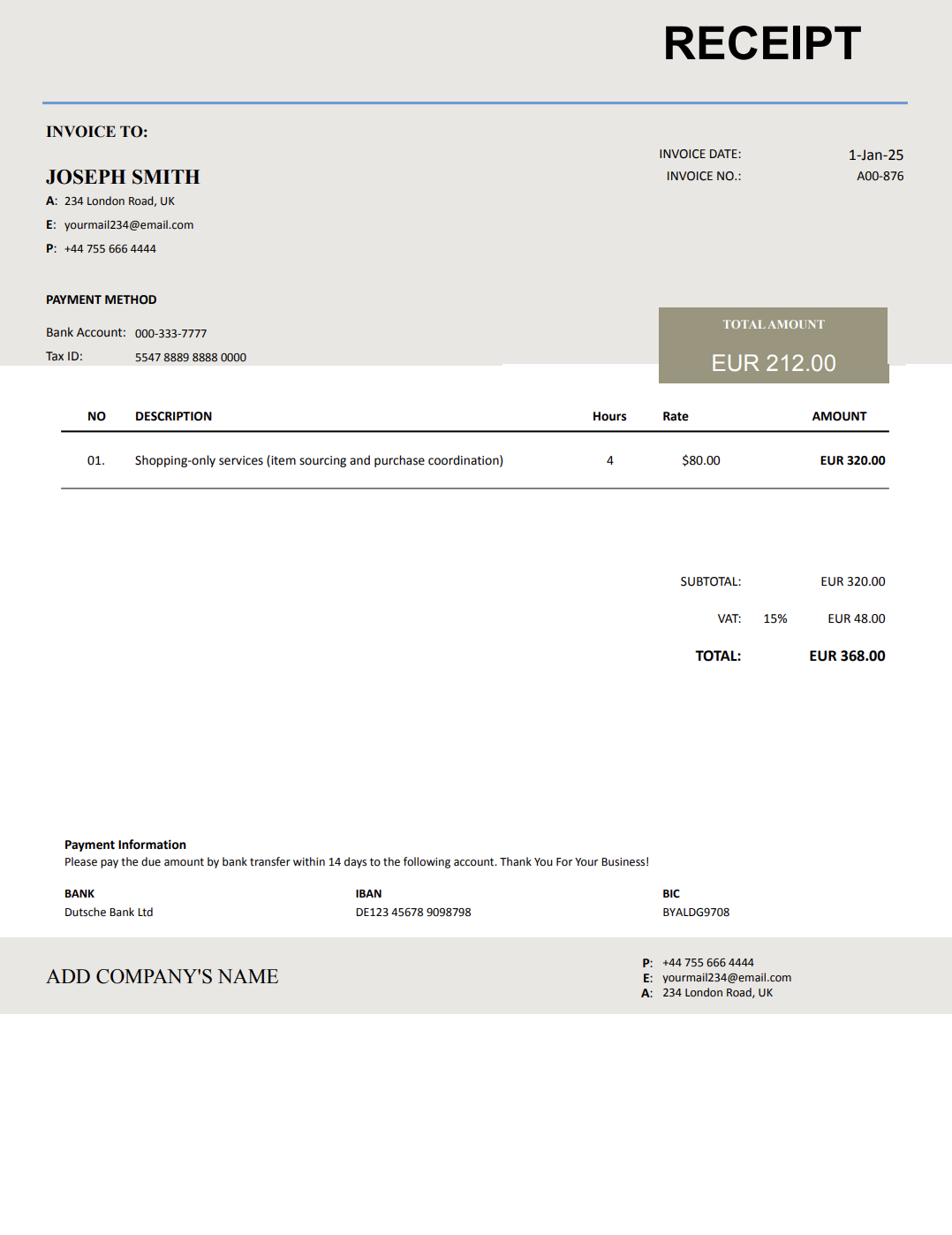
Useful when clients pay on the spot. It confirms payment and keeps your documentation organized.
For shoots and events, you may need assistants or supplies (tape, pins, steamers, garment bags). Listing these separately keeps invoices transparent.
Common add-ons:
Example line items:
Many stylists price work as a day rate (or half-day rate) rather than itemizing every task. To avoid disputes, the invoice should define what a “day” includes and how overtime is billed.
What to clarify:
Example line items:
A well-built stylist invoice should be detailed but easy for clients to understand.
Include your name, business name, email, phone number, website, and branding to help clients reach you easily.
Add the client's name, location, contact info, and event or project details.
Detail exactly what you did, such as:
Clear descriptions help clients see the full value of your work.
List hourly rates, day rates, or set session prices so clients understand how the total was calculated.
If you purchased items for clients or rented wardrobe pieces, include them as separate line items.
Stylists often move between multiple locations; include these costs clearly.
Steamers, garment bags, clips, pins, or props, if they were used or purchased for the client.
A clean breakdown avoids any confusion or assumptions.
Include due dates, deposit requirements, cancellation policies, and accepted payment methods.
Use this for outfit recommendations, care instructions, event reminders, or future styling suggestions.
Styling projects often include multiple fittings, look changes, and last-minute adjustments. Listing these services clearly helps clients understand why the total is more than “just shopping.”
Common fitting-related services:
Example line items:
Clients often focus on the final looks, but a large portion of styling happens in research and sourcing. Your invoice should separate sourcing from shoot/event day services when billed that way.
Common sourcing components:
Example line items:
Returns and pull management can take significant time, especially for multi-look shoots. If you handle returns, include a clear handling line item so the scope is visible and billable.
What to include (when applicable):
Example line items:
Smooth billing starts with clear expectations. These habits will help you get paid without delays.
Clients value clear, straightforward communication about what they’re paying for.
Timely invoices encourage quicker payments, especially for multi-day styling projects.
Specific deadlines prevent payments from being forgotten or delayed.
Clients understand pricing better when everything is itemized clearly.
If you work with recurring clients, pick a predictable invoicing schedule.
Here’s when and how to send invoices as a fashion stylist, depending on the type of service you offer and your client arrangements.
Send invoices immediately after the session or fitting.
Invoice in stages:
Send invoices the same day and attach receipts if needed.
If the client needs a last-minute pull or emergency styling, send a separate invoice outlining the urgency.
Digital invoices make these steps easier, and Invoicer.ai also shows when clients have viewed the invoice, which is helpful for keeping communication open.
A well-created invoice does more than request payment. Small details like clear descriptions, thoughtful formatting, and consistent branding can make your invoice feel professional, polished, and easy for clients to trust and pay promptly.
A minimal, tasteful logo or simple accent colors can reflect your aesthetic.
A short description of the looks you created or the vibe achieved adds a polished touch.
If you coordinated alterations, note it briefly to show how much you handled.
Invoicer.ai offers built-in payment features, making it easier for clients to settle invoices without delays.
Especially useful for clients who need reminders of what was pulled and why.
Word and Excel require constant formatting. Full accounting platforms include features stylists rarely need.
Invoicer.ai offers straightforward templates with the speed of online invoicing.
With Invoicer.ai you get:
No clutter. No formatting struggles. Just clear, beautiful invoices that help you stay organized and get paid efficiently.
You can also create invoices for fashion stylist services using our AI Invoice Generator. Just write a simple prompt and it builds the invoice for you, giving you an even faster way to get accurate, professional results.
You can stick with templates if that's your style, let AI take care of the setup when you want something quick, or always create invoices manually for a hands on approach.
Styling already asks you to be creative, organized, and ready to pivot at a moment’s notice. Your invoicing shouldn’t compete for that same energy. A fashion stylist invoice template keeps your charges clear and easy to follow, so clients understand the work without back-and-forth.
Set up your next fashion stylist invoice in minutes and and keep payments moving in the background while you focus on the looks. Once the invoice is ready, you can schedule it to send when it makes the most sense for the job or your billing routine.