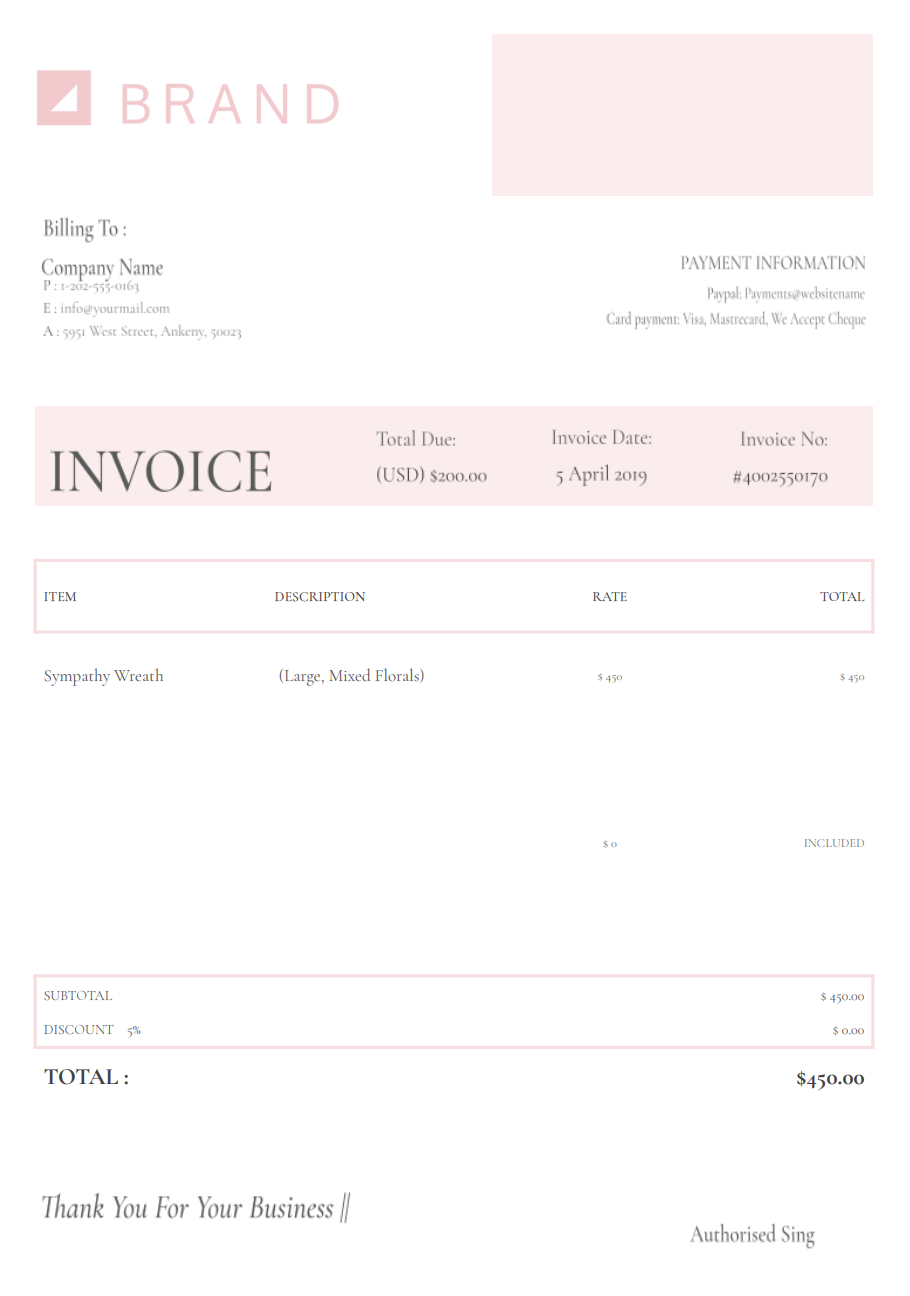
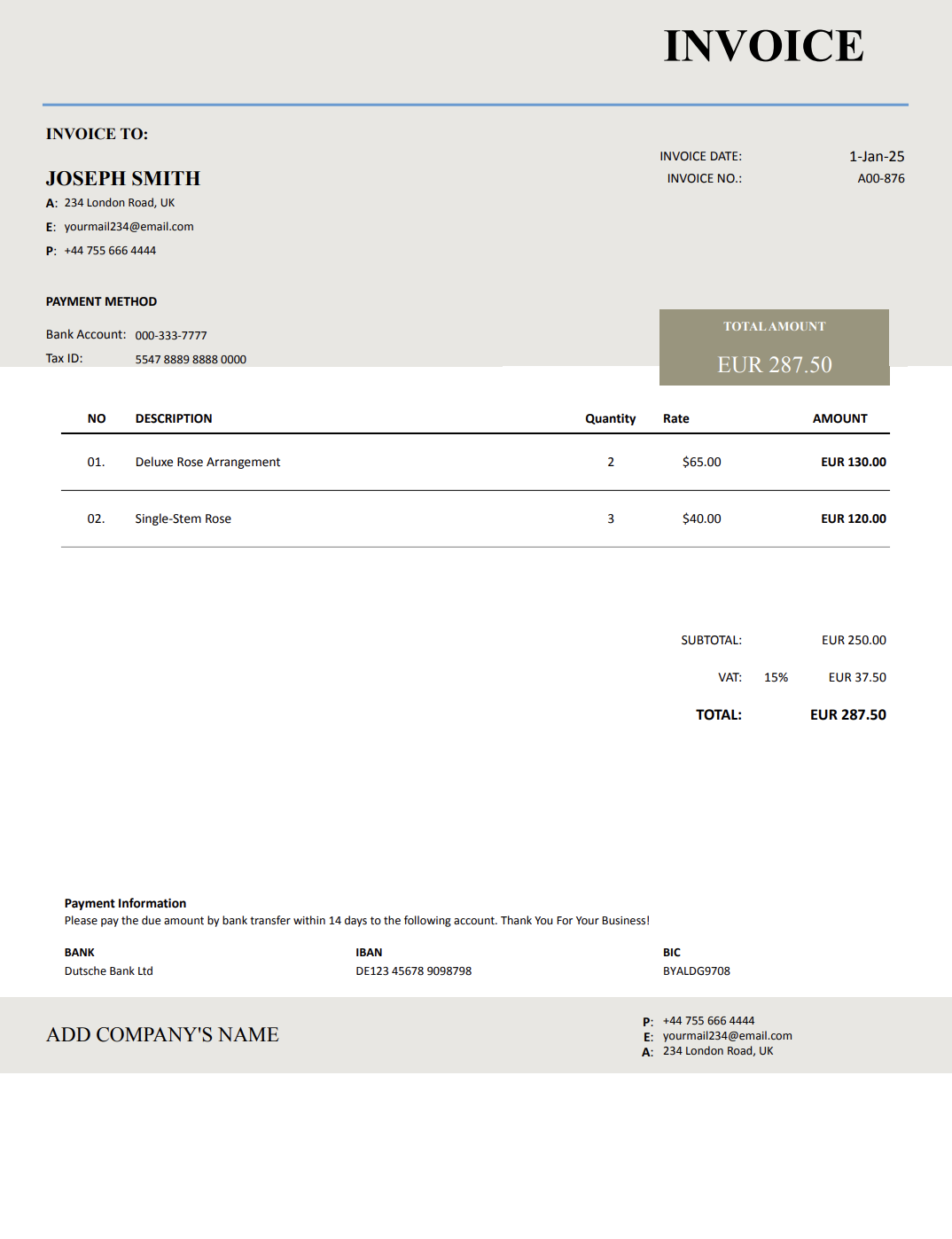
Need a simple, organized way to bill clients for your floral work? A florist invoice template helps you list flower types, quantities, labour, design fees, delivery, setup, and rentals.
Floristry involves creativity, precision, and time, but clients often underestimate the amount of work behind each arrangement. A structured invoice helps them understand exactly what they're paying for.
With Invoicer.ai, you can create florist invoices in minutes, either by downloading free Word or Excel invoice templates or by customizing and sending invoices online directly through the software (which is much simpler).
Floral work is artistic and highly logistical. Without proper invoicing, misunderstandings or financial losses can happen easily, especially during busy seasons like weddings, Valentine's Day, or holidays.
Clients often get caught up in event planning. A clear invoice helps them stay organized and prevents forgotten balances.
Flowers vary in cost depending on season and availability. A detailed invoice helps clients understand why certain blooms cost more.
Many clients don't realise how long floral design, arrangement, transportation, and setup take. Listing labour ensures you are paid fairly for your time.
Weddings and corporate events involve multiple floral components — bouquets, centerpieces, installations, arches, boutonnieres, and more. Without an invoice, these can be easily miscounted or misunderstood.
A clean invoice shows your floral business is reliable, organized, and trustworthy. Invoices also help you track revenue, plan for peak seasons, and maintain proper business records.
Floristry includes many types of work, from small retail bouquets to large-scale events. Each requires its own invoice style to keep pricing transparent and organized.
Below are the main florist invoice formats — each with its own intro and full explanation.
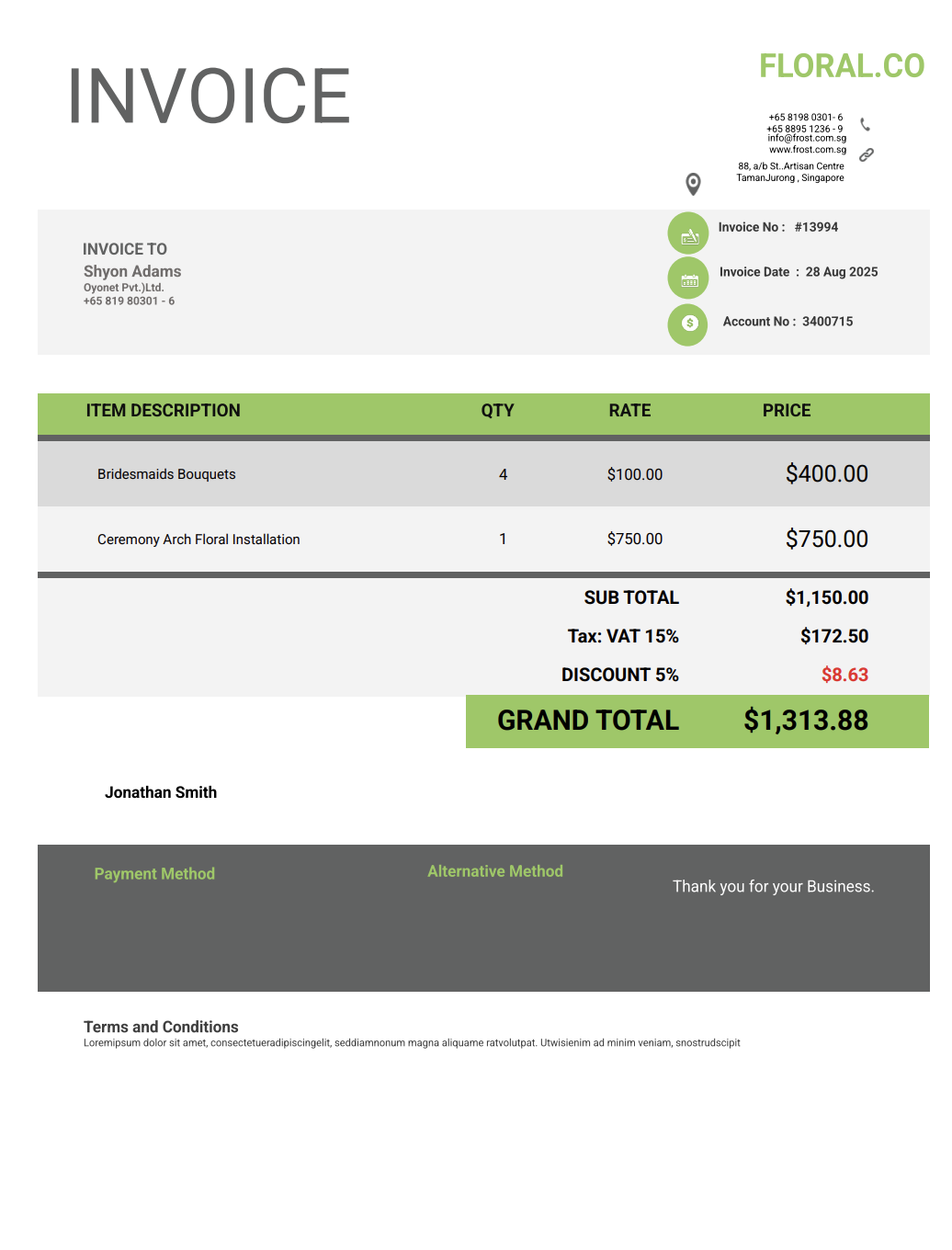
Wedding florals are detailed, customised, and often expensive. A wedding florist invoice allows you to break down every single arrangement: bouquets, boutonnieres, corsages, centerpieces, table florals, arches, installations, and delivery. It also includes labour, travel, rentals, and setup.
Wedding invoices usually span multiple sections so couples can see exactly what they're paying for.
Example:
Bridal bouquet + 4 bridesmaid bouquets + arch arrangement + 10 centerpieces + delivery + setup = £1,850.
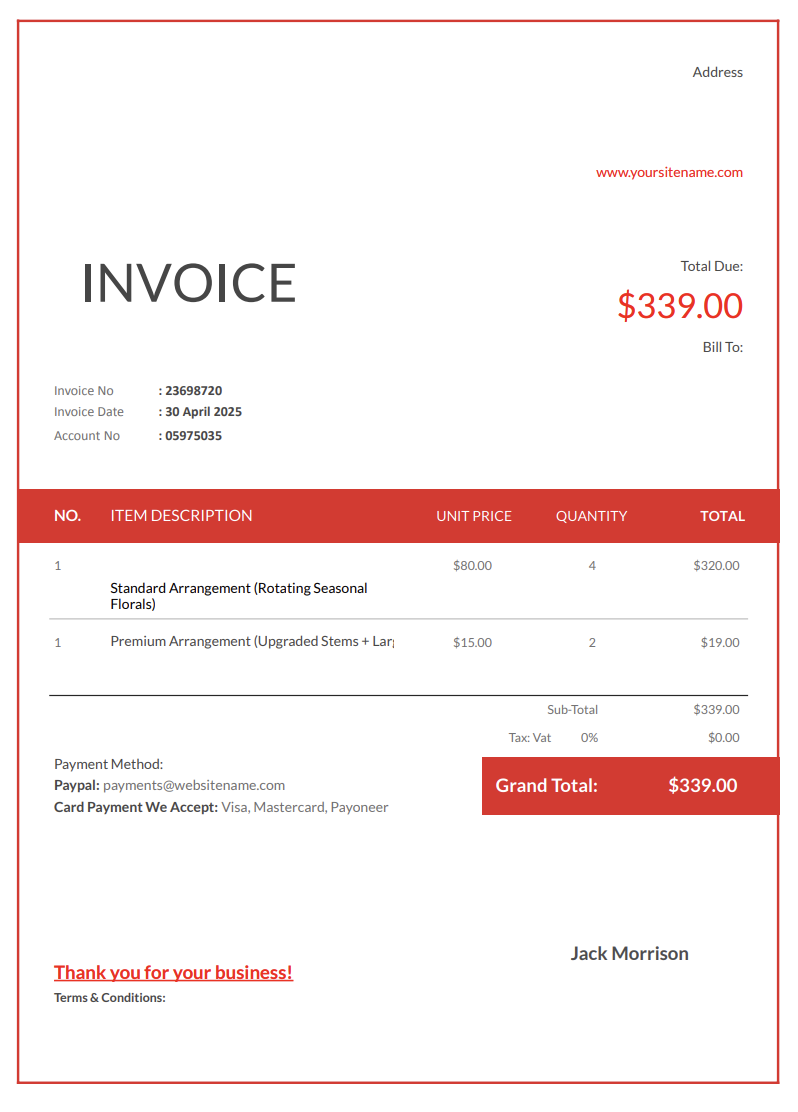
This type of invoice is used for parties, corporate events, galas, celebrations, and brand launches. You list the flower arrangements, labour, and installation fees, along with event-specific needs like on-site adjustments or teardown time.
Event florals often require coordination with decorators or planners, so a detailed invoice helps everyone stay aligned.
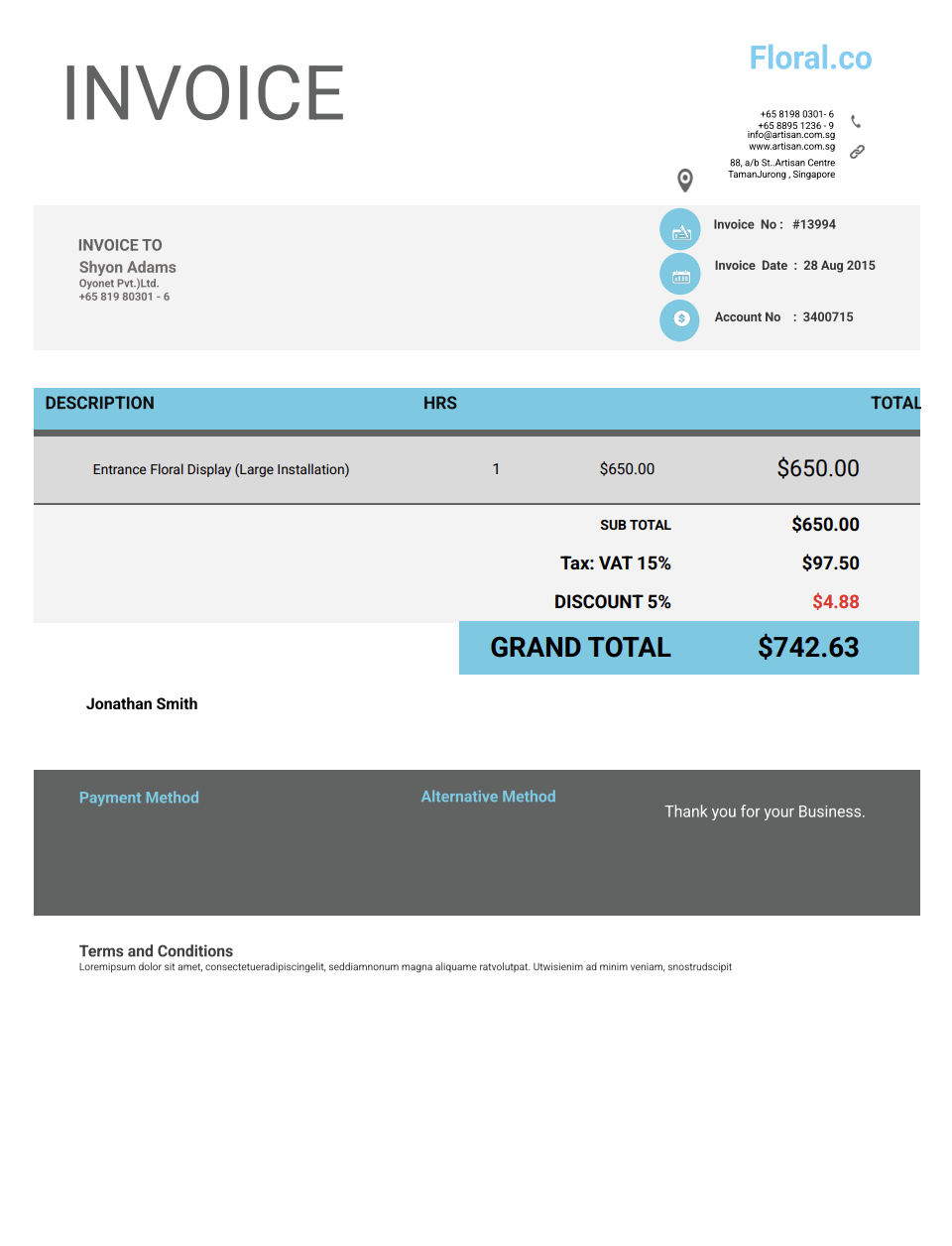
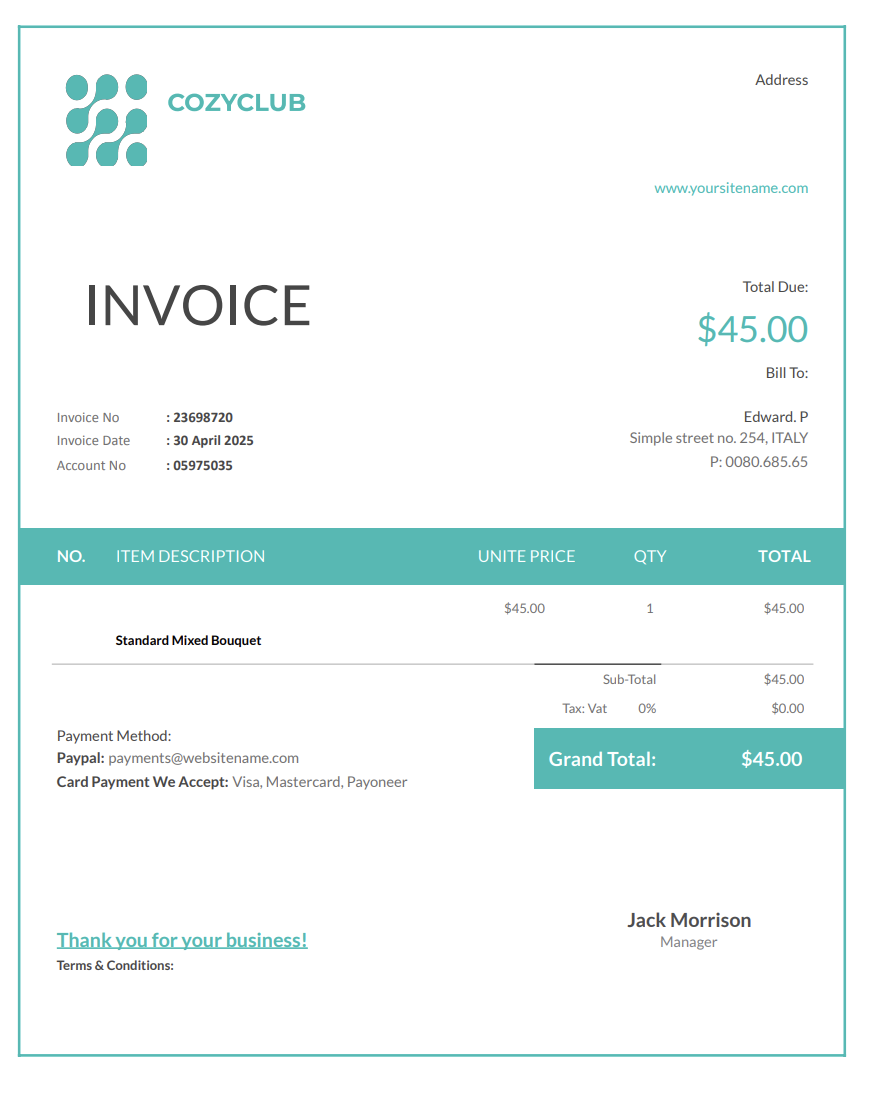
For day-to-day shop orders, deliveries, and holiday arrangements, a retail florist invoice outlines flower types, wrapping, vases, delivery fees, and card messages. It's perfect for small orders but still essential for consistent bookkeeping.
This invoice is also useful for phone-in orders or online bouquet sales.
Some clients request weekly, bi-weekly, or monthly flower deliveries to homes, offices, restaurants, or hotels. A subscription invoice lists the schedule, arrangement type, vase exchange program, and delivery fees.
Subscription clients appreciate seeing everything organized in one document.
Funeral florals typically have multiple arrangements with specific names: sprays, wreaths, standing arrangements, and casket flowers. A dedicated invoice helps families clearly understand what they've ordered during a sensitive time.
This format also clarifies delivery timing and setup at funeral homes or service locations.
A simple receipt template works when clients pay immediately — for example, when picking up a bouquet in-store or paying on delivery. It confirms the payment's details and keeps your records clean.
Florist invoices often include labor and logistics beyond the flowers themselves. Listing these charges separately helps clients understand the total cost and reduces last-minute disputes.
Common logistics line items:
Example line items:
Availability can change due to seasonality and supply constraints, and event clients often request adjustments close to the date. A simple change-order approach keeps billing fair and transparent.
Best practice:
Example line items:
If you supply vases, stands, arches, or candles, your invoice should track what was provided and the return plan. This reduces losses and avoids awkward follow-ups after the event.
What to include:
Example line items:
Floristry involves both product and labour. A detailed invoice helps clients understand each part of your work.
Business name, florist name, phone number, email, address, and branding, if applicable.
Name, event date, venue or delivery address, and contact details.
List every arrangement with full transparency. Include:
Include design time, arrangement time, setup, teardown, or technician support.
List vases, stands, arches, candles, props, or reusable items.
Transporting delicate arrangements takes time and care. Travel and setup should be listed separately.
If the client requested rare or out-of-season flowers, note the pricing clearly.
Provide a full and transparent breakdown.
Include due dates, deposit requirements, and accepted payment methods.
Use this for care instructions, special event reminders, or policies.
Event floral invoices are approved more quickly when organized by category rather than presented as a lump sum. Clear grouping also reduces disputes when clients compare the invoice to the proposal.
Recommended categories:
Example line items:
Clear invoices help, but smart invoicing habits help even more.
Most florists take 20–50% upfront for weddings and events. This approach secures your time and covers flower costs.
Clients often underestimate labour. Breaking down costs helps them appreciate the work involved.
Florals are time-sensitive. Include delivery time slots to avoid misunderstandings.
"Final balance due 7 days before the event" prevents last-minute panic.
Retail clients respond fastest when invoices arrive immediately after ordering.
Florist billing depends on the type of service provided. Here's when you should send your florist invoice:
Wedding clients and event planners expect to pay a deposit upfront.
Florists typically require the full balance before purchasing flowers.
Retail orders or one-off bouquets are usually billed at the time of delivery or pickup.
Some florists charge for teardown or equipment return afterward. Digital invoices work best, and Invoicer.ai allows you to see when clients have viewed the invoice.
Florist bookings often require an upfront deposit because the product is purchased in advance and is perishable. Your invoice should make it obvious what has been paid and what remains due.
Two clean approaches:
1. Deposit invoice + final invoice
Send a deposit invoice to confirm the booking, then issue the final invoice closer to the event date.
2. Final invoice with deposit shown as a credit
List the full order total, then add “Deposit received on [Date]” as a negative line item so the invoice total equals the remaining balance due.
Recommended wording:
Your floral business has its own style, and your invoice can reflect that without overwhelming clients.
Soft, elegant designs complement the nature of your business.
Write brief details like "garden-style bouquet with seasonal blooms" to remind clients of what they ordered.
Some florists include small thumbnails of proposed designs — helpful for weddings.
Clients are more punctual when the process is easy.
Especially for bouquets or table arrangements.
Word and Excel templates require constant manual formatting. QuickBooks is too complex unless you need full accounting software.
Invoicer.ai is designed to be beautiful, simple, and efficient, which is perfect for florists who want their business to feel polished without unnecessary tools.
With Invoicer.ai you get:
No spreadsheets. No bulky accounting. Just organized, elegant invoicing.
You can also create invoices for floral services using our AI Invoice Generator. Just write a simple prompt and it builds the invoice for you, giving you an even faster way to get accurate, professional results.
You can stick with templates if that's your style, let AI take care of the setup when you want something quick, or always create invoices manually for a hands on approach.
Floristry combines creativity, logistics, and careful planning — invoicing shouldn't take the same effort. A florist invoice template keeps your billing organized, clear, and easy for clients to understand.
Once the invoice is ready, you can schedule it to send when it makes the most sense for the job or your billing routine.
Start your free 14-day trial today and make getting paid the easiest part of your next arrangement.