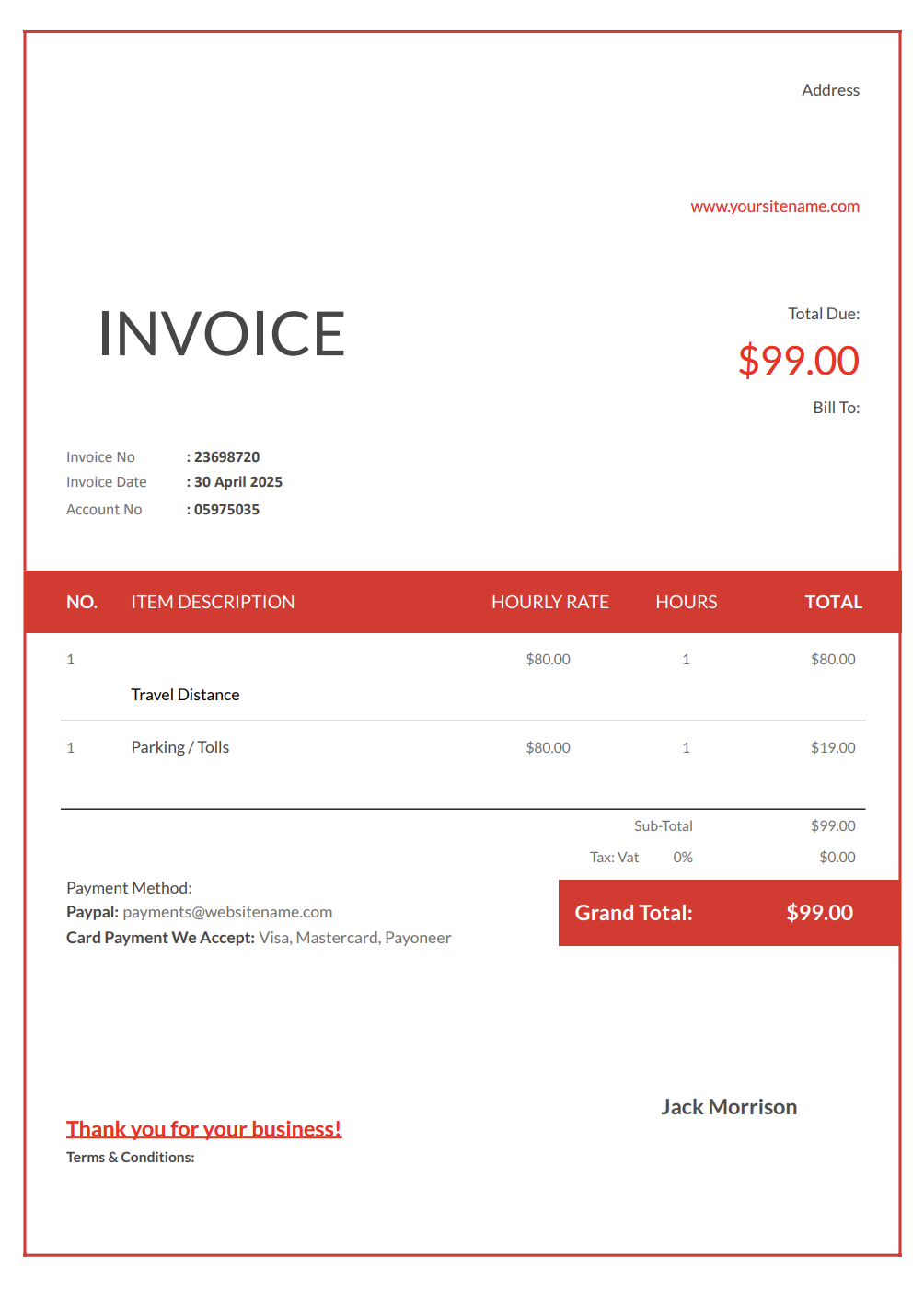
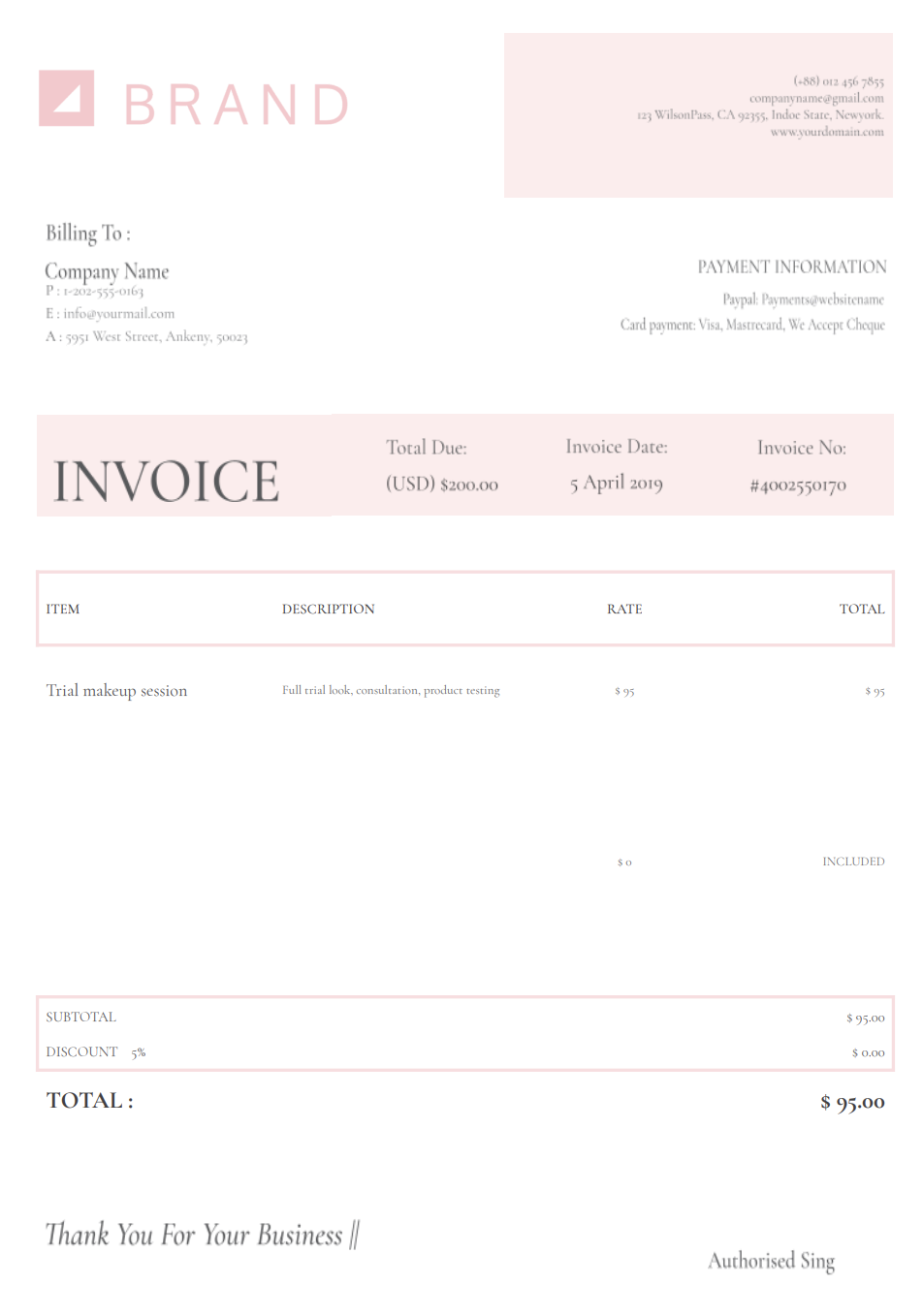
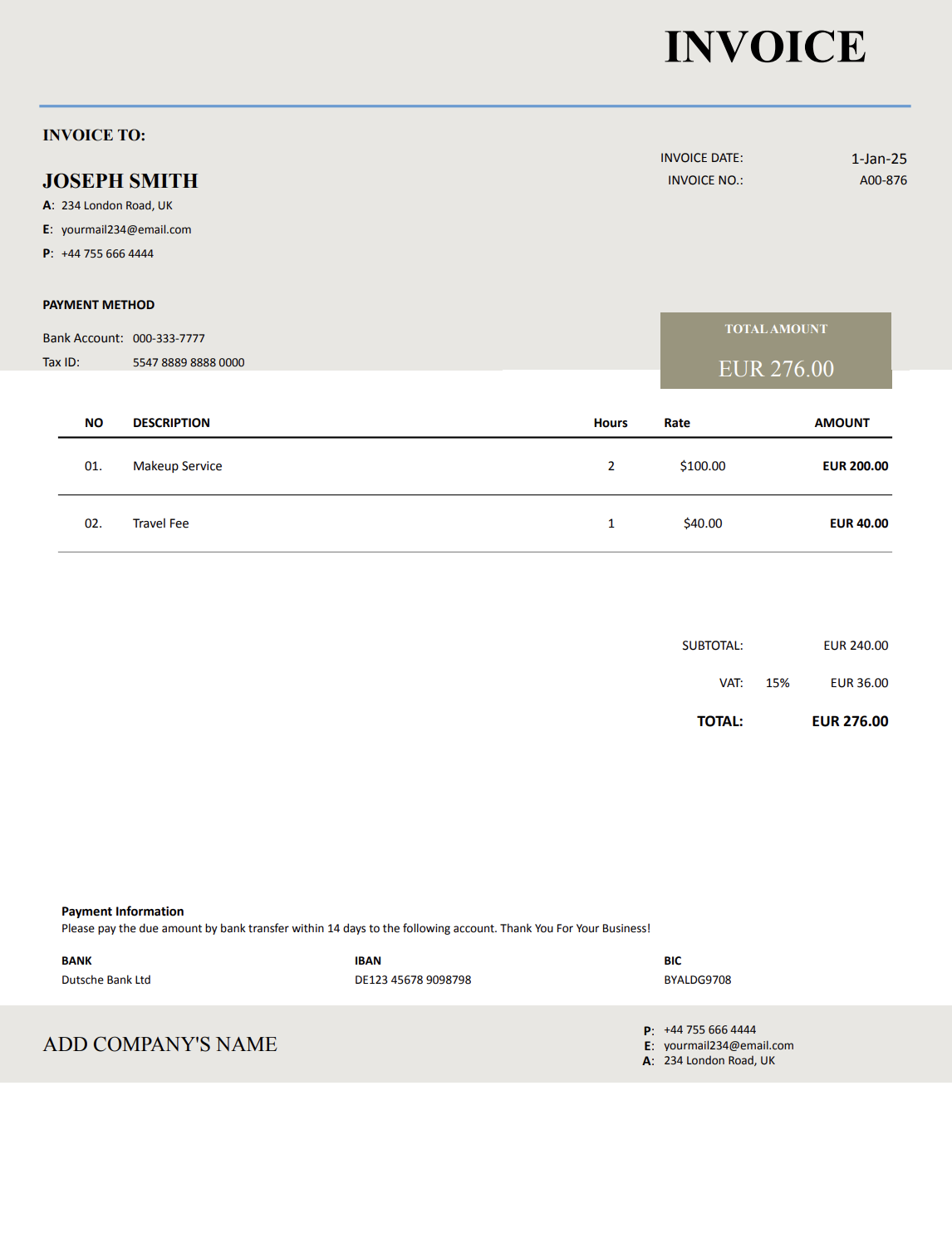
Need a simple and professional way to bill clients for makeup services? A makeup artist invoice template helps you outline service details, travel fees, trials, add-ons, group rates, deposits, and event schedules.
Since makeup work often involves early call times, custom looks, skin prep, and detailed planning, a structured invoice ensures clients know exactly what they're paying for.
No matter if you do bridal makeup, photoshoots, special-occasion looks, creative shoots, SFX makeup, or corporate events, a clean invoice builds trust, reduces payment issues, and makes your beauty business look polished and reliable.
With Invoicer.ai, you can create makeup invoices in minutes, either by downloading free Word or Excel invoice templates or by customizing and sending invoices online directly through the software (which is much simpler).
Makeup artistry involves much more than applying makeup. There's travel, setup, kit preparation, hygiene maintenance, product restocking, trials, and time-sensitive appointments. Without proper invoicing, things can get confusing quickly.
Clients may forget final balances, especially around weddings or busy event schedules. A clear invoice makes deadlines visible.
Clients often don't realise what's included: lashes, trials, touch-up kits, travel, early-morning fees, or hairstyling add-ons. Itemisation removes guesswork.
Bridal parties often change group sizes at the last minute. A proper invoice shows exactly how many people are included and what extra costs apply.
A detailed invoice communicates your value and positions your work as a serious service, not a casual favor.
Makeup work varies depending on the client, event, and service type. Having different invoice formats ready helps you respond quickly and bill accurately.
Below are the main invoice types for makeup artists:
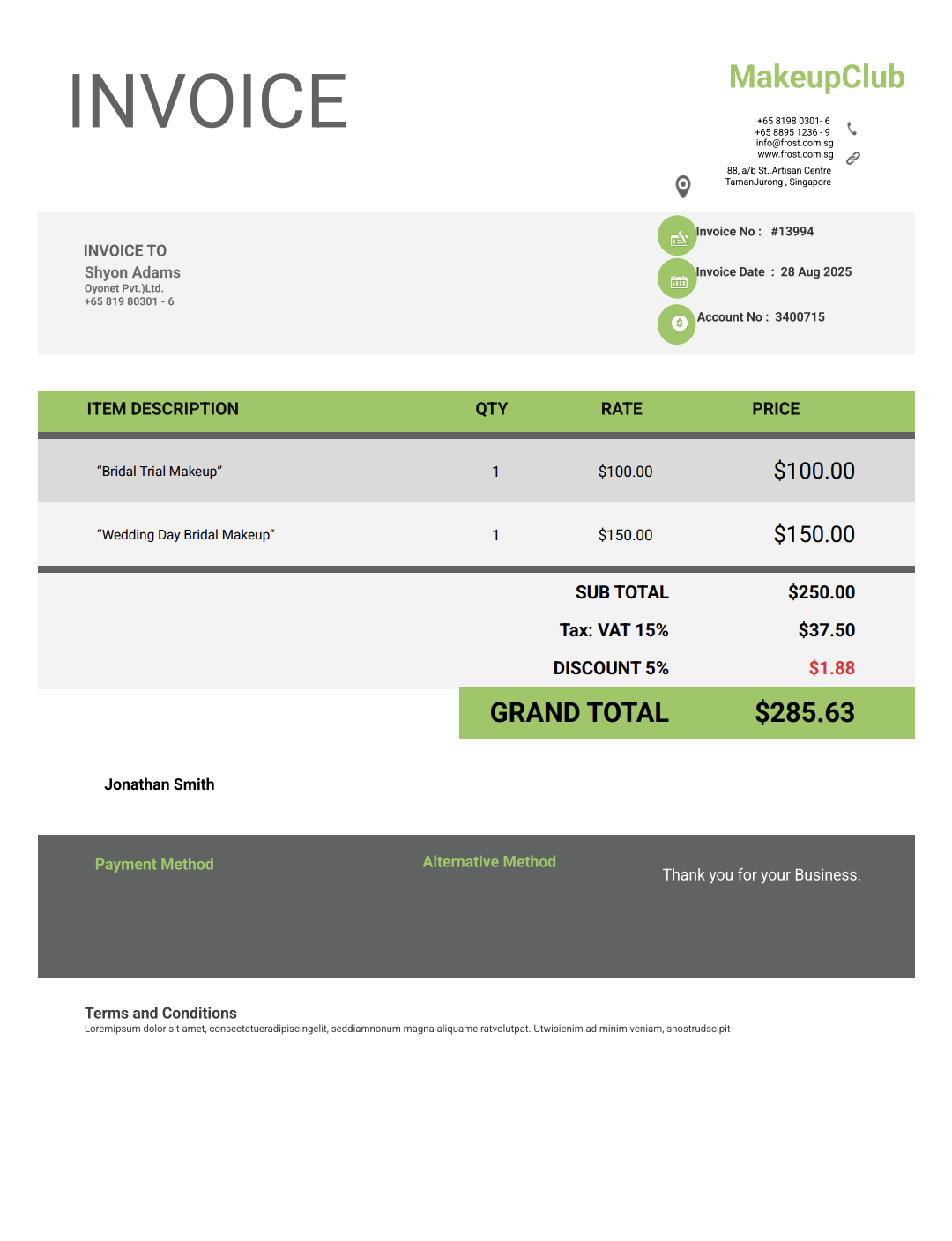
Bridal bookings are usually detailed and time-heavy. A bridal invoice outlines trial makeup, wedding day services, bridal party pricing, early-morning fees, and travel. It also lists deposits and remaining balances.
Because weddings involve strict timelines, clients appreciate having everything clearly itemized.
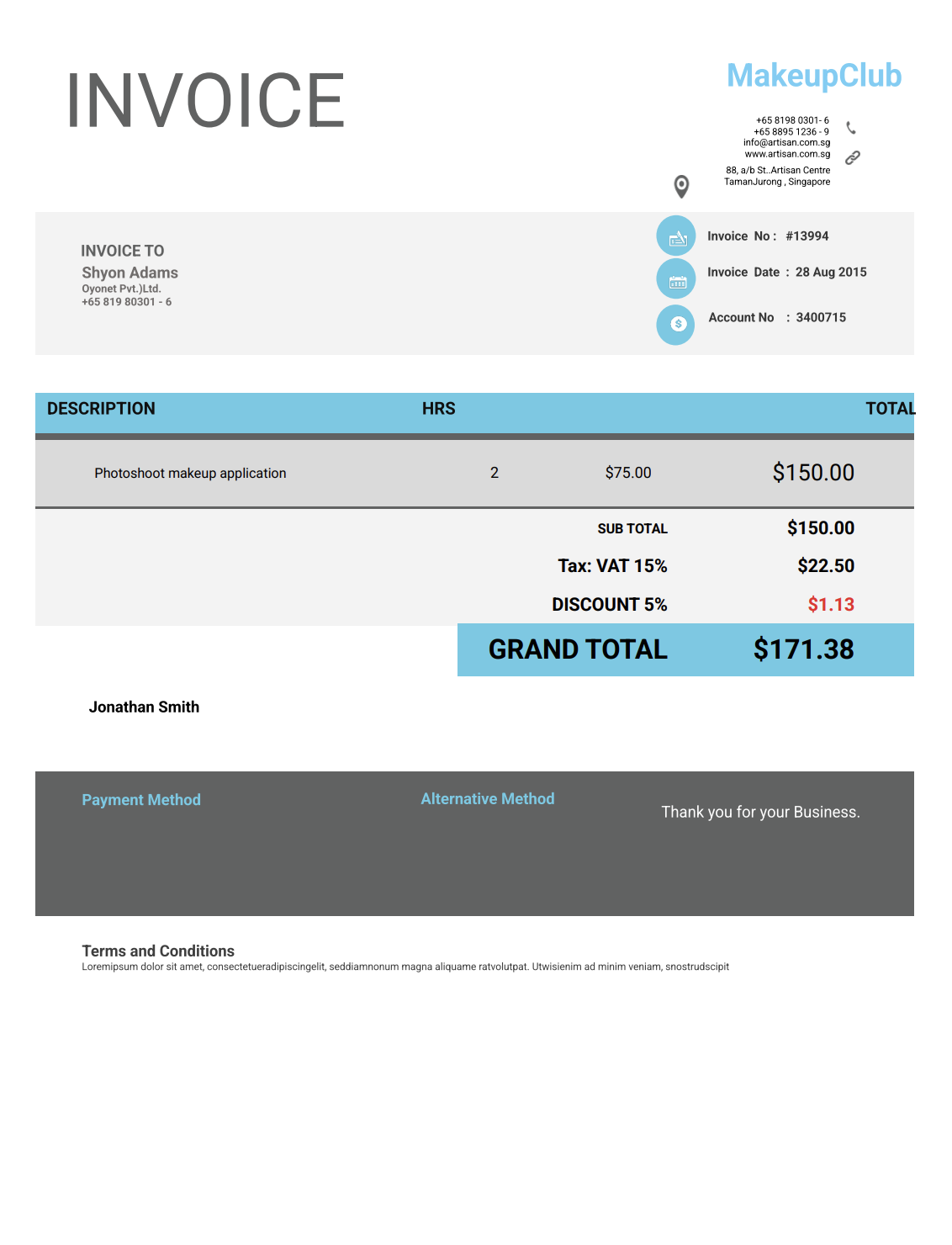
This invoice is used for studio shoots, brand campaigns, fashion editorials, or special occasions. It includes start times, session duration, location, and any special requests like bold looks, wardrobe prep, or on-set touch-ups.
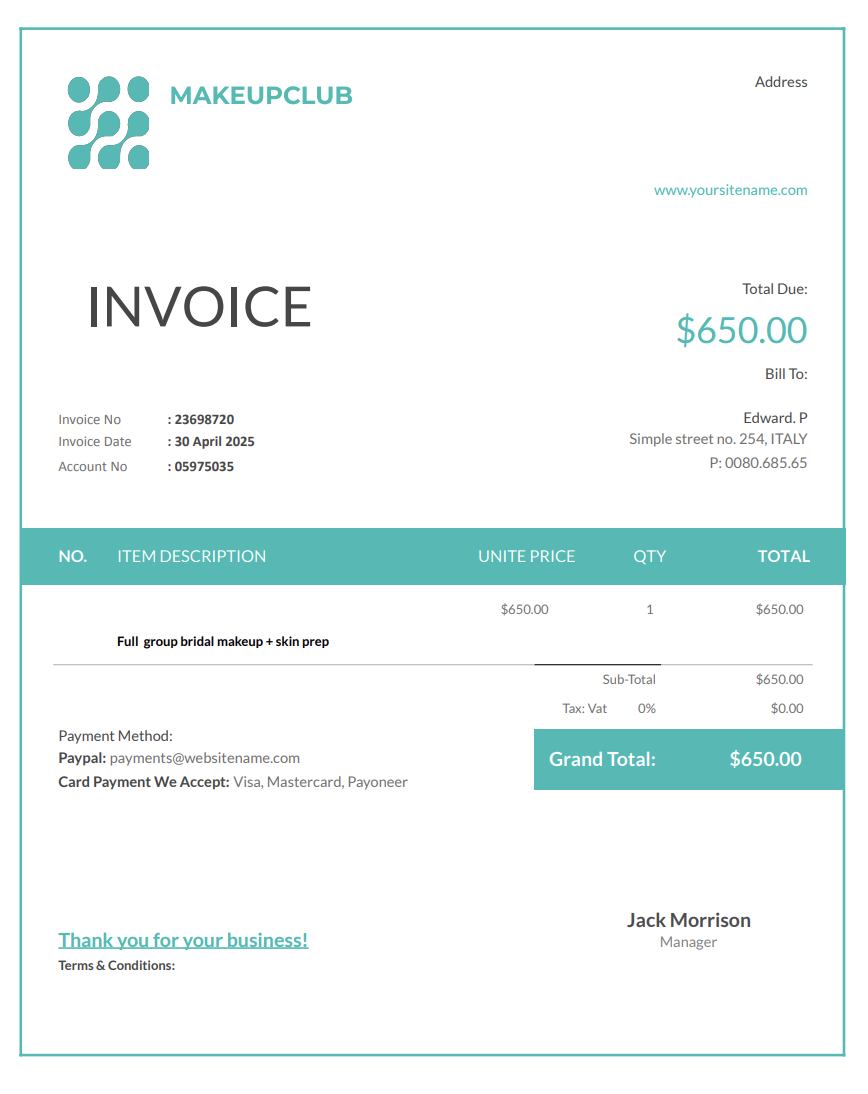
For events with multiple people, this invoice helps you list each person individually. You can include add-ons like lashes, contouring, or hair styling.
Makeup artists often travel to homes, hotels, studios, or wedding venues. A travel invoice lists mileage, travel costs, early morning fees, tolls, and setup time.
Trials are separate sessions done before events like weddings. A trial invoice lists the session length, look tested, and any product suggestions provided.
If a client pays immediately after a session, a receipt template confirms the payment and helps both sides keep accurate records.
Makeup services are easier for clients to review when each service is listed separately instead of being combined into one total. Clear itemization also helps avoid confusion when the final invoice is compared with the original booking agreement or quote.
Recommended item groups:
Example line items:
Bridal and event work often includes multiple services delivered to different people on the same day. The invoice should show whether pricing is per person, per service, or sold as a package.
Recommended approaches:
Example line items:
A makeup artist invoice should be thorough and easy to understand. Include:
Name or business name, email, phone number, and branding if applicable.
Name, phone number, and event details.
List the exact service provided: bridal makeup, photoshoot glam, creative look, SFX makeup, etc.
Break down costs for:
List trial sessions separately for clarity.
Mileage, parking, tolls, or destination charges.
If applicable, include these as separate line items.
Show how much the client has already paid.
Provide a clear and professional cost breakdown.
List due dates and accepted payment methods.
Optional space for special reminders, skin prep notes, or thank-you messages.
Event florals are easiest to approve when they are grouped by category instead of listed as one lump sum. Itemization also reduces disputes when clients compare the invoice to the original proposal.
Recommended item groups:
Example line items:
Some makeup artists include kit use in their base rate, while others list certain product-heavy services separately. If you charge kit fees or product add-ons, itemizing them makes the invoice clearer and helps clients understand the value.
Common product-related charges (when applicable):
Example line items:
Trials are a separate service with its own time, prep, and product use. Listing trial sessions clearly helps clients understand what is included and prevents the trial from being treated as a free add-on.
Common trial-related items:
Example line items:
Makeup artists often deal with tight schedules and events where timing is everything. These tips keep your payments stress-free.
Deposits secure your time, especially for weddings and peak seasons.
Clear breakdowns avoid misunderstandings and help justify your pricing.
If a bride needs makeup at 6 a.m., the fee should already be listed.
Clients appreciate transparent pricing, especially for long-distance bookings.
"Final balance due before event date" is standard in the beauty industry.
Different services require different billing schedules. The most common approaches are:
Deposits secure your time and prevent cancellations.
Most MUAs require full payment before the event starts, especially weddings.
Used for in-studio services or non-event makeup.
If the client adds lashes or hair styling on the day, invoice these separately.
Digital invoices are best. Invoicer.ai lets you track when the client has opened your invoice, making communication easier.
Bridal and event bookings commonly require a deposit or retainer to reserve the date. The invoice should clearly show what has been paid and what remains due.
Two clean approaches:
1. Deposit invoice + final invoice
Send a deposit invoice to confirm the booking, then invoice the remaining balance before the event or immediately after.
2. Final invoice with deposit shown as a credit
List the full booking total, then add “Deposit received on [Date]” as a negative line item so the invoice total equals the remaining balance due.
Recommended wording:
Makeup work is often time-sensitive and location-dependent. If you travel to venues or start outside standard hours, listing these charges as separate line items keeps pricing transparent.
Common billable logistics items:
Example line items:
Here's how you can make your makeup invoice stand out even more:
Clean colours, subtle icons, or minimalist lines reflect your aesthetic.
Brand recognition helps repeat clients remember you.
Some MUAs include skincare prep instructions or product recommendations.
The easier it is to pay, the faster clients do it.
Example: "Please arrive with clean, moisturised skin for your appointment."
Word and Excel templates require lots of manual adjusting. QuickBooks is too complex if you mainly need simple, fast billing.
Invoicer.ai is designed for service providers like makeup artists who want invoices that look clean, organized, and professional without the hassle.
Invoicer.ai provides the perfect balance for makeup artists:
No advanced accounting. No messy spreadsheets. Just easy, elegant invoicing.
Makeup artistry requires skill, creativity, and precision — invoicing shouldn't take the same effort. A makeup artist invoice template keeps your billing organized, clear, and stress-free so you can focus on creating beautiful work.
Once the invoice is ready, you can schedule it to send when it makes the most sense for the job or your billing routine.
Start your free 14-day trial today and make getting paid the easiest part of your business!