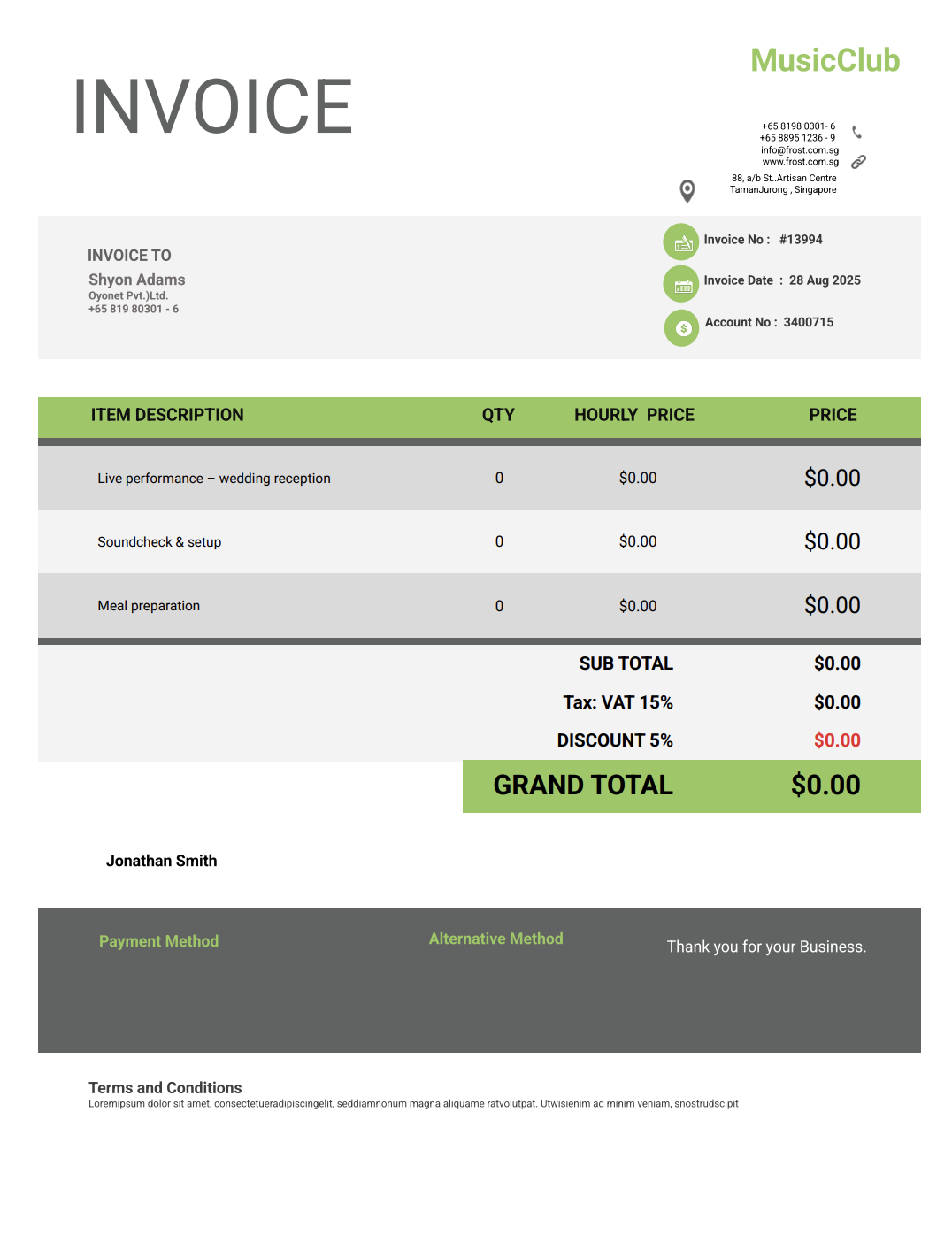
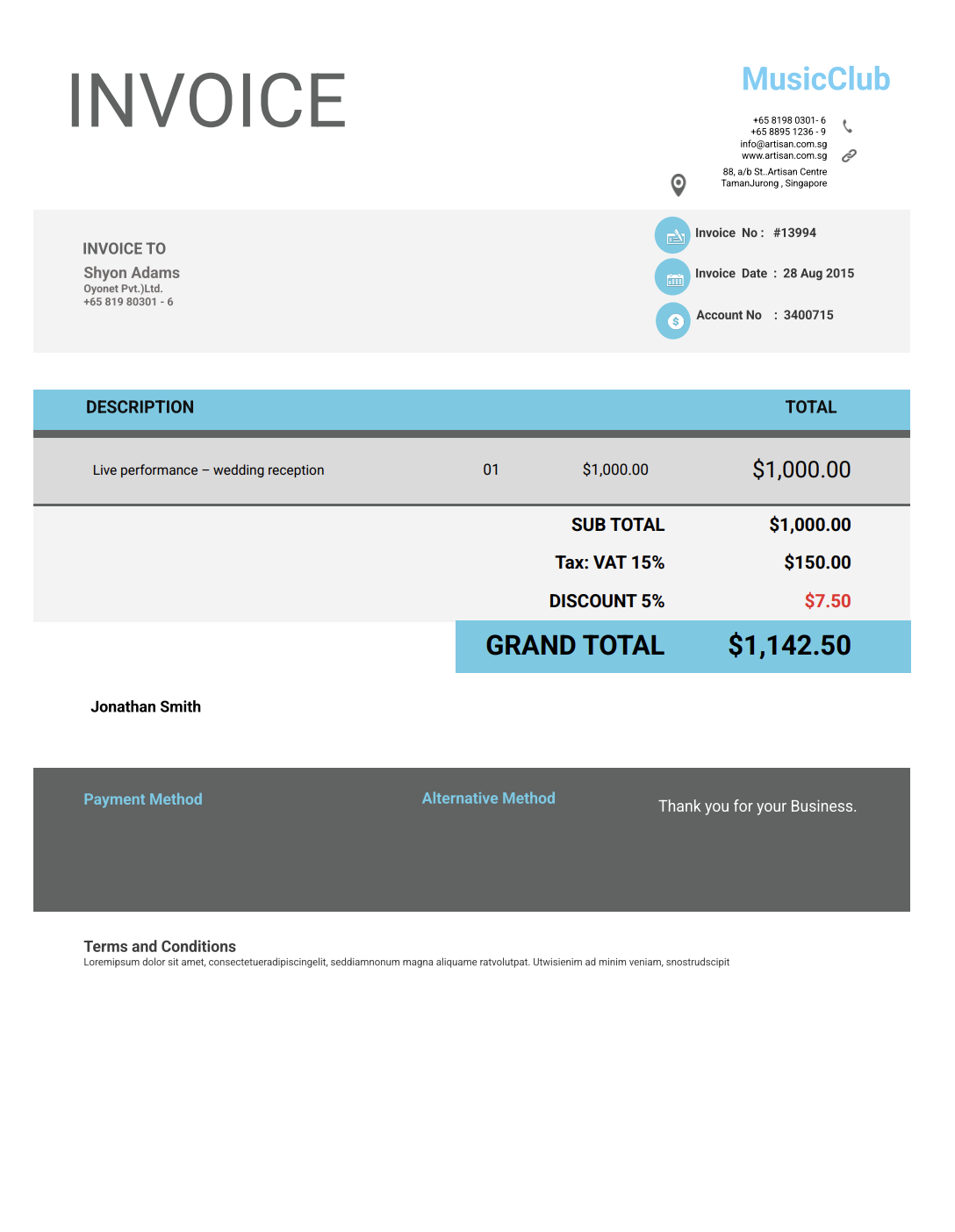
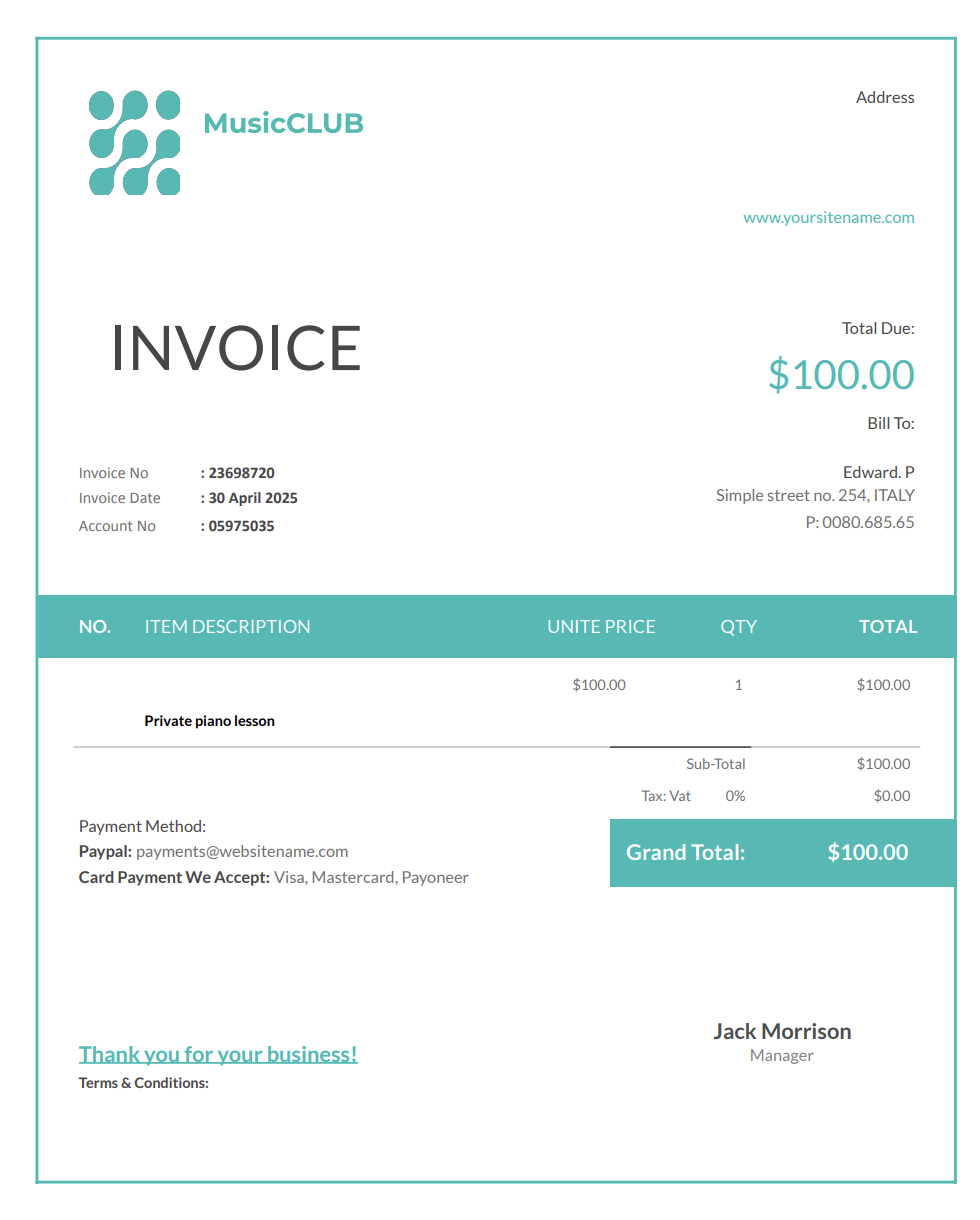
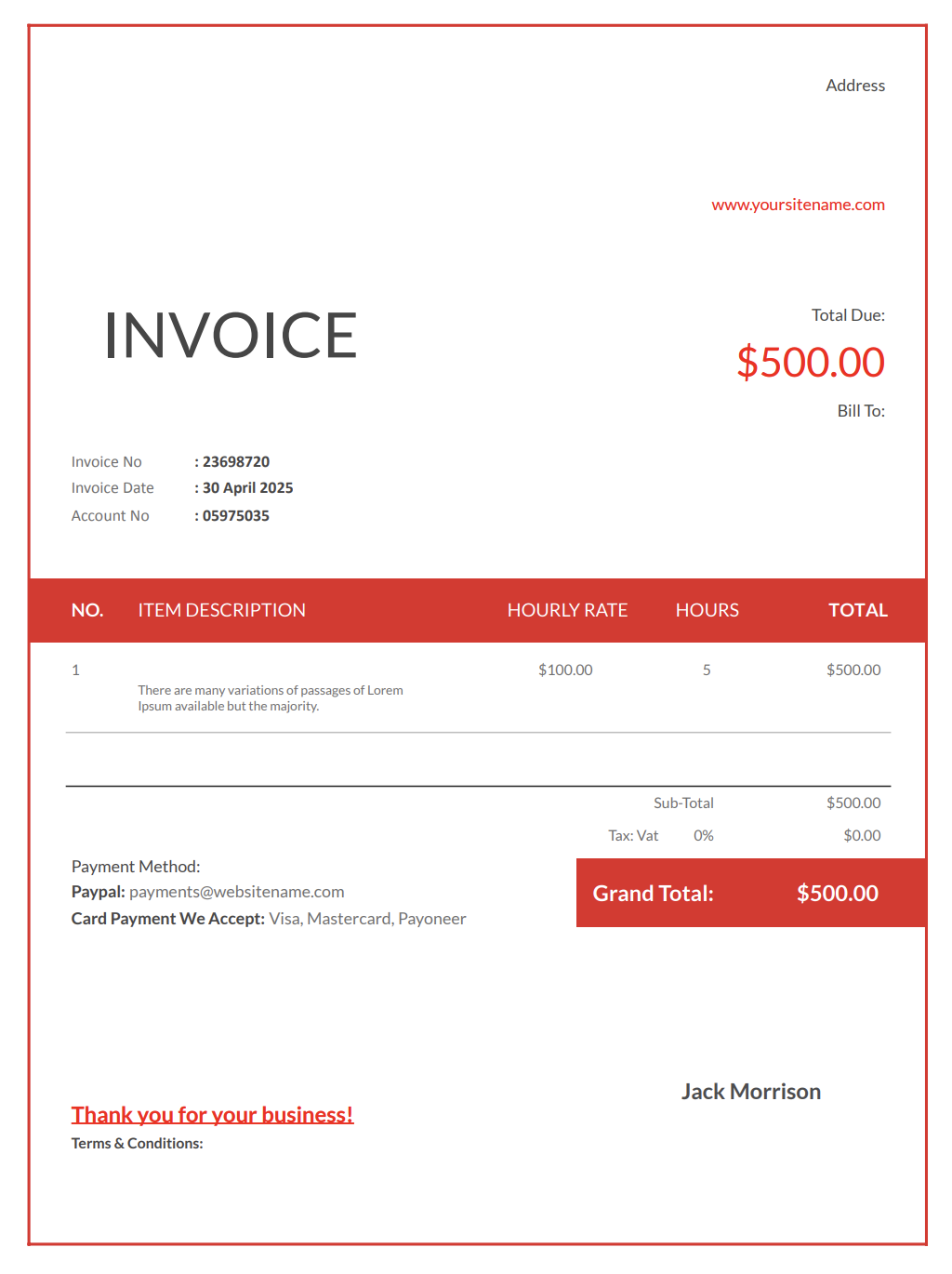
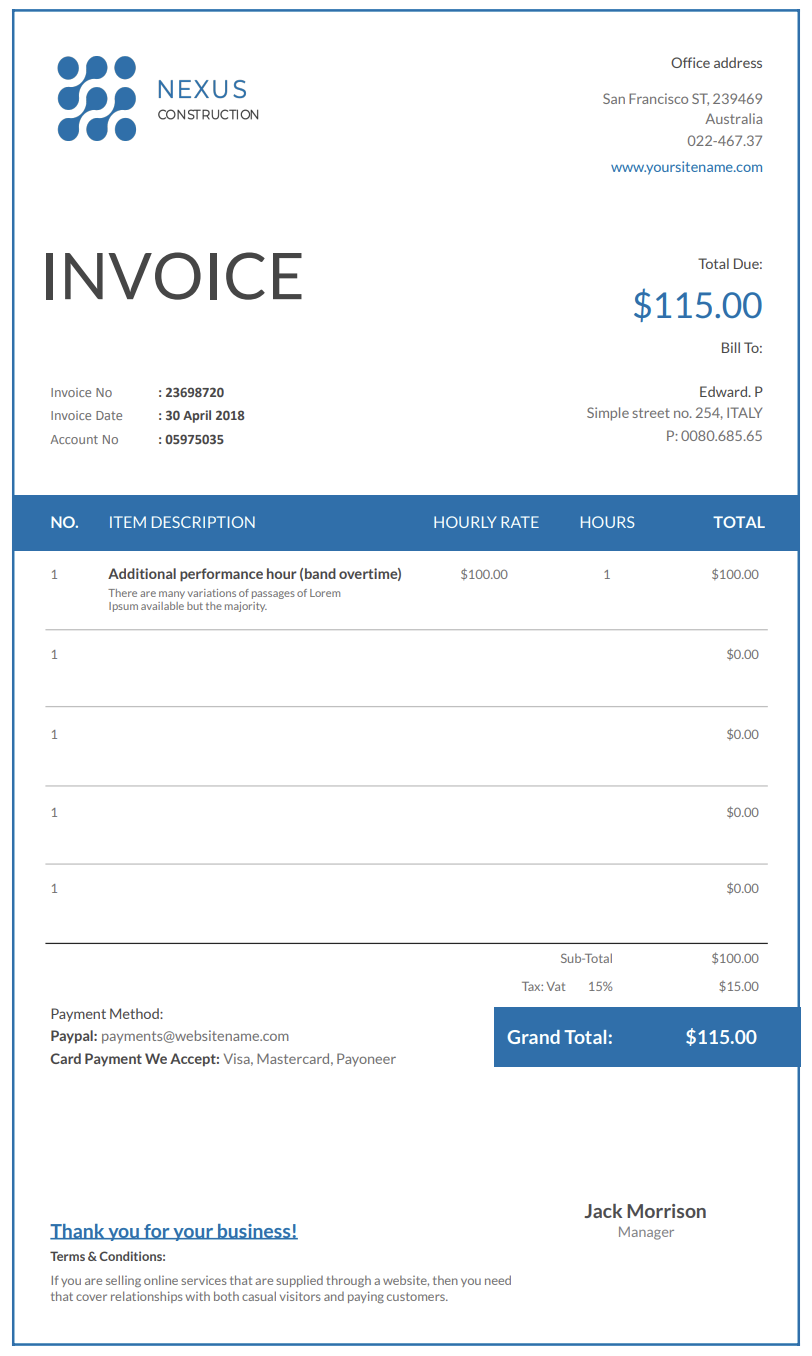
Invoice Templates for Musicians
Musicians put countless hours into rehearsals, performances, and recording sessions, but when it comes to getting paid, a clear invoice is just as important as the music itself.
A musician invoice template helps you track performance fees, rehearsal time, session work, equipment rentals, and even royalties in a professional, easy-to-understand format.
Whether you’re booking gigs at local venues, providing music lessons, composing jingles, or licensing tracks for film and TV, the right invoice makes sure clients know exactly what they’re paying for and when payment is due.
With Invoicer.ai, you can create musician invoices in minutes, either by downloading free Word or Excel invoice templates or by customizing and sending invoices online directly through our AI-powered invoicing software (which is much simpler).
Why Musicians Need Professional Invoices
For many musicians, the business side of music isn’t the most exciting part, but without professional invoices, even the best gigs can turn into payment headaches.
Here’s why musicians benefit from structured invoices:
- On-time payments: Venues, promoters, and students are more likely to pay promptly when they receive formal invoices.
- Avoiding disputes: A generic “performance fee” can create confusion. A detailed invoice might say: “2-hour wedding performance + 30-minute rehearsal.”
- Covering upfront costs: Musicians often invest in travel, equipment, and rehearsal time. Deposits ensure those expenses aren’t out of pocket.
- Contracts and proof: If a client disputes, your invoice acts as written evidence of agreed-upon fees and services.
- Professional image: A polished invoice helps promoters, students, and collaborators treat you as a professional, and not just a hobbyist.
An invoice is a business safeguard that keeps your music career sustainable.
Different Types of Musician Invoices
Musical work is diverse, so invoices need flexibility. Different situations call for different approaches:
1. Performance Invoice.
For live gigs, concerts, weddings, and events. It lists performance time, rehearsal hours, travel fees, and equipment costs if applicable.
2. Session Work Invoice.
Used when recording for another artist, producer, or studio. Tracks hourly or daily session fees and any rights to royalties.
3. Teaching/Lesson Invoice.
Perfect for music teachers or tutors. Can be billed per lesson, per block of sessions, or monthly.
4. Composition/Production Invoice.
When writing original music for media, commercials, or clients. Includes creative fee, studio time, and licensing terms.
5. Licensing Invoice.
For existing songs licensed to films, TV, ads, or streaming. Details usage rights, territories, duration, and fees.
6. Equipment Rental Invoice.
If you rent instruments, sound systems, or recording gear as part of your service, this invoice separates rental from performance costs.
7. Change Order/Extra Work Invoice.
Covers last-minute requests—like an extended setlist, extra rehearsal, or additional recording hours.
Band Invoices and Paying Additional Musicians
When multiple performers are involved, invoicing works best when the client receives one invoice from a single responsible party (often the band leader), while internal payments to other musicians are handled separately.
Best practice for client-facing invoices:
- Invoice the client under the band name or band leader name (consistent with your contract/booking agreement).
- Itemize what the client is purchasing (performance time, rehearsal, travel, equipment), not individual musician payouts.
If you hire other musicians:
- Track those costs internally as subcontracted labor (for your own records).
- Keep receipts or payment confirmations for what you pay other performers.
- If the client specifically requires it, you can include a general line such as “Additional musician fees (as agreed)” without listing personal details.
What to Include in a Musician Invoice
A good invoice balances professionalism with clarity. Here’s what every musician invoice should include:
- Your information: name or band name, address, phone, email, website/socials.
- Client information: venue, event planner, student, studio, or production company.
- Invoice number and date: for easy tracking and bookkeeping.
- Service description: e.g., “3-hour live band performance at XYZ Venue.”
- Itemized costs: performance fee, rehearsal time, travel, equipment rental, licensing, or teaching sessions.
- Payment schedule: deposits, due dates, and payment methods accepted.
- Rights/licensing terms: if music use extends beyond a single event or session.
- Taxes/fees: add VAT or sales tax if applicable.
- Notes: soundcheck times, set lengths, overtime rates, or late payment penalties.
Invoicing for Music Licensing and Usage Rights
If a client is paying to use your music beyond a single live performance or session, the invoice should clearly state the scope of usage. This is less about legal language and more about preventing misunderstandings.
Usage details to specify (when applicable):
- What is being licensed: track name(s) or project name.
- Where it can be used: online ads, social media, website, broadcast, film, streaming, in-store, etc.
- Duration: for example, 3 months, 12 months, or perpetual.
- Territory: local, national, worldwide.
- Exclusivity: non-exclusive (common) or exclusive (higher fee).
- Deliverables: file format and what is included (master, stems, alternate versions).
Simple example line
“License fee: Non-exclusive online promotional use of [Track Name], worldwide, 12 months.”
How to Show Deposits and Remaining Balance on a Musician Invoice
Deposits are common for weddings, corporate events, and higher-value bookings. The important part is presenting them clearly so the client can see what has already been paid and what is still due.
Two options:
- Separate deposit invoice + final invoice
- Send a deposit invoice to confirm the booking.
- After the event (or before, based on your policy), send a final invoice for the remaining balance.
- Single invoice that displays the deposit as a credit
- List the full service total as line items.
- Add a line item such as “Deposit received on [date]” as a negative amount.
- The invoice total will show the remaining amount due.
Recommended wording for clarity:
- “Deposit received on [date] (applied to total).”
- “Remaining balance due by [due date]
Tips to Get Paid Quickly as a Musician
Late or missing payments can be devastating when music is your livelihood. Here’s how to keep cash flow smooth:
Use Contracts or Written Estimates.
Always confirm performance fees or teaching rates in writing before sending an invoice. This prevents surprises.
Ask for Deposits.
For gigs, it’s common to request 25–50% upfront. This secures your booking and covers travel or rehearsal expenses.
Invoice Immediately.
Don’t wait weeks after a show. Send invoices within 24–48 hours to keep payment top of mind.
Offer Multiple Payment Methods.
Venues may prefer bank transfers, while students may prefer PayPal or card payments. Flexibility helps you get paid faster.
Send Professional Reminders.
A polite follow-up email or message can resolve late payments without conflict.
Keep Records Organized.
Store contracts, invoices, and receipts together, especially for tax reporting and royalty tracking.
Maintain Professional Presentation.
Branded, well-designed invoices build credibility and reduce client hesitation.
Simple Tweaks to Make Your Musician Invoice Stand Out
Your invoice doesn’t just request payment. It represents your brand as a musician. Small changes make a big difference:
- Add Band or Personal Branding. Include your logo, band name, or stage name to reinforce identity.
- Use a Clear Layout. Break fees into categories, like performance, travel, rehearsal, and equipment, so clients know exactly what they’re paying for.
- Highlight Terms. Make deposit requirements, due dates, and late fee policies obvious.
- Reference the Gig. Include event names, dates, or venues. Example: “Invoice for Jazz Quartet at Grand Ballroom, Sept 14, 2025.”
- Offer Quick-Pay Options. QR codes or payment links make settling the bill easy for venues and clients.
- Keep It Clean and Professional. While creative invoices can be stylish, prioritize clarity and readability.
When and How to Send Musician Invoices
Payment timing often depends on the type of music work:
- For small gigs: invoice right after the performance.
- For weddings/events: request a deposit to confirm booking, then invoice the remainder after the event.
- For studio sessions: invoice at the end of each session or at agreed milestones.
- For music lessons: invoice weekly or monthly for recurring students.
- For licensing/compositions: invoice once the agreement is signed.
- For extra requests: invoice immediately after approval of added work.
Digital invoicing makes this process smoother. With Invoicer.ai, you can send invoices by email, track when clients open them, and set up automated reminders for overdue payments.
Invoicing for Recurring Music Work (Residencies, Weekly Gigs, Ongoing Lessons)
If you perform or teach on a recurring schedule, a one-off invoice format quickly becomes inefficient. A recurring approach makes it easier for clients to approve and pay on time, and it gives you cleaner records for bookkeeping.
Common recurring billing structures:
- Monthly invoice (most common): Bill all sessions or performances completed in a calendar month with one invoice and a clear due date.
- Per date, bundled weekly: Useful for venues that settle weekly and want a short list of dates rather than a full month.
- Package-based billing (lessons): Invoice for a set number of lessons (for example, 4 or 8 sessions) and track remaining sessions in the notes.
What to include for recurring work:
- A set billing period (example: “Services provided: February 1–29, 2026”).
- A line-by-line list of dates, times, and locations (or a simple table-style list).
- The agreed rate (per performance/per hour/per lesson) and any add-ons (travel, overtime, materials).
- Optional but helpful: “Next scheduled dates” in the notes for alignment.
This format reduces back-and-forth, especially with venues and organizations that need internal approval before paying.
Why Choose Invoicer.ai Over Word, Excel, or QuickBooks
Musicians often start with Word or Excel templates, but those can be messy due to manual edits, formatting problems, and lost files.
QuickBooks is another option, but it’s built for accountants and larger businesses, often too expensive and overwhelming for freelancers or small groups.
Invoicer.ai offers a practical alternative designed for creatives:
- Pre-built musician invoice templates in Word, Excel, and PDF.
- Simple online invoice creation—no spreadsheets required.
- Create with AI or manually, the choice is yours.
- Instant creation of invoices from estimates.
- Saved templates for repeat venues, clients, or students.
- Sleek, professional formatting that clients understand.
- Email delivery with payment tracking.
- Automatic reminders to reduce late payments.
- Create recurring invoices. Availible on Advanced plan.
With Invoicer.ai, musicians can focus on rehearsals and performances instead of chasing unpaid bills.
Get Paid the Easy Way
A musician invoice template brings professionalism and clarity to your work. Instead of chasing payments, you’ll have a structured process that keeps gigs profitable and relationships professional.
Once the invoice is ready, you can schedule it to send when it makes the most sense for the job or your billing routine.
Focus on your craft while Invoicer.ai handles the paperwork. Try Invoicer.ai free for 14 days now.