Property managers juggle many moving parts at once. From coordinating repairs and handling tenant questions to tracking vendors and managing ongoing responsibilities, the work is continuous and rarely predictable.
Tasks don’t arrive neatly packaged, and priorities can change quickly depending on what’s happening at the property.
A property manager invoice template helps bring order to that workload. Rather than tying billing to a single outcome, it allows you to show how management fees and additional services are calculated over a set period, making charges easier for property owners to review and approve.
With Invoicer.ai, you can create property management invoices in minutes, either by downloading free Word or Excel invoice templates or by customizing and sending invoices online directly through the software (which is much simpler). Once the invoice is ready, you can schedule it to send when it makes the most sense for the job or your billing routine.
Property management involves ongoing oversight and coordination rather than one-time tasks. Day-to-day responsibilities like maintenance coordination, tenant communication, and vendor management create a steady flow of work.
Having professional invoices helps organize that work and present it in a way that property owners can easily follow.
Properties rarely stay static. New maintenance requests come up, vendors change, emergencies happen, and additional services get added. An invoice helps separate standard management duties from extra work without friction.
Even small issues often require multiple steps: communication, scheduling, oversight, and confirmation. When invoices don’t reflect that coordination, the effort involved can be underestimated.
Urgent repairs, tenant turnover, inspections, or compliance tasks can increase workload quickly. If billing is vague, this added effort may go unnoticed or questioned later.
Property management is a professional service built on oversight, accountability, and consistency. A structured invoice reinforces that you’re providing active management and expertise, not just collecting rent.
Used for ongoing management services. Covers routine oversight, tenant communication, coordination with vendors, and administrative work during the billing period.
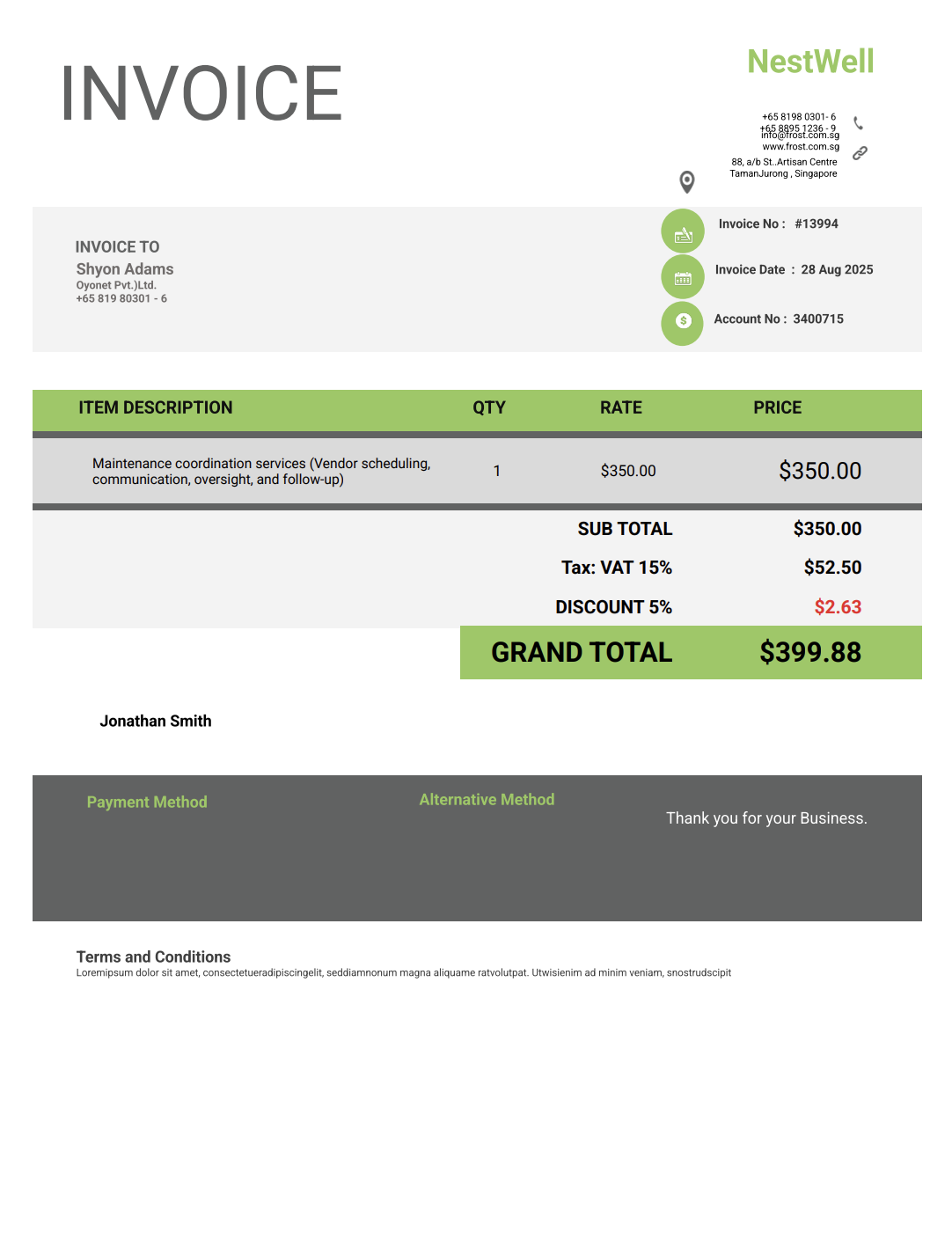
Used when billing for arranging and supervising repairs, inspections, or preventative maintenance, including follow-ups with contractors.
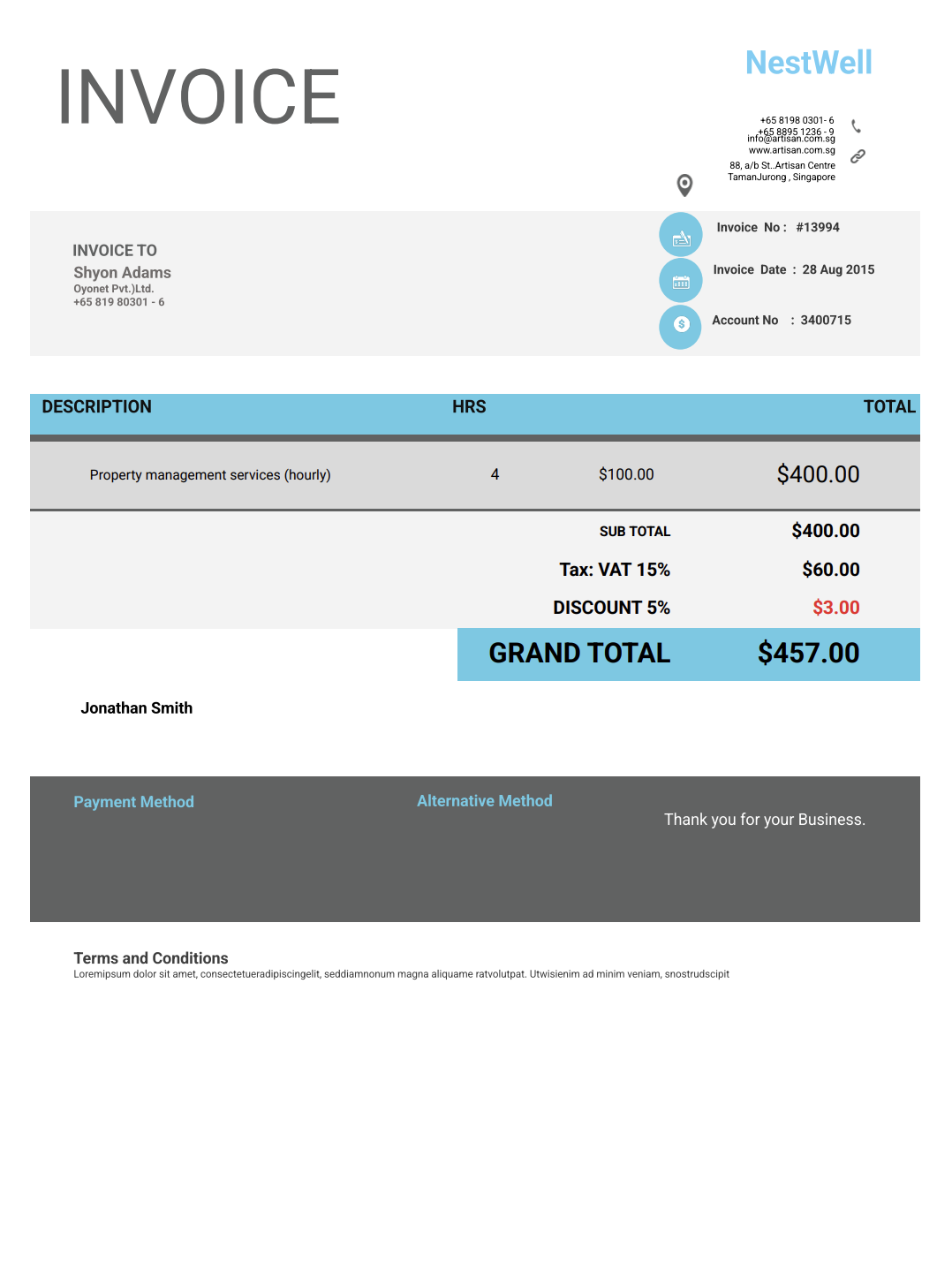
Applies to work billed by time, such as consultations, short-term management support, or tasks outside a standard agreement.
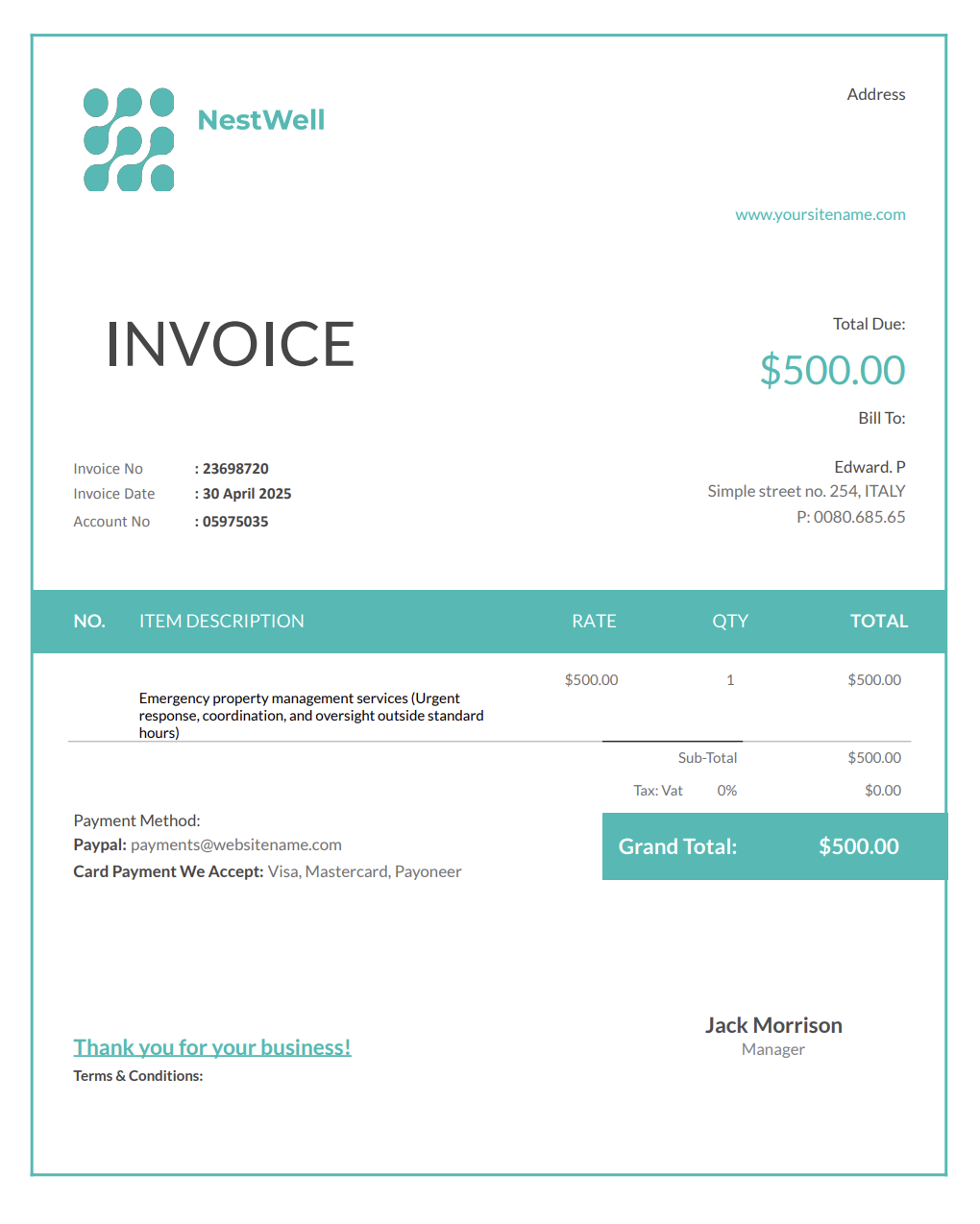
Used for urgent issues like emergency repairs or unexpected tenant situations that require immediate attention.
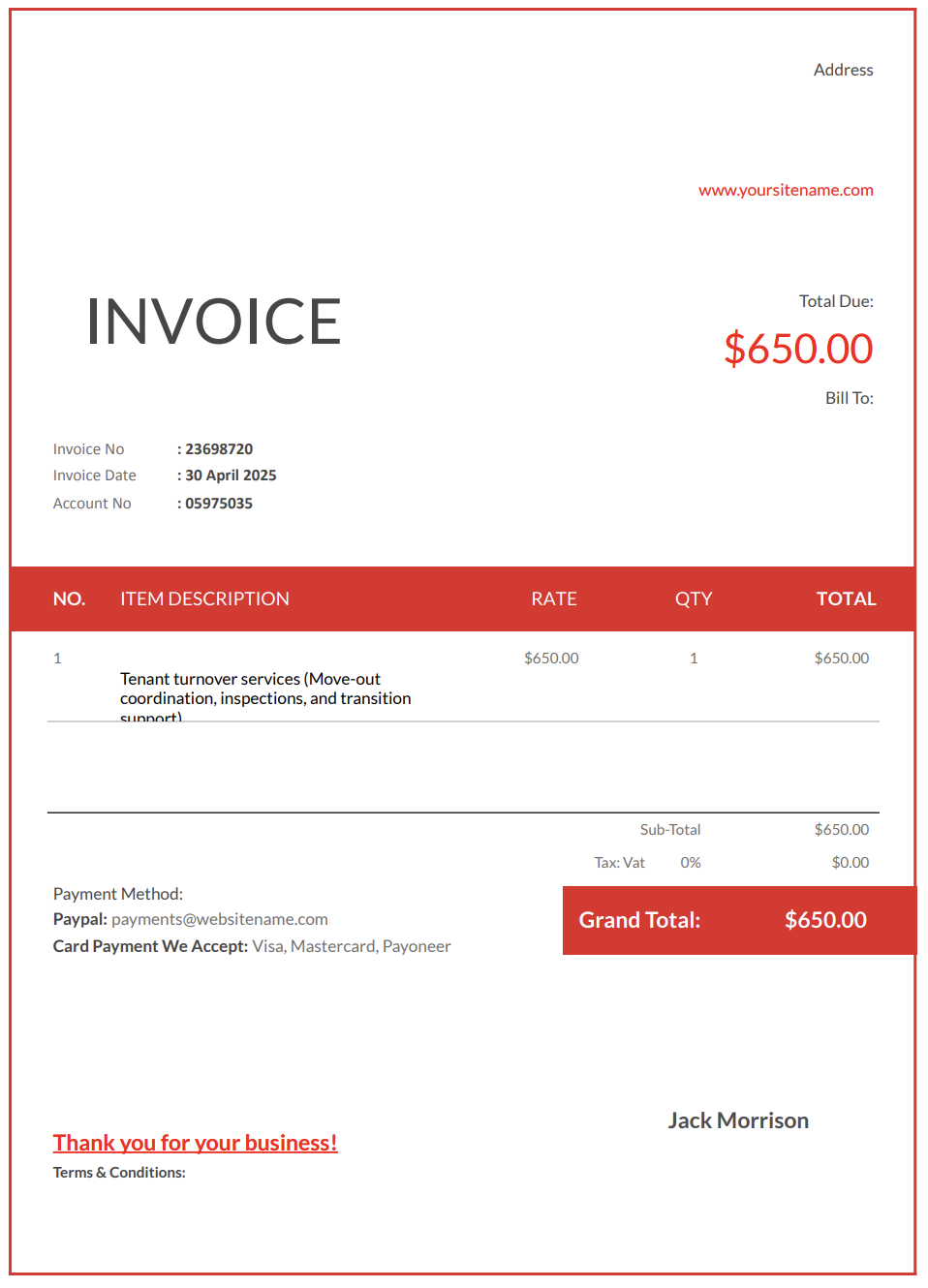
Covers services related to move-ins or move-outs, such as inspections, coordination of cleaning or repairs, and administrative processing.
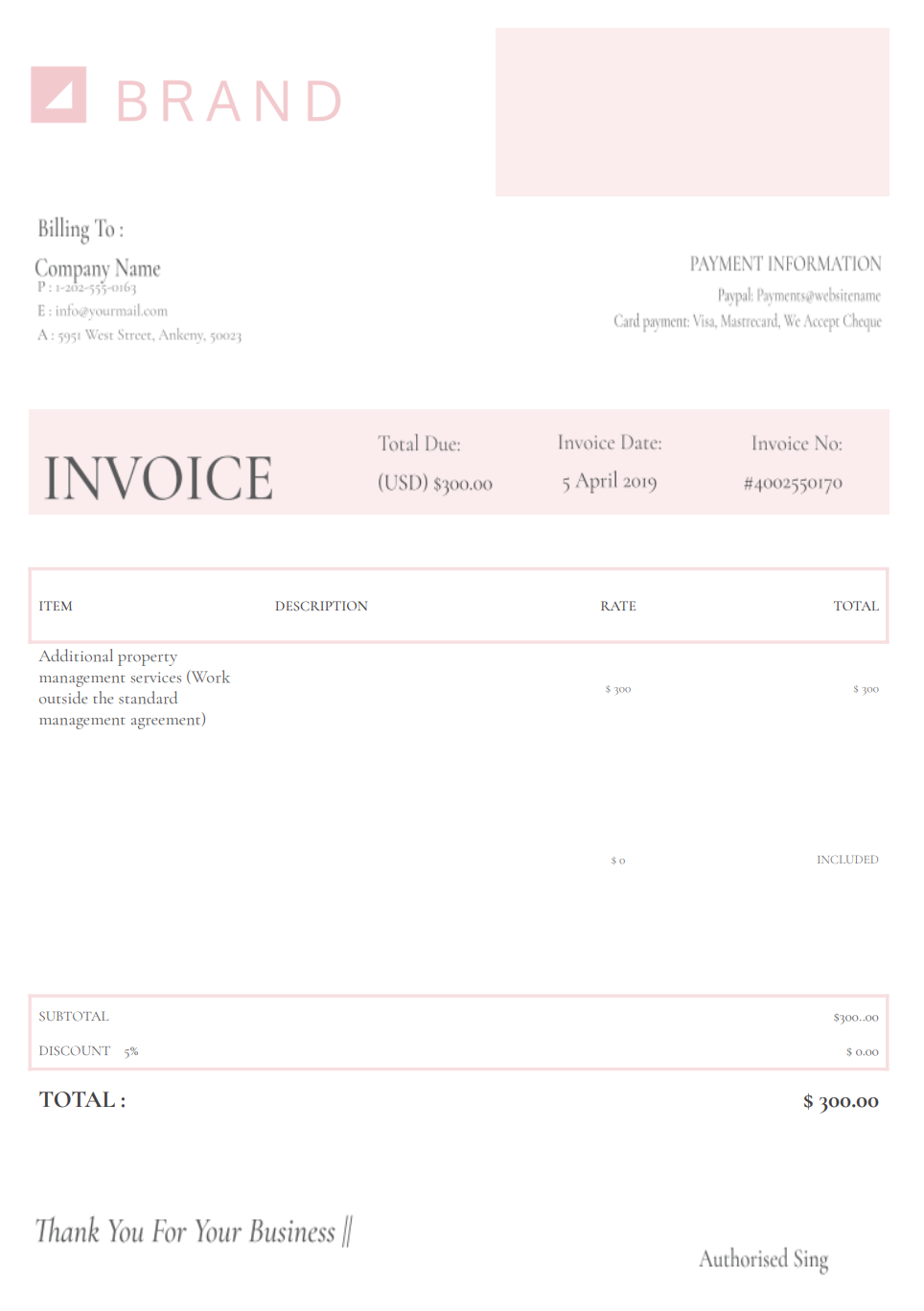
Used for work outside the original scope, such as extra inspections, special reporting, or project-specific coordination.
Used for upfront payments, deposits, or same-day charges where payment is collected immediately.
A good property management invoice should explain what was handled during the billing period without overwhelming the property owner. The goal is to make charges easy to review and understand.
Include your business name, your name, email address, phone number, and branding, so owners know exactly who the invoice is from.
List the owner’s name, company name if applicable, and a reference to the property or unit being managed.
Briefly describe what the invoice covers, such as:
Outline the main activities performed, for example:
Note the dates the services apply to, especially for ongoing management agreements.
Specify whether charges are based on a flat management fee, hourly rates, or per-service pricing.
Call out any work outside the standard agreement, such as emergency responses, extra inspections, or special projects.
Show the subtotal and final amount in a way that’s easy to review.
Include the due date, accepted payment methods, and any late payment policies.
Use this space for brief updates, reminders, or information related to upcoming property needs.
Late payments usually come down to misaligned expectations, not unwillingness to pay. A few practical invoicing habits can help keep payments on schedule.
Spell out what’s included in your management fee and what isn’t. When invoice descriptions match the agreement, there’s less room for questions or delays.
For larger projects or special services, splitting billing into phases helps reduce risk and keeps cash flow steady.
Invoices without a deadline tend to get pushed aside. A stated payment date sets expectations and makes follow-ups easier.
If work falls outside the original agreement, list it separately. This makes extra charges easier to understand and approve.
Online invoices are easier to open, easier to pay, and faster to process.
Property management involves a mix of routine responsibilities and unexpected tasks, so timing your invoices matters. Sending them consistently and at appropriate points in the workflow helps prevent billing issues and keeps payments moving without follow-ups.
Issue the invoice once the task is completed, such as for inspections, special coordination work, or standalone projects.
Invoice on a set schedule, usually monthly. Predictable billing makes it easier for owners to review and process payments on time.
Send the invoice shortly after the issue has been handled. Quick billing helps link the charge to the situation that required immediate action.
Invoice after major steps are completed rather than waiting until everything is finished.
Digital invoices make these steps easier, and Invoicer.ai also shows when clients have viewed the invoice, which is helpful for keeping communication open.
A property management invoice doesn’t have to look impressive to do its job well. What really matters is that owners can quickly see what was done and what they’re being charged for.
Using the same format every month helps owners recognize the invoice right away and know where to look for the details.
Avoid broad labels. Short, specific descriptions make it easier to understand how time and effort were spent.
Noting things like contractor coordination, inspections, or follow-ups shows involvement without turning the invoice into a report.
Invoicer.ai offers built-in payment features, making it easier for clients to settle invoices without delays.
A brief overview of the month or project helps owners connect individual line items to the bigger picture.
Word and Excel require manual formatting and updates. Large accounting platforms often include features property managers don’t need. Invoicer.ai focuses on clarity and speed.
With Invoicer.ai you get:
You can also create invoices for property management services using our AI Invoice Generator. Just write a simple prompt and it builds the invoice for you, giving you an even faster way to get accurate, professional results.
You can stick with templates if that's your style, let AI take care of the setup when you want something quick, or always create invoices manually for a hands on approach.
Property management already involves a lot to keep track of. Invoicing shouldn’t add to that. A property management invoice template helps keep billing simple and easy to follow, so owners understand the charges without extra questions.
Create your property management invoice today and take one more thing off your plate.