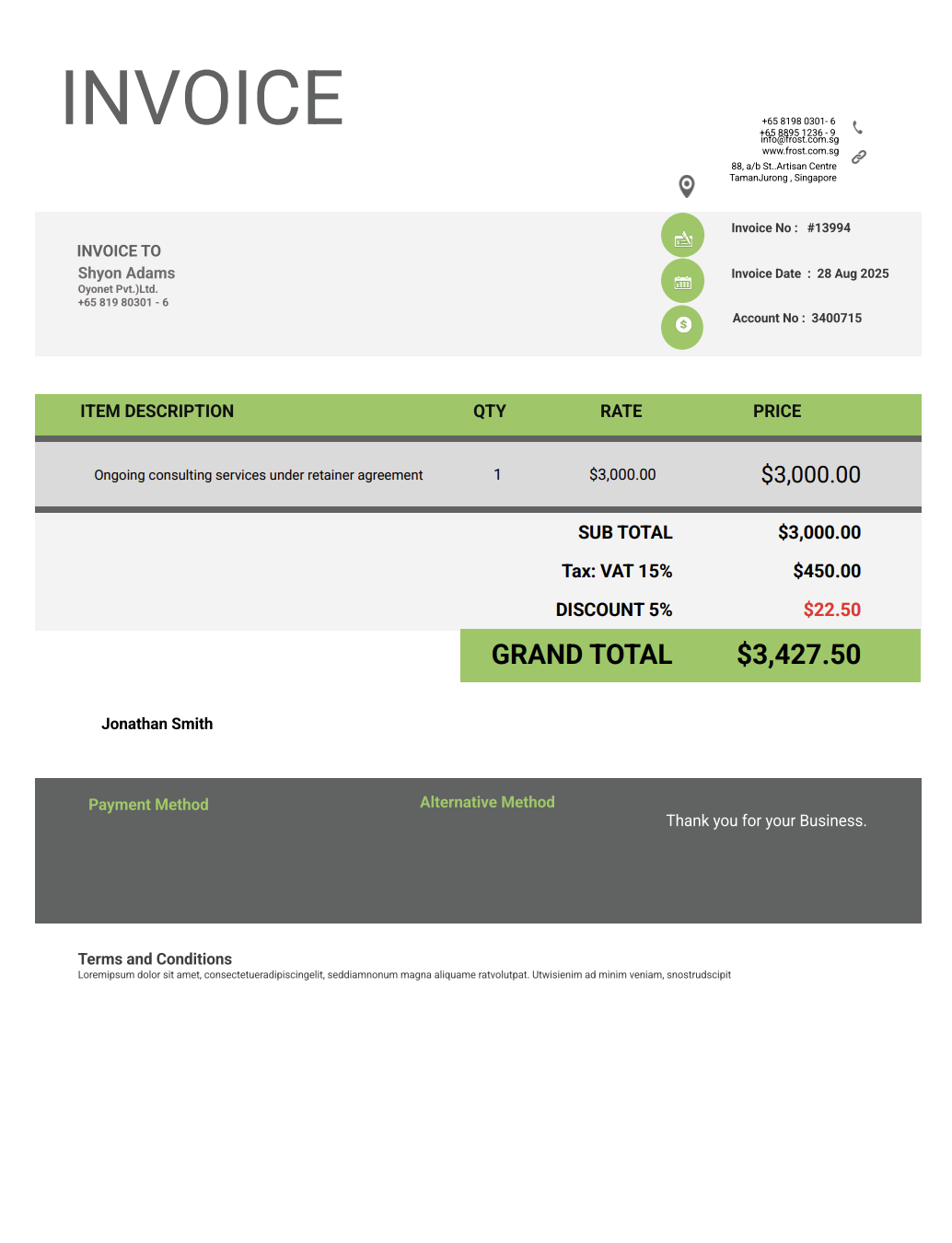
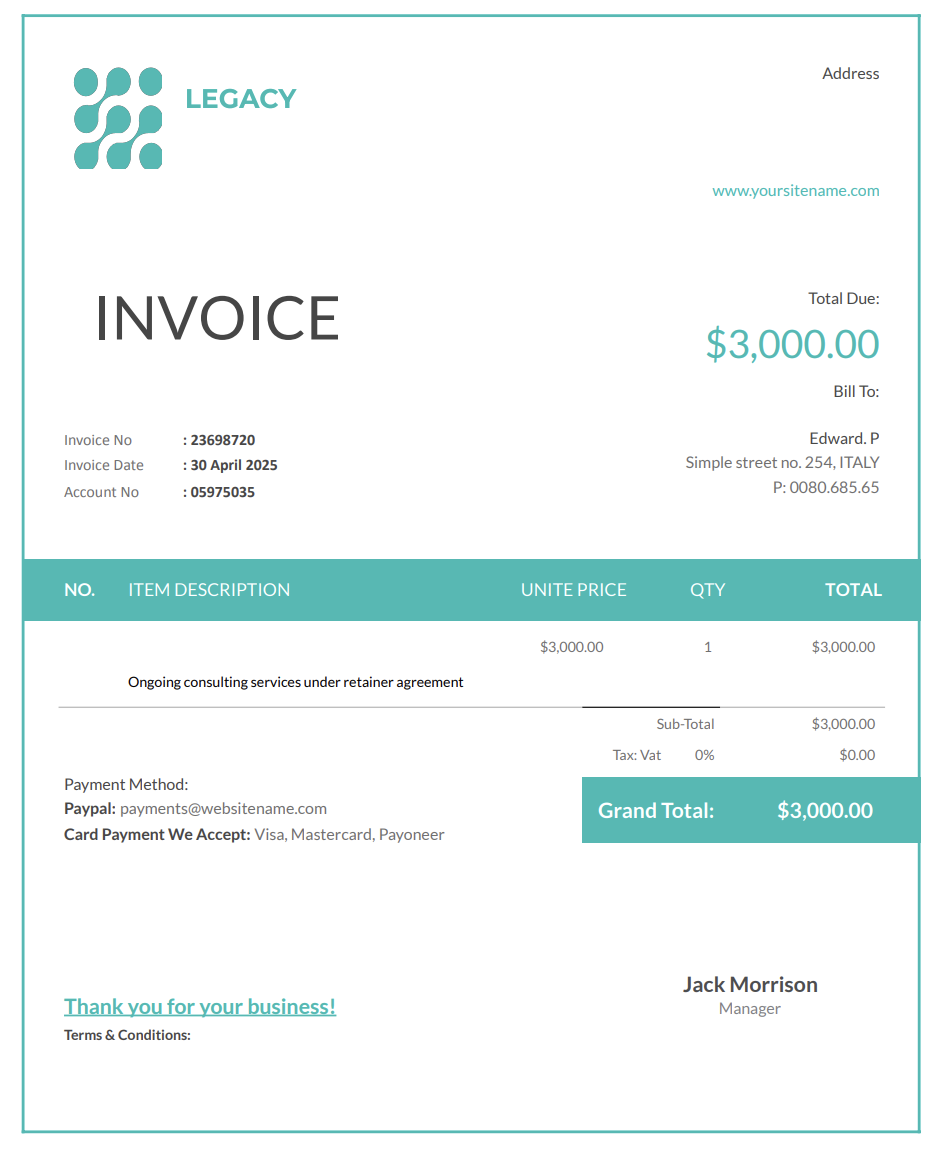
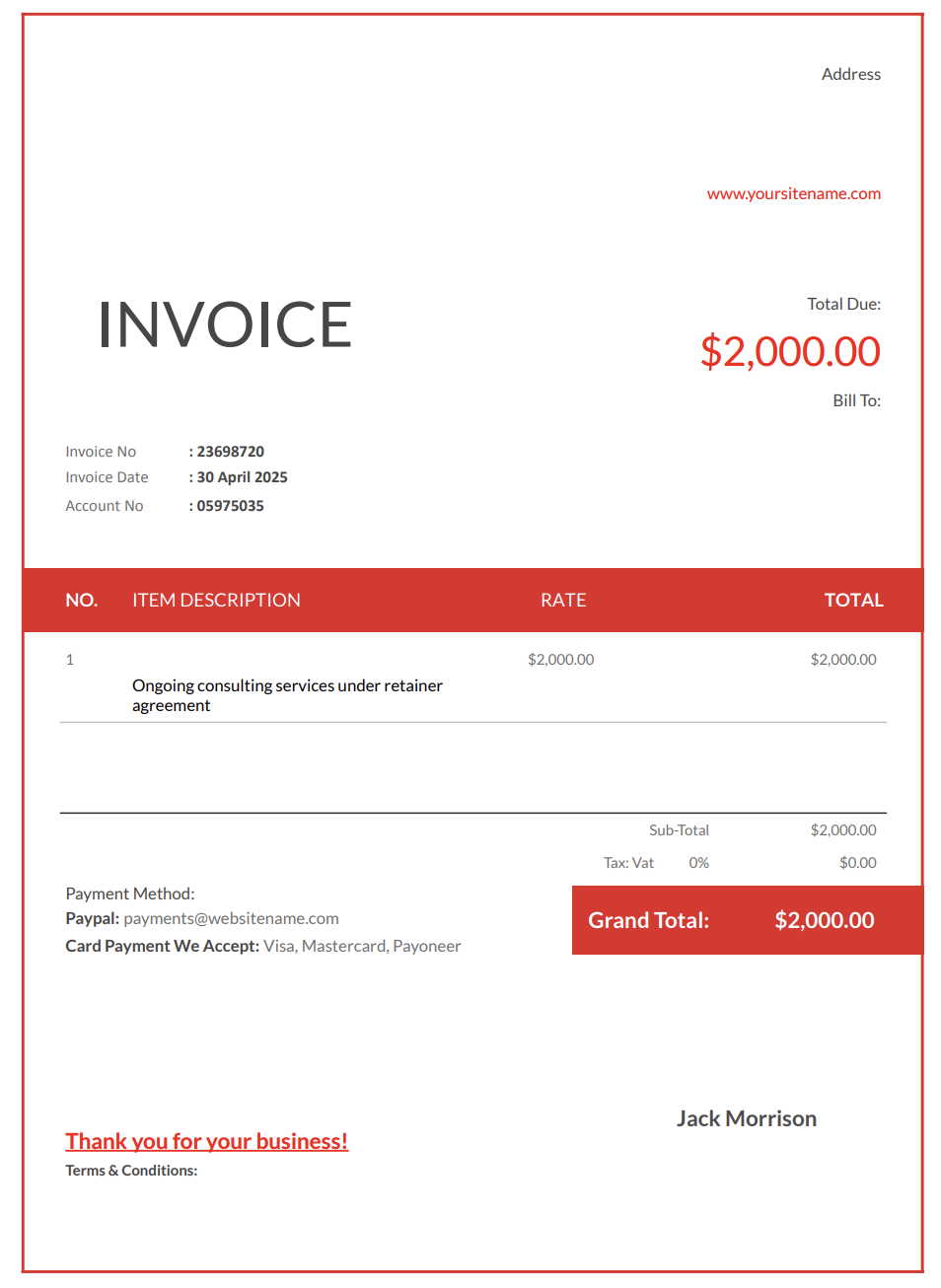
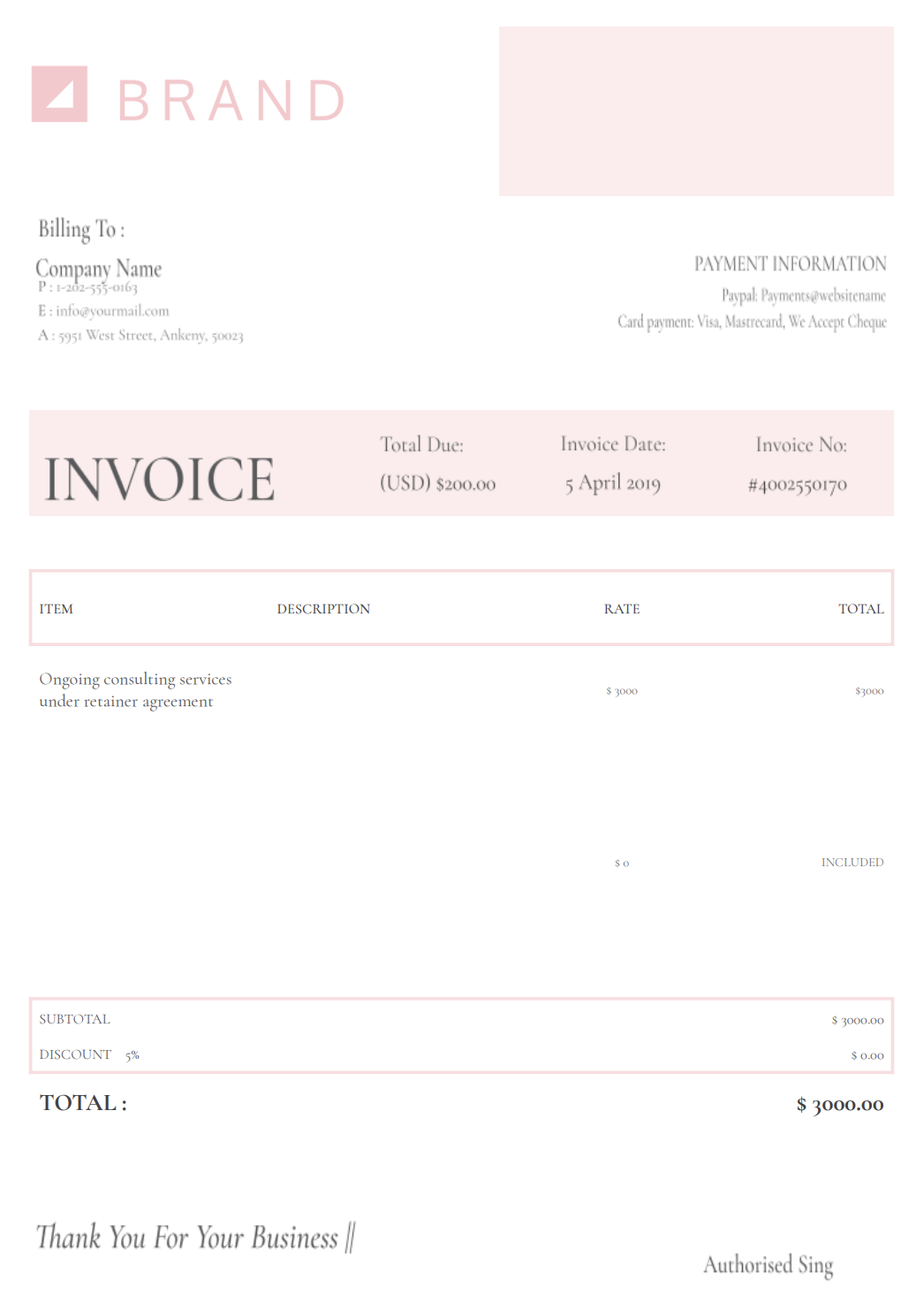
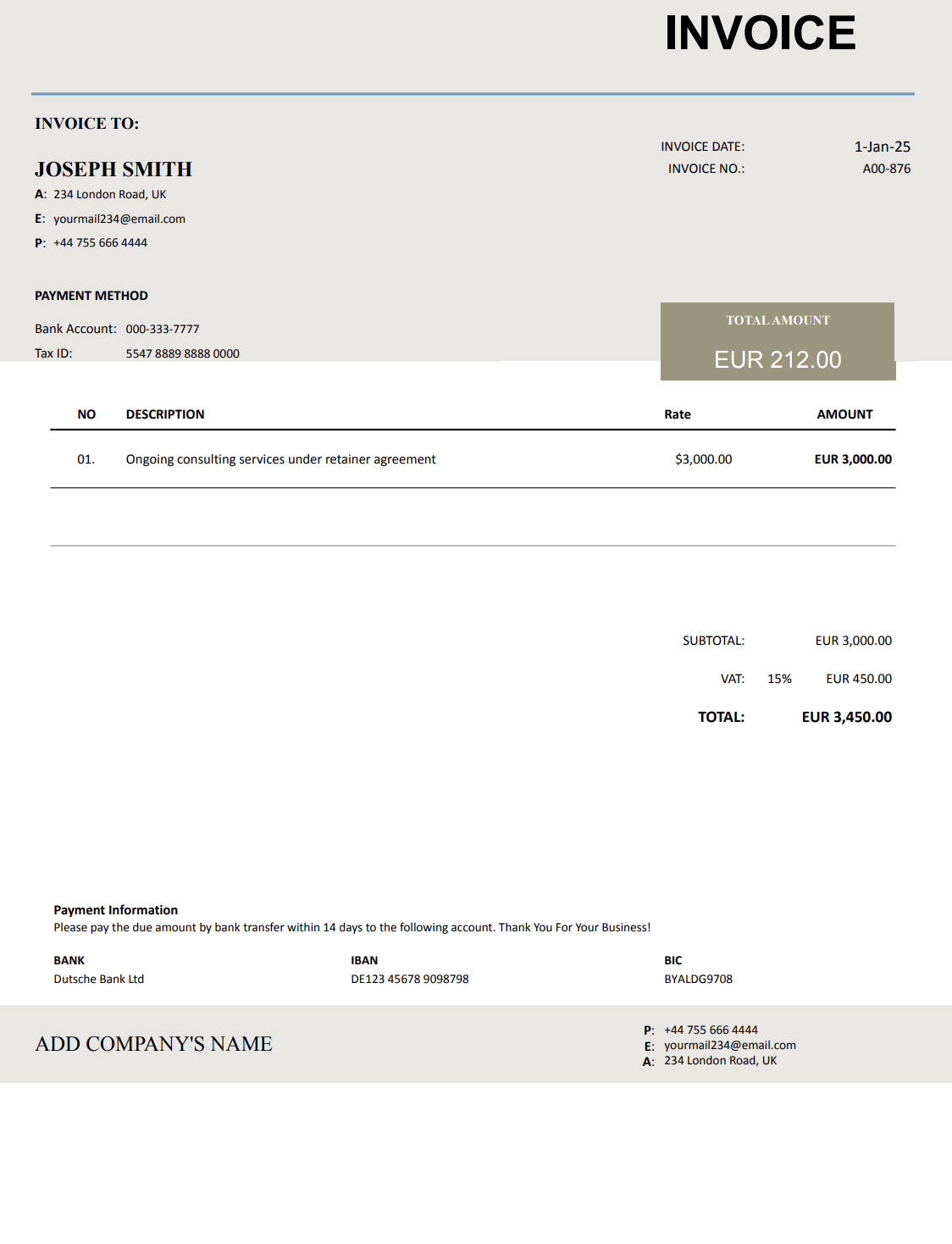
Operating as an LLC means your business is expected to present itself as a formal legal entity, even if the company is small or owner-managed. Clients, partners, and accounting teams rely on clear invoices that reflect that structure.
Professional invoicing helps keep that expectation consistent. A well-done invoice template gives your LLC a reliable billing framework. It shows who is billing, what was provided, how the totals were calculated, and when the payment is due.
That clarity reduces questions, shortens approval time, and supports clean financial records as your business grows.
With Invoicer.ai, LLCs can create professional invoices in minutes. You can download free Word or Excel invoice templates, or customize and send invoices online through the platform for a faster, more organized workflow. Once the invoice is ready, you can schedule it to send when it makes the most sense for the job or your billing routine.
Payment delays often happen because invoices are confusing, incomplete, or inconsistent. For LLCs, professional invoices help avoid those issues.
Invoices that are easy to read and logically structured are easier to approve. When information is missing or unclear, invoices often stall while questions are raised.
Many LLCs bill for a mix of services, products, recurring work, or projects. A professional invoice template allows you to switch between billing scenarios without rebuilding invoices each time.
It’s common for projects to expand after they begin. Additional tasks, extended timelines, or new requests are easier to justify when invoices clearly separate the original scope from the added work.
Using the same invoice structure makes income tracking, reporting, and tax preparation more straightforward, especially for LLCs working with accountants or bookkeepers.
Different types of work call for different invoice formats, and many LLCs use more than one depending on the job.
Used for consulting, professional services, maintenance, repairs, or ongoing work.
Designed for selling physical or digital products, with clear quantities, unit pricing, and optional shipping details.
Best for flexible work where time spent varies, such as advisory services, troubleshooting, or short-term support.
Used when scope and deliverables are defined in advance, such as website builds, marketing projects, or renovation phases.
Common for ongoing relationships where clients pay a fixed recurring fee for continued services or availability.
Used to collect an upfront payment before work begins, helping reduce risk and support cash flow.
Ideal for subscriptions, memberships, and services billed on a regular schedule.
A professional invoice answers common questions without requiring follow-up.
Sales tax requirements vary by state and by what an LLC sells. If tax applies, list it on your invoice and show both the taxable subtotal and tax rate.
Optional space for brief updates, reminders, or next steps.
Late payments are often caused by unclear or misaligned expectations. Small invoicing adjustments can make a huge difference.
If the due date is hard to find, it’s easier to ignore. Display it clearly near the invoice total.
Vague labels slow approvals. Clear descriptions help clients quickly recognize what they are being billed for.
Listing extra services separately makes changes in total cost easier to understand and approve.
Send invoices soon after work is completed or on a consistent schedule.
Online invoices are easier to review, pay, and track.
Send the invoice immediately after completion or at the agreed milestone.
Invoice by phase or milestone to align payment with progress.
Invoice on the same day each month for consistency.
Automated recurring invoices reduce manual work and missed payments.
Professional invoices for LLCs don’t need a complex design. Consistency and transparency matter more.
Keep the same logo, layout, and formatting across invoices.
Short, direct descriptions are easier to review and approve.
A short billing summary helps clients understand the invoice quickly.
Subtotal, tax, and total due should be easy to find at a glance.
Invoicer.ai works better than traditional invoice templates for LLCs by keeping billing organized without adding unnecessary complexity. Invoice layouts can be saved and reused across billing periods, reducing repetitive setup and formatting.
Automatic calculations replace manual edits, helping prevent errors and keep totals accurate. Invoices can be created manually or adjusted using the AI-powered editor, while invoice view tracking removes uncertainty around client follow-ups.
With clients, invoices, estimates, expenses, and items managed in one place, LLC billing stays consistent, accurate, and easier to manage over time.
Running an LLC already involves enough administrative responsibility, and invoicing should support that work, not slow it down.
Create your professional LLC invoice today and make billing one of the most predictable parts of your workflow.
Start your free 14-day trial today!
Retainer work is what gives consulting breathing room. One client, an ongoing relationship, with a predictable income.
You’re not constantly pitching the next project or renegotiating scope every few weeks. The invoicing should feel just as stable.
When retainer invoices are created well, approvals happen quickly. Payments don’t stall, and finance teams don’t ask follow-up questions. The invoice quietly does its job and gets out of the way.
Below, we will discuss how retainer invoicing works for consultants and how to structure invoices so they make sense to clients, accounting teams, and auditors, without overexplaining or introducing friction.
With Invoicer.ai, you can create retainer consultant invoices in minutes, either by downloading free Word or Excel invoice templates or by customizing and sending invoices online directly through the software (which is much simpler).
A consultant retainer invoice bills a client a fixed, recurring amount for ongoing access to your services over a defined time period, most often monthly.
Instead of charging for each call, document, or decision, the client pays for availability, continuity, and expertise. The invoice reflects the agreement, not the individual activity.
This billing model is common for:
The defining feature of a retainer is predictability. Everyone knows the amount and the general scope of the relationship. There are no surprises, and the invoice simply documents that understanding.
Retainer clients are not paying for deliverables in the traditional sense. Instead, they are paying for sustained access to your judgment and support over time.
When retainer invoices are written like project invoices, confusion follows. Clients see the same amount appear month after month and start questioning what it represents.
Accounting teams hesitate because the invoice does not explain why there is no task list or milestone attached. Payments slow down, not because anyone is unhappy, but because the invoice does not match how the work is delivered.
A proper retainer invoice makes one thing clear immediately: This charge covers ongoing consulting services for a defined billing period.
A strong retainer invoice should stand on its own. Someone unfamiliar with the engagement should be able to understand it without additional explanation.
Use consistent legal names, addresses, and business identifiers every billing cycle. Matching what appears in the client’s accounting system reduces rejections and delays.
Every invoice must have a unique invoice number. More importantly, the billing period should be clearly stated. This answers most internal finance questions before they are asked and helps reconcile recurring charges.
You should also keep the description accurate and concise. Your consultant retainer invoice should state that the fee covers ongoing consulting services or availability during the billing period. Avoid listing tasks, meetings, or emails unless your agreement explicitly requires it.
Always include the fixed retainer amount. If the retainer is tied to a general scope, access window, or expected level of involvement, a brief note can help set that context. Even when the fee never changes, clarity reduces hesitation.
If tax applies, show it in your invoice as well. If it does not, state that explicitly. The total amount due should be immediately visible.
Consistent and transparent payment terms make retainer billing routine. Due dates, accepted payment methods, and currency should remain stable from month to month.
Using structured invoice tools like Invoicer.ai helps consultants keep retainer invoices consistent and professional, especially when billing the same client over long periods or across multiple engagements.
Project invoices document completion, while retainer invoices document ongoing work.
With project billing, the focus is on what was delivered. With retainer billing, the focus is on the time period covered and the ongoing nature of the relationship.
That difference usually means:
Invoicing a retainer as if it were a project can raise unnecessary questions. A straightforward retainer invoice reassures clients that things are moving along as expected.
Independent consultants typically benefit from simple retainer invoices. Most clients only need to confirm:
Consulting firms often require more structure. Larger organizations may need purchase order numbers, contract references, tax details, cost centers, or internal codes to align invoices with their accounting workflows.
In both cases, the goal is the same: make the invoice easy to approve without explanation.
Good retainer invoicing does more than save time. It protects the working relationship.
Consistent retainer invoices result in:
Most retainer payment delays come from these avoidable issues:
Invoicer.ai works better than traditional invoice templates for retainer consulting services because it keeps the billing organized without adding complexity.
Consultants can save invoice structures, reuse them across billing periods, and rely on automatic calculations instead of manual edits. Consultant invoices can be created manually or refined using the in-line AI-powered editor, while invoice view tracking removes uncertainty around client follow-ups.
With clients, invoices, estimates, expenses, and items managed in one place, retainer billing stays consistent, accurate, and easier to manage over time.
Retainer consulting invoices exist to confirm an ongoing agreement. A well-structured retainer invoice states the billing period, the consulting retainer covered, and the agreed fee in a way that’s easy to recognize and approve.
When these invoices follow the same format each cycle, finance teams process them without hesitation, records stay consistent, and billing remains a quiet, predictable part of the working relationship instead of a distraction.