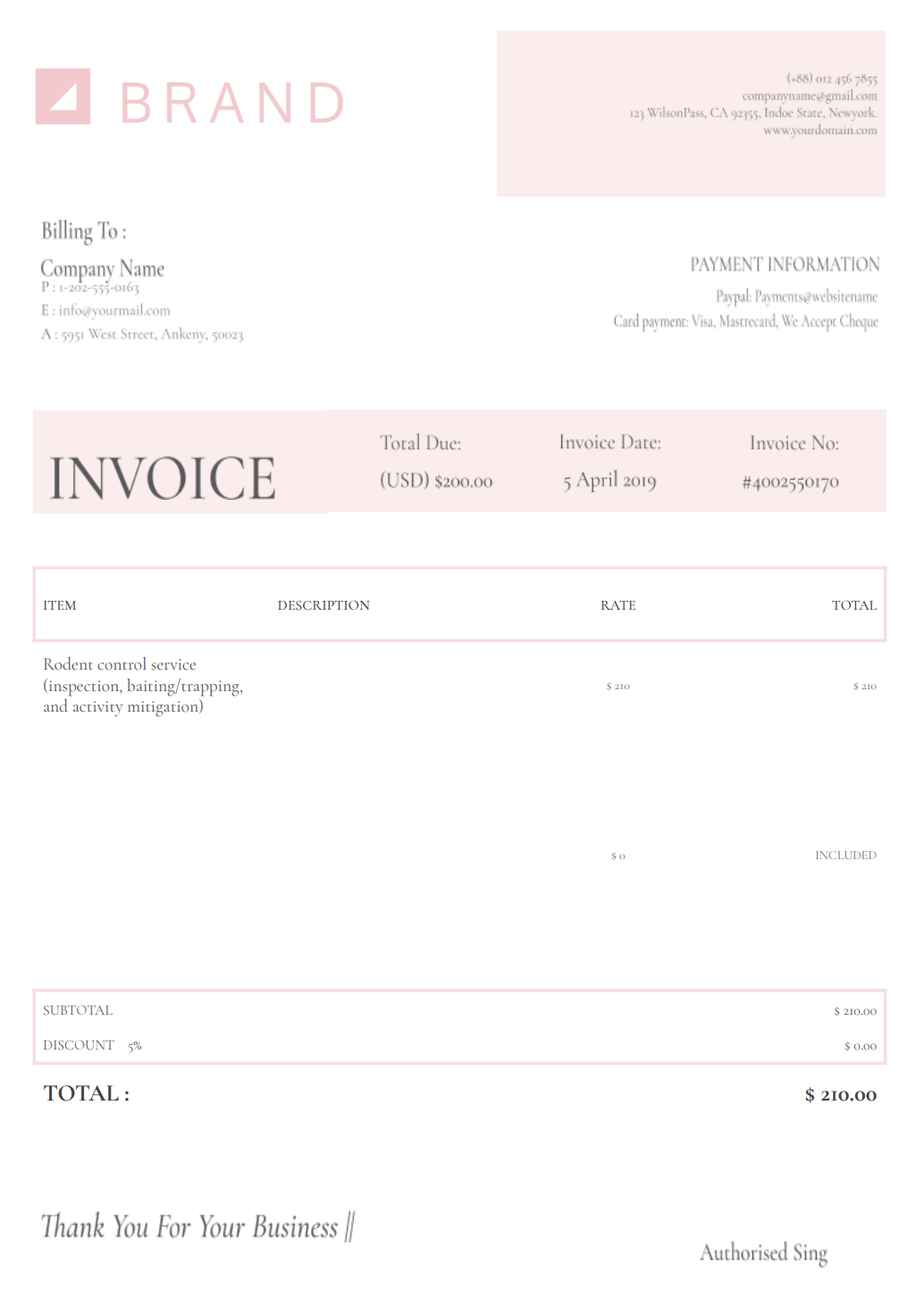
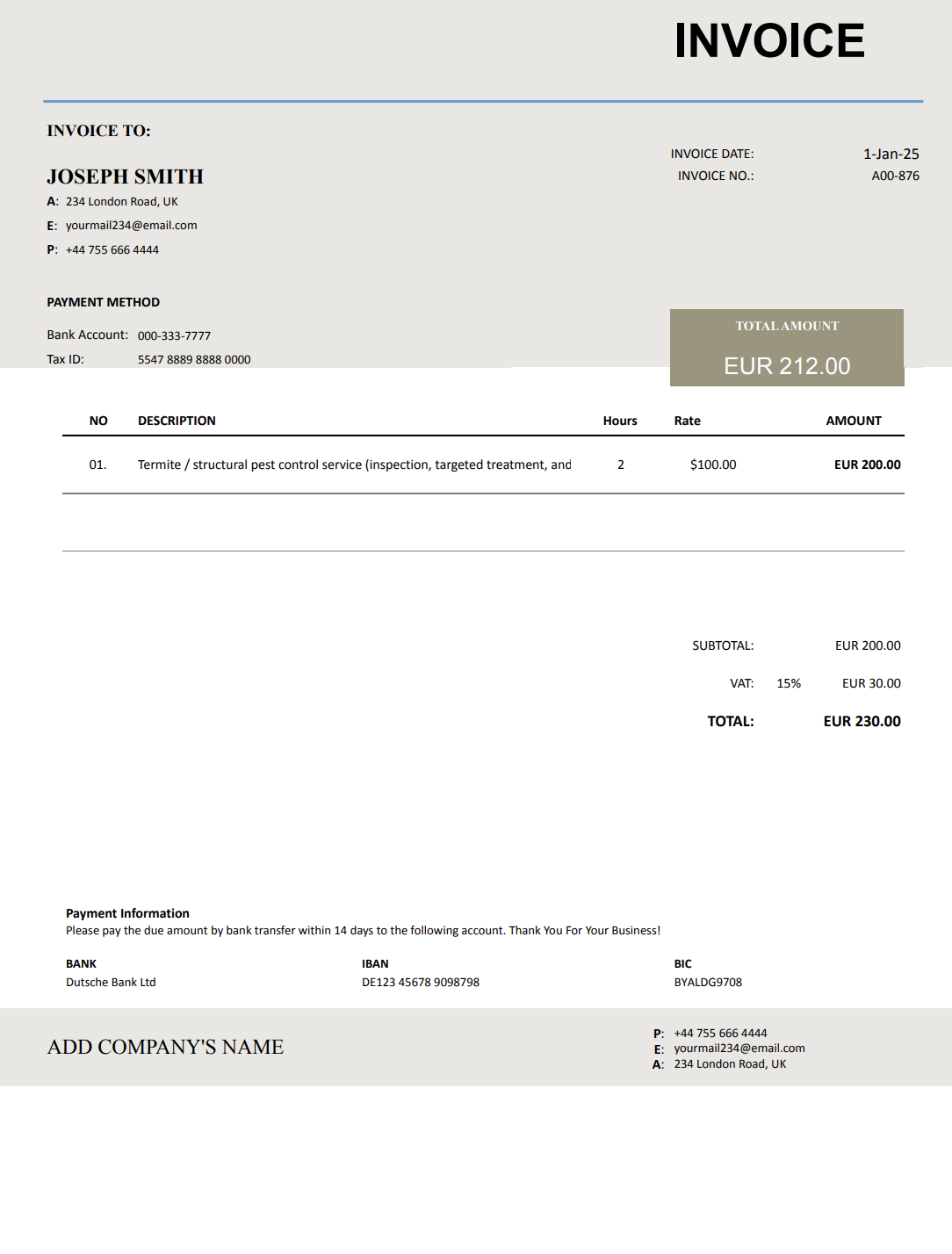
Tax invoices are one of those things nobody thinks about until something goes wrong. A missing tax number, a confusing description, or the wrong wording can delay payments, confuse clients, or cause problems during tax reporting.
Using the right tax invoice template helps avoid all of that. Below, we will talk about what a tax invoice actually is, when it’s required, what it should include, and how to use tax invoice templates correctly so your invoices are easy to approve, easy to pay, and easy to account for.
With Invoicer.ai, you can create tax invoices in minutes, either by downloading free Word or Excel invoice templates or by customizing and sending invoices online directly through the software (which is much simpler). Once the invoice is ready, you can schedule it to send when it makes the most sense for the job or your billing routine.
A tax invoice is an invoice that meets specific legal and accounting requirements for reporting taxes on the sale of goods or services. Unlike a basic invoice, a tax invoice clearly shows how much tax was charged and provides the information tax authorities require to verify the transaction.
Tax invoices are commonly used by VAT-registered, GST-registered, or sales-tax-registered businesses. In many jurisdictions, clients can only claim tax deductions or input tax credits if they receive a valid tax invoice.
In simple terms, a tax invoice answers three important questions:
When any of those are unclear, the invoice becomes a problem instead of a record.
You usually need to issue a tax invoice when:
In some countries, tax invoices are mandatory for transactions above a certain amount. In others, they are required whenever tax is charged, regardless of value.
Even when not legally required, tax invoices are often expected in B2B transactions. Finance teams also rely on them to reconcile expenses, report taxes, and close their books accurately.
The difference between a tax invoice and a regular invoice is not cosmetic. It’s structural.
A regular invoice might show:
A tax invoice must also show:
Without those elements, the invoice may be considered invalid for tax purposes. Clients may still pay it, but they may not be able to use it for tax reporting, which often results in follow-up requests and delayed approvals.
Using structured invoice tools like Invoicer.ai helps businesses keep tax invoices accurate and consistent, especially when issuing invoices regularly or across multiple clients and transactions.
A proper tax invoice template includes specific information that stays consistent across invoices. While exact requirements vary by country, most tax invoices include the following elements.
The legal business name, address, and tax registration number of the seller must be clearly stated.
The client’s legal name and address should match their accounting records. In some jurisdictions, the client’s tax number may also be required.
Each tax invoice needs a unique invoice number and a clear issue date.
Line items should describe what was sold in a clear, understandable way. Overly vague descriptions can raise questions during audits.
This is the most important part of a tax invoice. It should show:
If multiple tax rates apply, you should show them separately.
The final amount payable, including tax, should be clearly visible and easy to identify.
Creating tax invoices from scratch each time increases the chance of errors. A tax invoice template helps to make sure that required fields are always included and presented consistently.
Templates help by:
Each tax invoice needs to have a unique identifier so transactions can be tracked, referenced, and verified during tax reporting or audits.
Most businesses use sequential numbering, sometimes combined with a prefix or date reference. What matters most is consistency. Invoice numbers should never be reused, skipped without explanation, or edited after an invoice has been issued.
Inconsistent numbering is one of the most common reasons finance teams flag invoices for review.
Using a structured system helps ensure that every tax invoice can be traced back to a specific transaction and reporting period, reducing confusion and saving time during reconciliation.
Mistakes happen, but tax invoices should not be edited once they are issued. Changing an existing tax invoice can create discrepancies in accounting records and tax reports.
When a correction is needed, the proper approach is usually to issue a revised invoice or a credit note, depending on the situation. A revised invoice replaces the original with corrected details, while a credit note offsets an incorrect charge and keeps the audit trail intact.
Handling corrections properly protects both the seller and the client by ensuring that tax records remain accurate and defensible if reviewed later.
Many payment delays and accounting issues come down to small, avoidable mistakes.
Some of the most common problems include:
These issues don’t always stop payment, but they often trigger questions from finance teams. Eventually, that will slow cash flow and create unnecessary back-and-forth.
Freelancers who are registered for VAT or GST need tax invoices that clearly separate fees from tax. Simple, clean templates usually work best, especially for repeat clients.
Small businesses often invoice frequently and across different clients. A reusable tax invoice template helps maintain consistency and reduces bookkeeping errors.
Larger clients may require additional details such as purchase order numbers, contract references, or internal cost codes. Tax invoice templates should allow space for these without cluttering the invoice.
Manual templates, such as Word or Excel files, can work for low invoice volumes. However, they rely heavily on manual accuracy.
Digital invoicing tools reduce risk by:
Invoicer.ai works better than traditional invoice templates for tax invoices by keeping billing accurate and organized without adding unnecessary complexity. Tax invoicing depends on consistency and clear records, and invoices should reflect that.
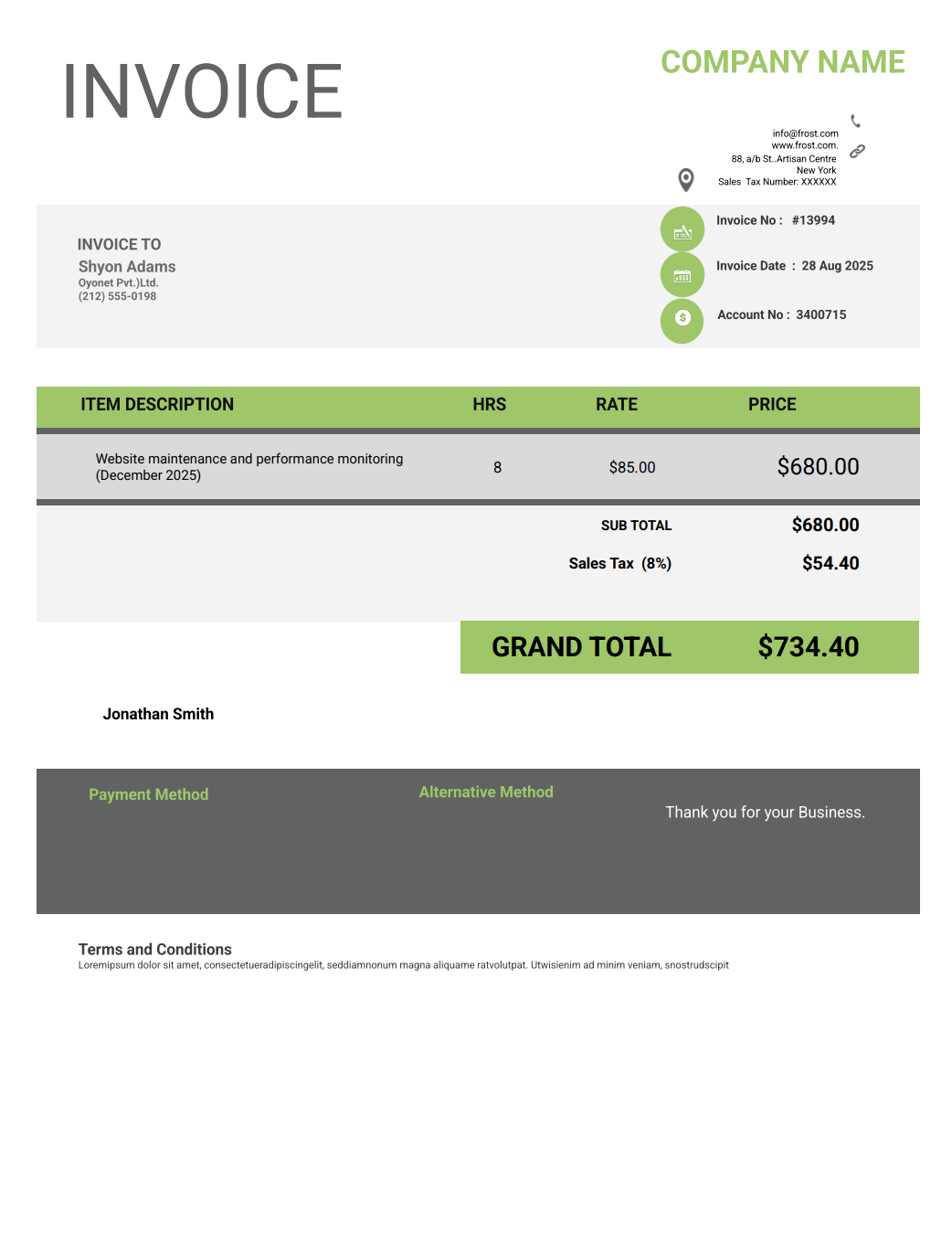
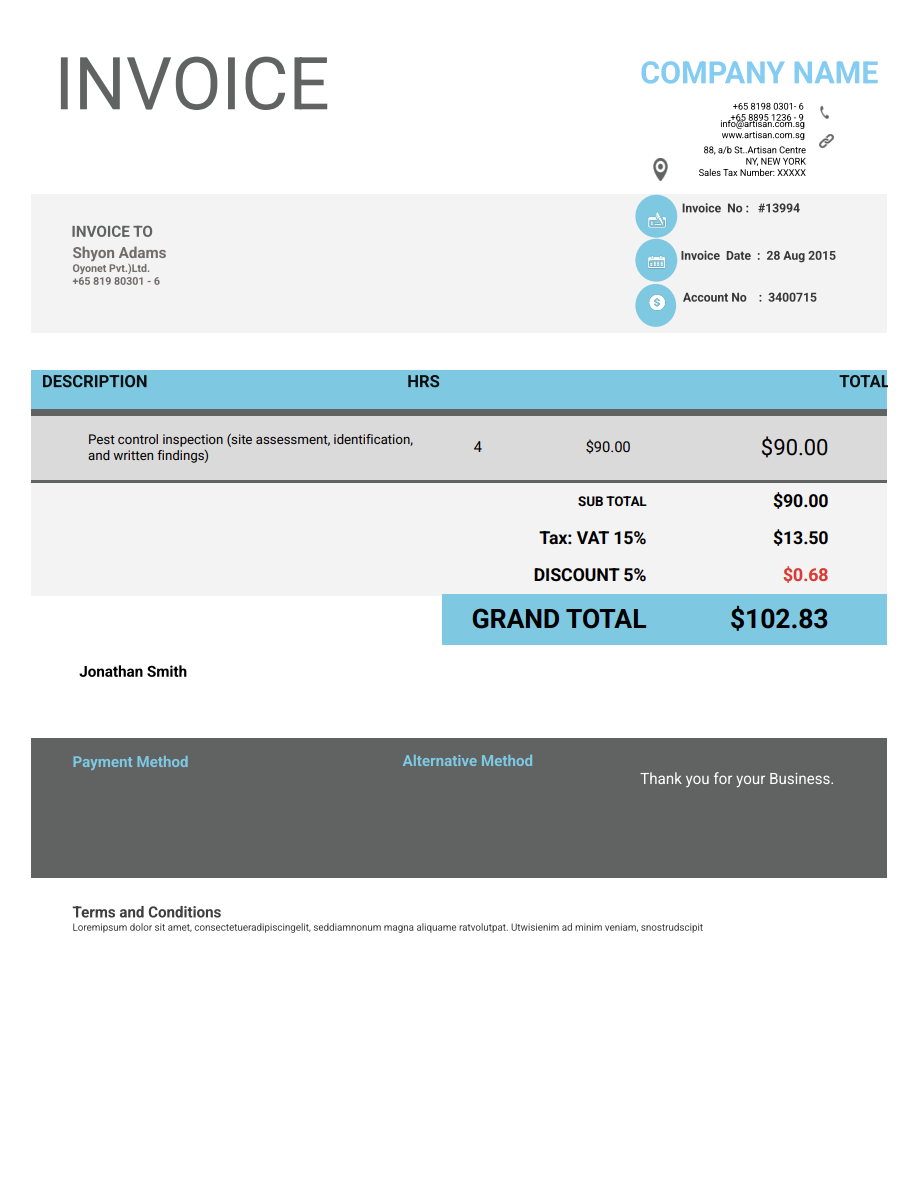
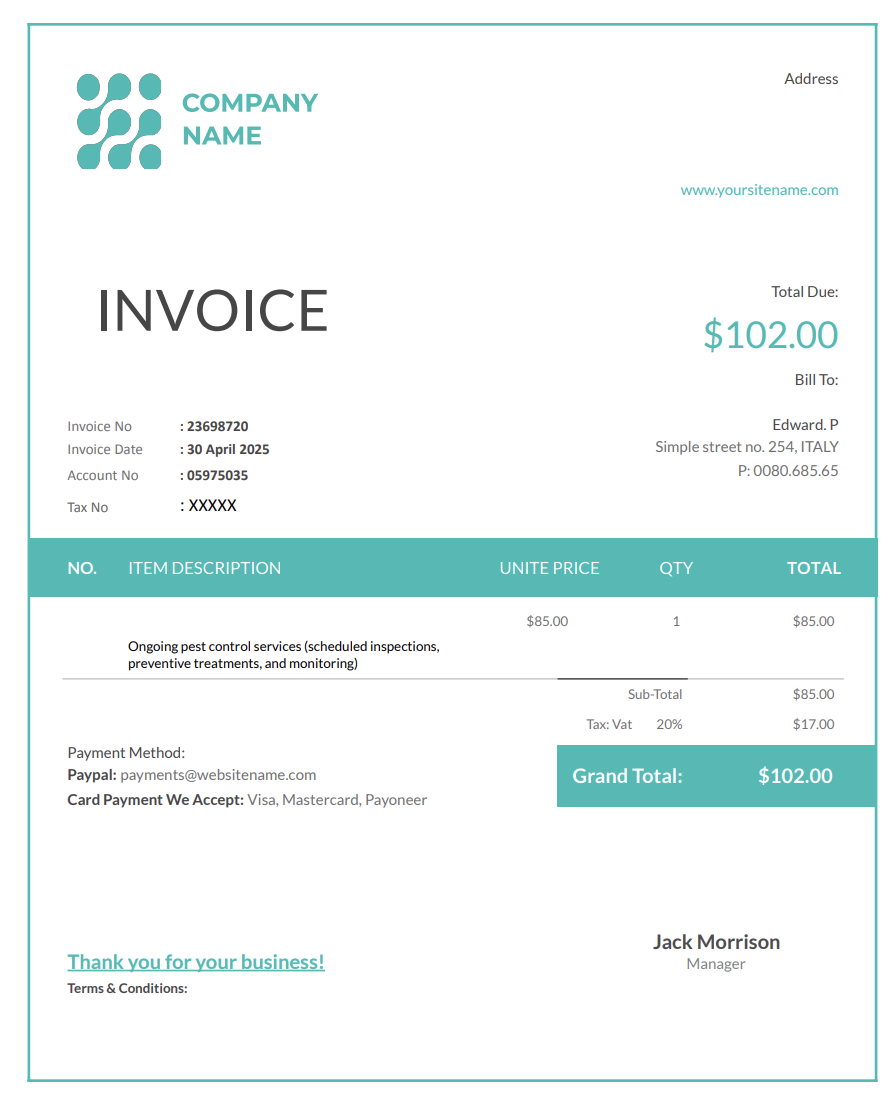
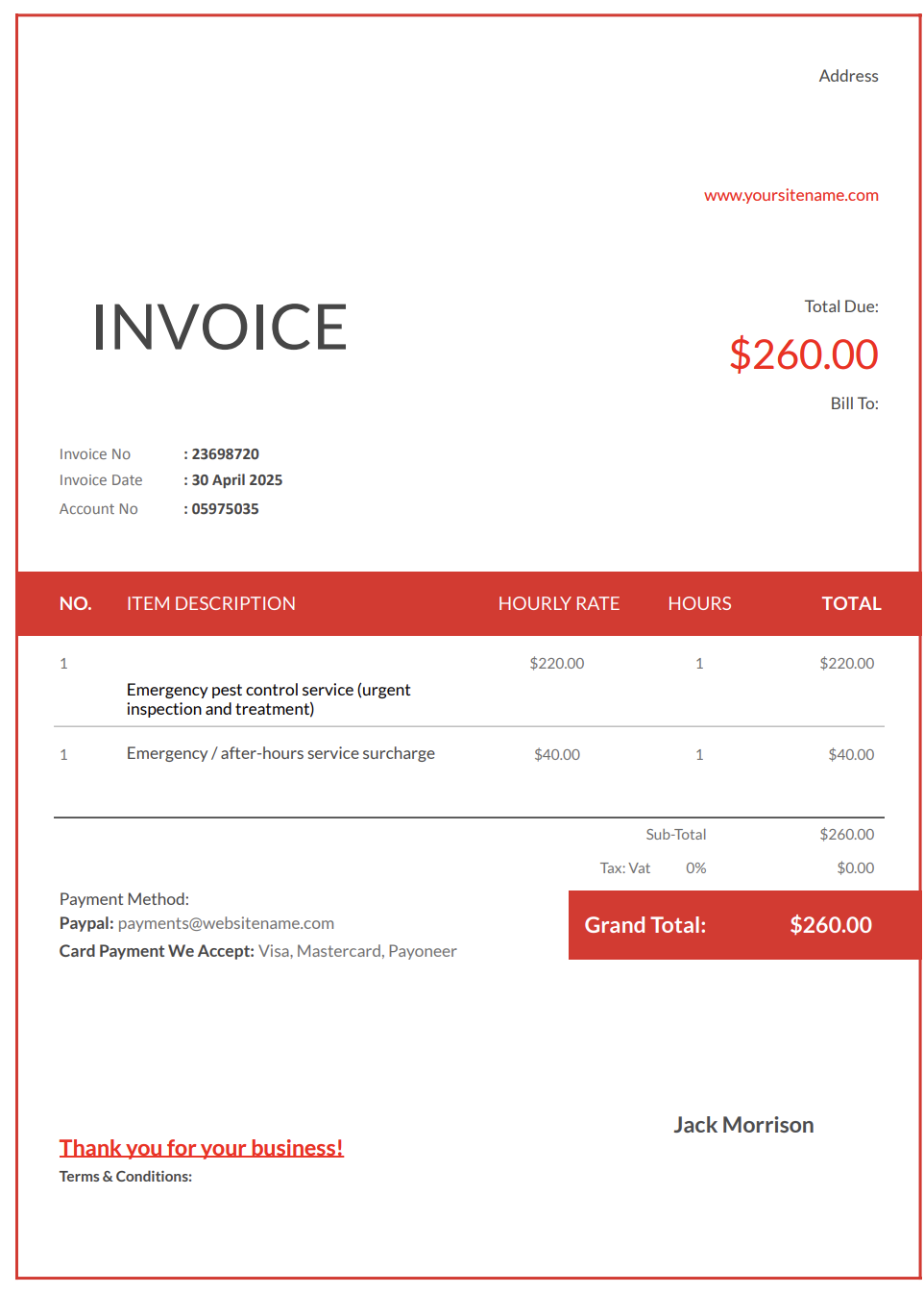
A well-structured tax invoice presents the transaction period, taxable amounts, and totals in a format that clients and accounting teams can review without confusion.
With Invoicer.ai, invoice layouts can be saved and reused, calculations are handled automatically, and invoices can be created manually or refined using the in-line AI-powered editor. When invoices follow a consistent structure, approvals are faster, records stay clean, and billing becomes a routine part of doing business rather than a point of friction.
Tax invoices exist to document a transaction. A solid tax invoice template lays out the important details, when the transaction happened, what was taxed, and the final amount, in a way that’s easy to review and easy to file.
When invoices are presented the same way every time, finance teams move through them quickly, records stay consistent, and billing stays out of the way instead of slowing things down.