{ "@context": "https://schema.org", "@graph": [ { "@type": "Organization", "@id": "https://invoicer.ai/#organization", "name": "Invoicer.ai", "url": "https://invoicer.ai/" }, { "@type": "WebSite", "@id": "https://invoicer.ai/#website", "name": "Invoicer.ai", "url": "https://invoicer.ai/", "publisher": { "@id": "https://invoicer.ai/#organization" } }, { "@type": "WebPage", "@id": "https://invoicer.ai/invoice-templates-with-remaining-balance-due#webpage", "url": "https://invoicer.ai/invoice-templates-with-remaining-balance-due", "name": "Invoice Templates with Remaining Balance Due", "description": "Download invoice templates with remaining balance due or create and send invoices online in minutes.", "inLanguage": "en", "isPartOf": { "@id": "https://invoicer.ai/#website" }, "publisher": { "@id": "https://invoicer.ai/#organization" }, "breadcrumb": { "@id": "https://invoicer.ai/invoice-templates-with-remaining-balance-due#breadcrumb" }, "mainEntity": [ { "@id": "https://invoicer.ai/invoice-templates-with-remaining-balance-due#template-list" }, { "@id": "https://invoicer.ai/invoice-templates-with-remaining-balance-due#faq" } ], "potentialAction": [ { "@type": "CreateAction", "name": "Create an Invoice Now", "target": { "@type": "EntryPoint", "urlTemplate": "https://app.invoicer.ai/invoices/new" } } ] }, { "@type": "BreadcrumbList", "@id": "https://invoicer.ai/invoice-templates-with-remaining-balance-due#breadcrumb", "itemListElement": [ { "@type": "ListItem", "position": 1, "name": "Invoicer.ai", "item": "https://invoicer.ai/" }, { "@type": "ListItem", "position": 2, "name": "Invoice Templates", "item": "https://invoicer.ai/invoice-template" }, { "@type": "ListItem", "position": 3, "name": "Invoice Templates with Remaining Balance Due", "item": "https://invoicer.ai/invoice-templates-with-remaining-balance-due" } ] }, { "@type": "ItemList", "@id": "https://invoicer.ai/invoice-templates-with-remaining-balance-due#template-list", "name": "Invoice template with remaining balance due", "itemListOrder": "https://schema.org/ItemListOrderAscending", "numberOfItems": 6, "itemListElement": [ { "@type": "ListItem", "position": 1, "item": { "@type": "CreativeWork", "name": "Invoice template with remaining balance due (green)" } }, { "@type": "ListItem", "position": 2, "item": { "@type": "CreativeWork", "name": "Invoice template with remaining balance due (blue)" } }, { "@type": "ListItem", "position": 3, "item": { "@type": "CreativeWork", "name": "Invoice template with remaining balance due (turquoise)" } }, { "@type": "ListItem", "position": 4, "item": { "@type": "CreativeWork", "name": "Invoice template with remaining balance due (red)" } }, { "@type": "ListItem", "position": 5, "item": { "@type": "CreativeWork", "name": "Invoice template with remaining balance due (pink)" } }, { "@type": "ListItem", "position": 6, "item": { "@type": "CreativeWork", "name": "Invoice template with remaining balance due (sand)" } } ] }, { "@type": "Product", "@id": "https://invoicer.ai/invoice-templates-with-remaining-balance-due#product", "name": "Invoice Templates with Remaining Balance Due", "description": "Invoice templates that show payments received and the remaining balance due, designed for contractors and multi-payment projects.", "brand": { "@type": "Brand", "name": "Invoicer.ai" }, "aggregateRating": { "@type": "AggregateRating", "ratingValue": "4.7", "bestRating": "5", "ratingCount": 5 } }, { "@type": "FAQPage", "@id": "https://invoicer.ai/invoice-templates-with-remaining-balance-due#faq", "inLanguage": "en", "mainEntity": [ { "@type": "Question", "name": "Should the remaining balance due include taxes (sales tax/VAT) or exclude them?", "acceptedAnswer": { "@type": "Answer", "text": "It depends on how your contract is priced, but your invoice should match the agreement. If the contract total includes tax, the remaining balance should include tax too. If tax is added on top, show the pre-tax remaining balance and the tax separately so clients see exactly what’s changing." } }, { "@type": "Question", "name": "Where should “Remaining Balance Due” appear on the invoice?", "acceptedAnswer": { "@type": "Answer", "text": "Put it near the totals, not buried in notes. Most contractors place it next to “Amount Due” or directly under the payment summary so it’s visible in the same scan clients use to approve payment." } }, { "@type": "Question", "name": "What’s the difference between “Remaining Balance Due” and “Amount Due”?", "acceptedAnswer": { "@type": "Answer", "text": "“Amount due” is what the client needs to pay right now for this invoice. “Remaining balance due” is what will still be owed on the full project after accounting for payments received (and sometimes after this invoice is paid, depending on how you label it). The invoice should make that distinction obvious." } }, { "@type": "Question", "name": "Should the invoice show the remaining balance before or after the current invoice is paid?", "acceptedAnswer": { "@type": "Answer", "text": "Either can work, but you have to label it clearly. Many contractors show both: “Balance before this invoice” and “Balance after payment.”" } }, { "@type": "Question", "name": "How do I show a partial payment on a remaining balance due invoice?", "acceptedAnswer": { "@type": "Answer", "text": "Record the payment as “Payments received” and update the remaining balance accordingly. If the payment is applied to a specific invoice, you can also show “Amount applied to this invoice” to avoid confusion." } }, { "@type": "Question", "name": "How do I handle late payments?", "acceptedAnswer": { "@type": "Answer", "text": "Set clear terms and let Invoicer.ai send automatic late payment reminders." } }, { "@type": "Question", "name": "What if a client overpays or pays twice?", "acceptedAnswer": { "@type": "Answer", "text": "Show the overpayment as a credit and reflect it in the remaining balance. Your invoice should make it clear whether the credit will be refunded or applied to the next invoice." } } ] } ] }

Progress Billing Invoice Templates for Contractors

Download progress billing invoice templates for contractors or create and send invoices online in minutes.
User ratingUser ratingUser ratingUser ratingUser rating
5-star rating
4.7
from 200+ reviews
Progress Billing Invoice for Contractors

Progress Billing Invoice Templates for Contractors

Contractors rarely get paid in one clean, satisfying lump sum. Projects stretch over weeks or months, scopes evolve, and costs pile up long before the final walkthrough. That’s exactly why progress billing exists.
Progress billing allows contractors to invoice clients in stages as work is completed, rather than waiting until the end and hoping everyone still remembers what was agreed to.

Even small contracting businesses are expected to invoice professionally. Clients, lenders, and sometimes inspectors or accountants rely on invoices to understand how much work has been completed and what remains.

With Invoicer.ai, contractors can create professional progress billing invoices in minutes. You can download free Word or Excel invoice templates or create and send invoices online through the platform, depending on how you prefer to work.

Why Progress Billing Is Important for Contractors

Progress billing is not just a convenience. For many contractors, it’s the difference between steady operations and financial stress.

Cash Flow Stays Predictable

Materials, labor, permits, and subcontractors all require upfront spending. Progress billing helps to make sure you’re paid as value is delivered, instead of financing the entire project yourself.

Clients See Exactly What They’re Paying For

When invoices display completed milestones or percentages, clients feel more confident approving payments.

Disputes Are Easier to Avoid

Clear documentation of what’s been completed, previously billed, and still outstanding reduces misunderstandings later in the project.

Large Projects Stay Manageable

Breaking billing into phases makes large contract values easier for clients to approve and process, especially for commercial or multi-phase work.

Common Types of Progress Billing Used by Contractors

Not all progress billing looks the same. Contractors choose methods based on project size, client expectations, and contract structure.

Milestone-Based Billing

Invoices are issued when specific project milestones are completed, such as foundation work, framing, rough-ins, or final finishes.

Percentage-of-Completion Billing

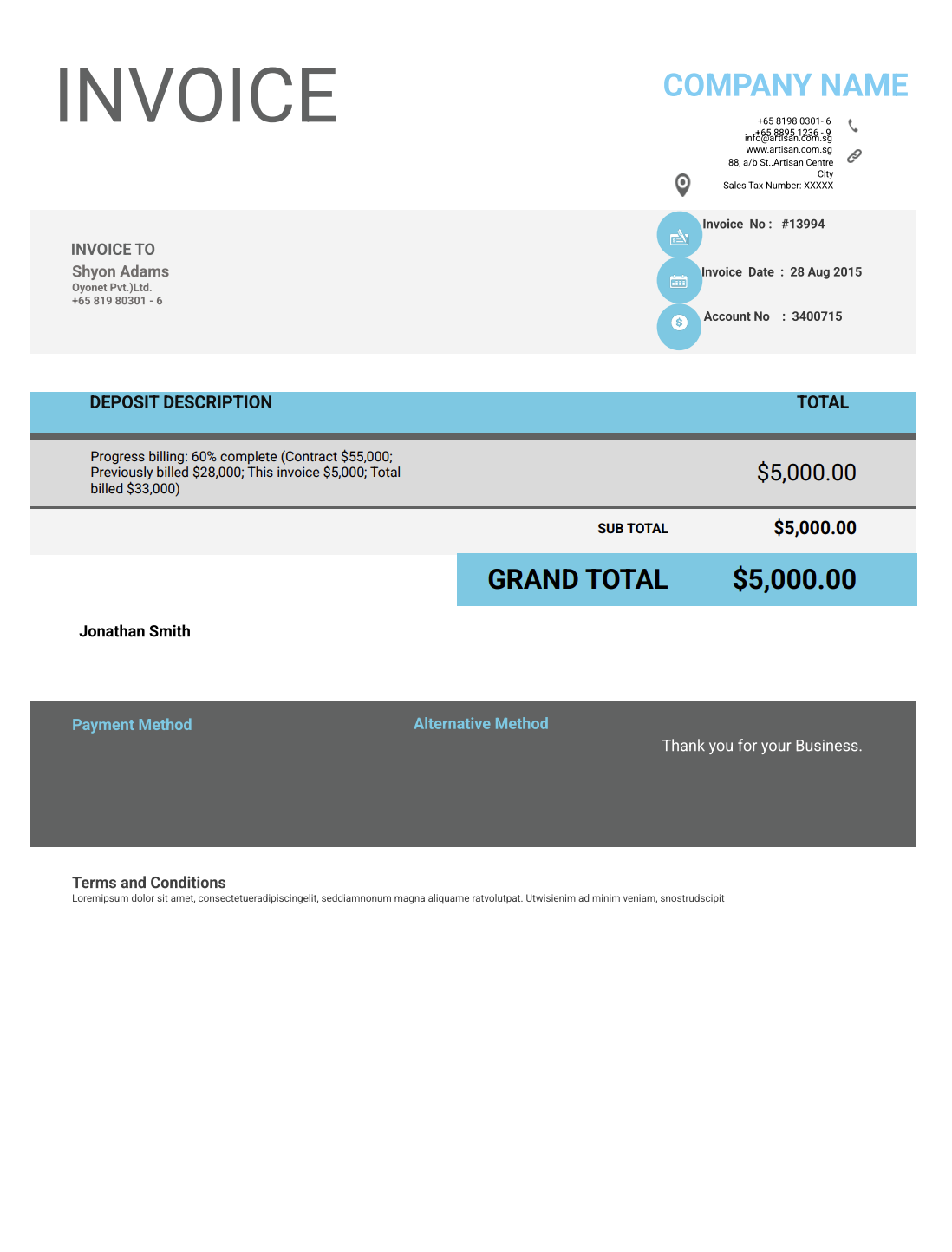
Each invoice reflects a percentage of the total contract value based on work completed to date.

Phase-Based Billing

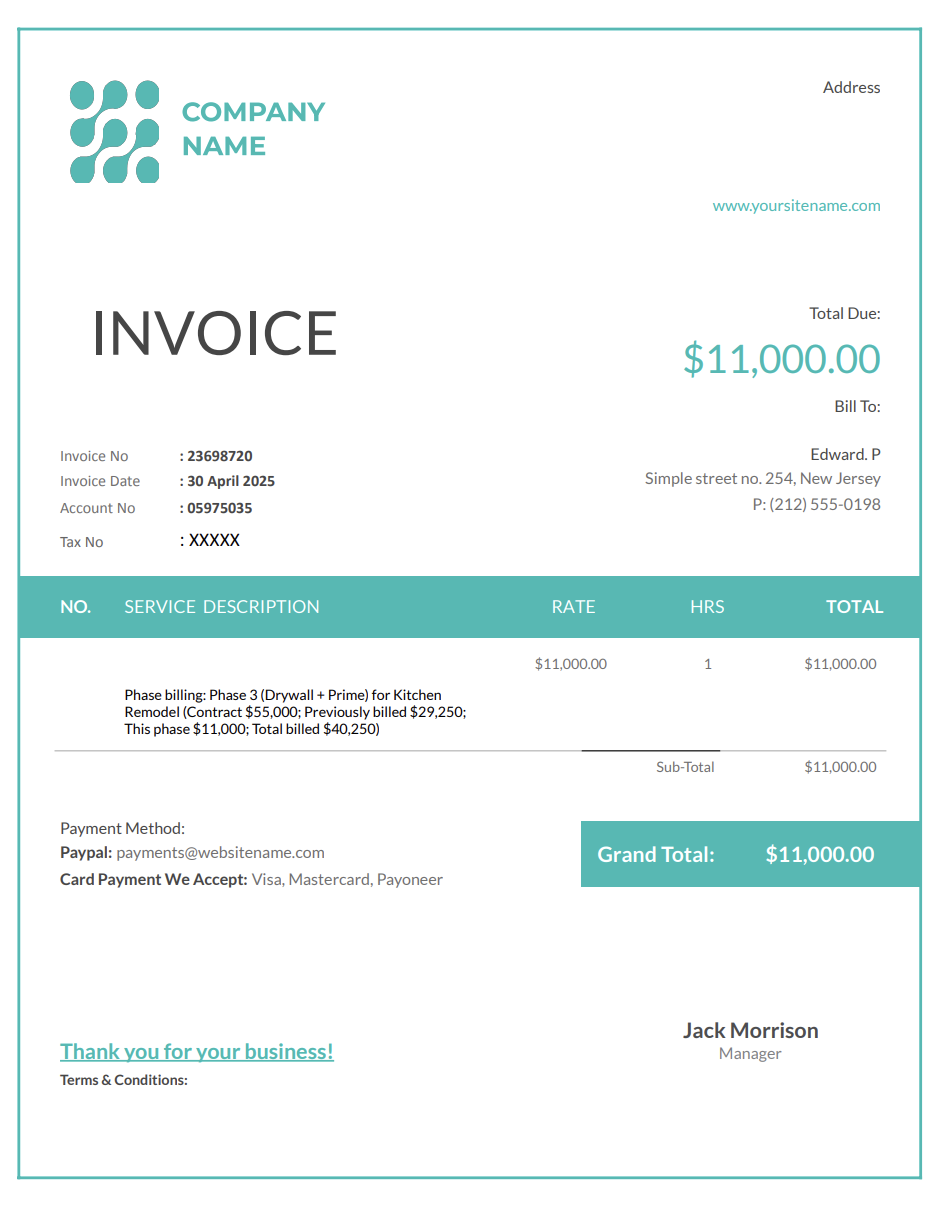
Work is divided into defined phases, and each phase is billed separately once completed.

Schedule of Values (SOV) Billing

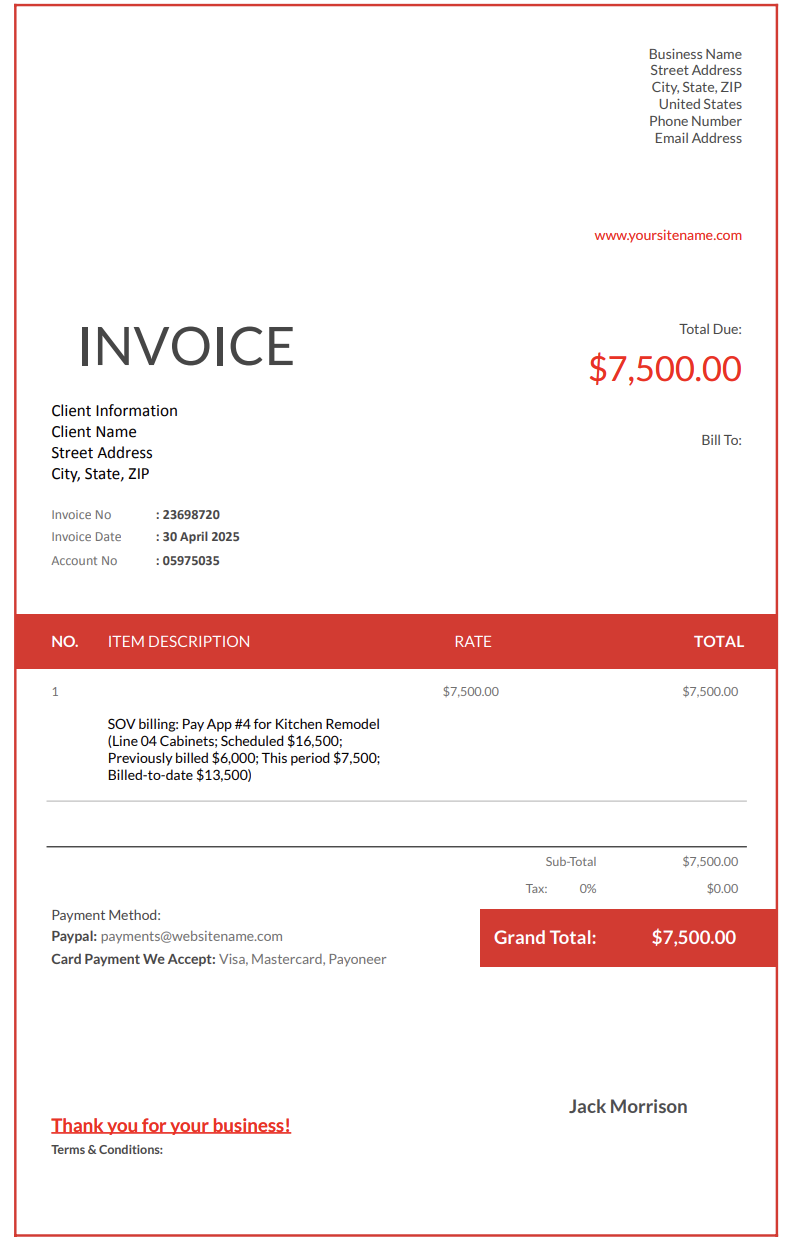
Often used in commercial construction. Each line item represents a portion of the total contract value, and invoices track how much of each item has been completed and billed.

Why Progress Billing Is Standard Practice in Construction

Progress billing is standard across residential, commercial, and industrial construction because it promotes transparency and financial stability. On larger projects, progress billing is often required by contracts, lenders, or project managers as a condition for releasing funds.

Rather than being an exception, staged billing is the norm for projects that involve multiple trades, extended timelines, or significant upfront costs. It shows that a project is being managed professionally and according to established industry practices.

How Percentage Completion Is Usually Determined for Billing

Percentage completion is usually determined based on observable progress rather than estimates or assumptions. Contractors may rely on completed milestones, measured quantities of work, or predefined line items in a schedule of values.

When completion percentages are tied to tangible results, invoices feel fair and defensible. Clear documentation of how progress is measured helps clients understand why a certain amount is being billed and reduces skepticism around partial payments.

Why Progress Invoices Are Issued Before Final Completion

Progress invoices are issued before a project is fully completed because they represent work that already has tangible value. When framing, rough-ins, installations, or other defined stages are finished, that work is no longer theoretical. It exists, it required labor and materials, and it can be verified.

Progress billing makes sure payment reflects completed work rather than postponing all compensation until the final day. This approach reduces risk for contractors and provides clients with a staged payment process.

How Progress Billing Works on Small Jobs Versus Large Projects

Progress billing looks very different depending on the size and complexity of a project. Small jobs and large projects may both use staged payments, but the level of detail, structure, and documentation changes significantly as scope and risk increase.

On small jobs, progress billing is usually kept simple. Contractors often rely on a limited number of milestones or payment stages, such as a deposit, a mid-project payment, and a final balance. Invoices tend to focus on completed work rather than formal percentage calculations.

Large projects, on the other hand, need far more structure. Commercial builds, multi-phase renovations, and long-term construction projects often use detailed schedules of values that break the contract into many individual line items. Progress invoices track cumulative billing, percentage completion for each item, retainage, and approved change orders.

Progress Billing Best Practices for Small Construction Businesses

Small construction businesses benefit most from progress billing practices that are simple, predictable, and easy for clients to understand.

At this stage, billing is less about formal process and more about trust, clarity, and cash flow. Clients are usually approving invoices themselves, not sending them through accounting departments, which means confusion leads directly to delays.

Progress billing works best for small construction businesses when it follows a few practical principles rather than trying to mimic large commercial billing systems.

Effective progress billing practices for small construction businesses include:

How Progress Billing Works in Real Construction Projects

Progress billing works by dividing a construction project into clearly measurable portions and invoicing based on completed work. These portions are usually defined in the contract as milestones, phases, percentages of completion, or line items in a schedule of values.

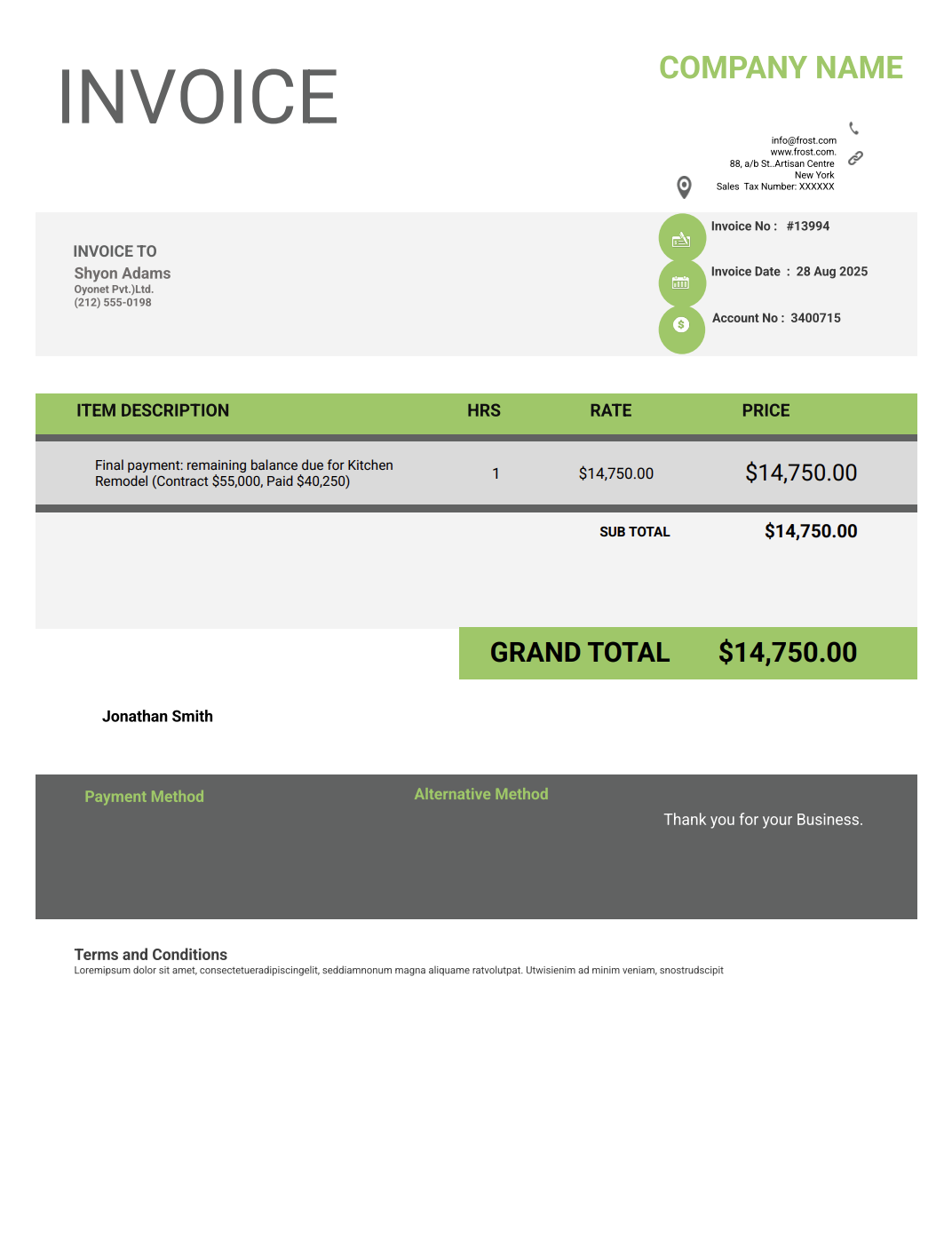
Each invoice represents a snapshot of the project’s financial status at a specific point in time. It shows completed work, amounts previously billed, current charges, and the remaining contract balance. This cumulative structure means each invoice naturally builds on the one before it, so clients can see how the project is progressing without having to dig through the full billing history.

What Happens When a Progress Invoice Is Not Paid

When a progress invoice is not paid, the next steps depend largely on the contract terms and local regulations. In many cases, contracts allow work to pause until payment is received.

How Progress Billing Differs on Fixed-Price and Time-and-Materials Contracts

Progress billing looks different depending on the contract structure. On fixed-price contracts, progress billing is usually tied to milestones or schedules of values that allocate portions of the total contract price.

On time-and-materials contracts, progress billing requires more detailed tracking of labor hours, materials used, and costs incurred during each billing period. Understanding this difference helps both contractors and clients interpret invoices correctly and avoid misunderstandings.

What a Professional Progress Billing Invoice Should Include

A progress billing invoice needs more structure than a simple service invoice. It should answer questions before the client has to ask them.

Contractor Information

Client Information

Invoice Details

Contract Summary

Progress Breakdown

Totals and Payment Summary

Taxes (US-Specific Note)

Sales tax rules vary by state and by the type of work performed. If tax applies, it should be shown clearly and calculated only on taxable portions of the invoice.

Payment Instructions

How Contractors Can Get Paid Faster with Progress Billing

Late payments are rarely about bad intentions. They usually come from unclear documentation.

Tie Invoices to the Contract

Use the same language, milestones, and structure as the original agreement or schedule of values.

Show Previous Payments Clearly

Clients should instantly see what has already been paid and why this invoice exists.

Avoid Vague Descriptions

“Work completed” doesn’t help anyone. “Electrical rough-in for second floor” does.

Invoice Promptly After Milestones

Delays in billing often lead to delays in payment. Invoicing should occur as soon as a milestone is reached.

Use Digital Invoices When Possible

Online invoices are easier to approve, track, and pay, especially for larger organizations.

When to Send Progress Billing Invoices

Timing matters almost as much as accuracy.

Milestone Completion

Send the invoice immediately after the agreed milestone is completed and verified.

Monthly Progress

For long-term projects, monthly billing keeps cash flow steady and expectations clear.

Change Orders

Invoice approved changes separately or clearly within the next progress invoice.

Final Completion

The final invoice should clearly distinguish retainage, final balances, and any punch-list items.

Simple Ways to Make Progress Invoices Look More Professional

Making progress invoices look more professional does not require complex design. Small improvements in clarity often make the biggest difference:

Keep Layouts Consistent

Use the same structure for every invoice so clients know where to look.

Highlight Important Numbers

Current amount due, total billed to date, and remaining balance should stand out.

Include a Short Summary

A brief explanation of what this invoice covers reduces back-and-forth.

Separate Change Orders

Clients approve faster when extra work is clearly itemized and documented.

Why Invoicer.ai Works Better Than Traditional Progress Billing Invoice Templates

Invoicer.ai works better than traditional progress billing invoice templates for contractors by keeping billing organized without unnecessary complexity. Invoice layouts can be saved and reused, reducing repetitive setup.

Automatic calculations replace manual edits, helping keep totals accurate. Invoices can be created manually or adjusted using the AI-powered editor, while invoice view tracking helps remove uncertainty around client follow-ups.

With clients, invoices, estimates, expenses, and items managed in one place, contractor billing stays consistent, accurate, and easier to manage over time.

Get Paid the Easy Way

Clear invoices help keep project payments consistent and easy to track. Create your progress billing invoice today to document completed work and bill clients with confidence.

Start your free 14-day trial today!

FAQs About Progress Billing Invoice Templates

Everything you need to know about progress billing invoices.
Can progress billing be used without a formal construction contract?
Yes, but it is riskier. Progress billing works best when milestones, phases, or percentages are defined in writing before work begins. Without a formal contract, invoices rely more heavily on trust and documented communication
Should progress billing invoices include retainage?
If retainage is part of the agreement, it should always be shown clearly on progress invoices. Retainage is typically listed as a separate line that shows the withheld percentage, total retained to date, and the amount expected to be released at final completion.
How do change orders affect progress billing invoices?
Approved change orders should be added to the contract total and reflected in future progress invoices. Each change order should be listed separately so clients can distinguish original scope from added work.
Is progress billing acceptable for residential clients?
Yes. Progress billing is common in residential construction, especially for renovations, additions, and custom builds. Homeowners are often more comfortable with staged payments when invoices explain what work has been completed and what remains
Can progress billing invoices be used for subcontractors?
Progress billing can be used when billing subcontracted work, provided the agreement allows it. Subcontractor progress invoices usually reference completed quantities, time periods, or specific deliverables.
How do I handle late payments?
Set clear terms and let Invoicer.ai send automatic late payment reminders.
How detailed should progress billing descriptions be?
Descriptions should match the client’s level of oversight. Residential clients usually need clear, plain-language explanations tied to visible work. Commercial clients often expect more detail, including quantities, percentages, or schedule-of-values references.
User ratingUser ratingUser ratingUser ratingUser rating
5-star rating
4.7
from 200+ reviews

Start your free trial

Get started today. Create your first invoice and see how easy Invoicer is.