"With Invoicer, it's so fast and easy I never have to worry about how I'd like it to feel. Rather, it does the job I need it to do and I love it!"


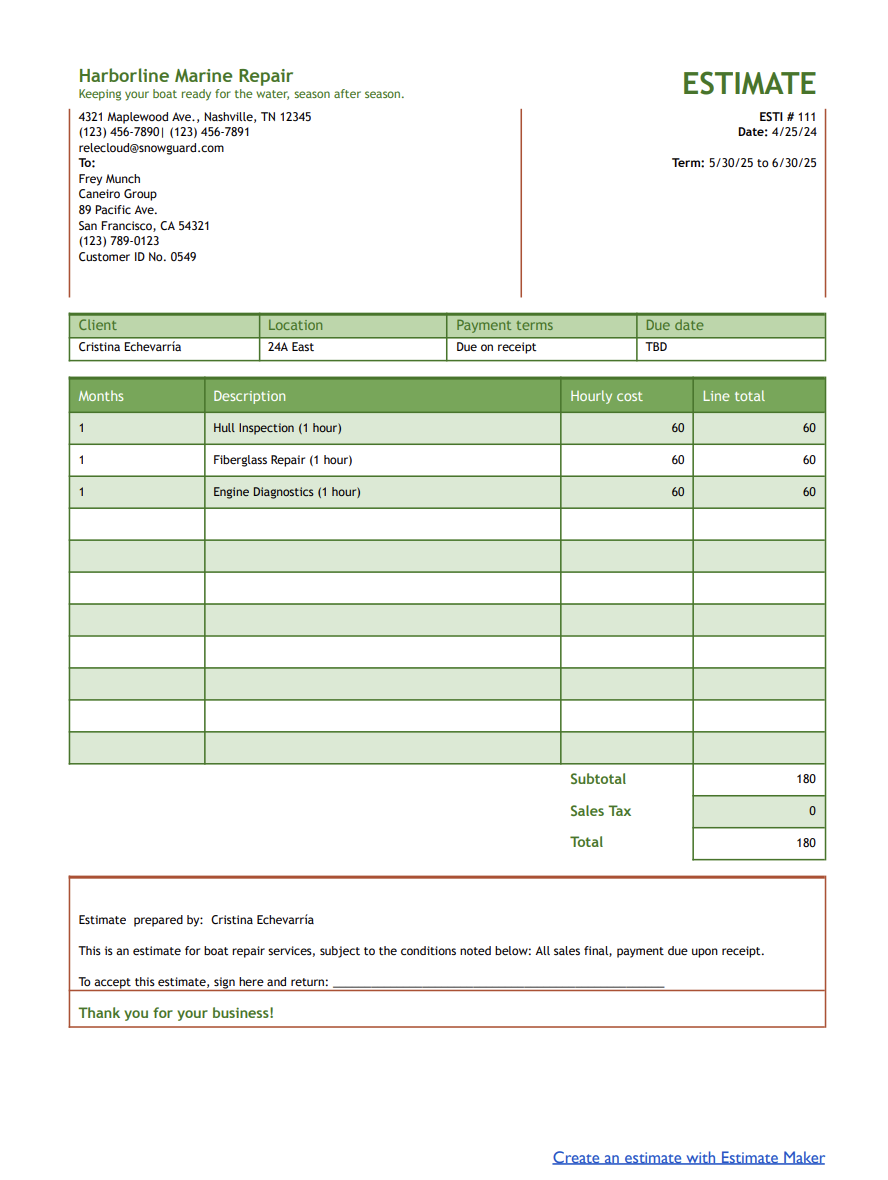
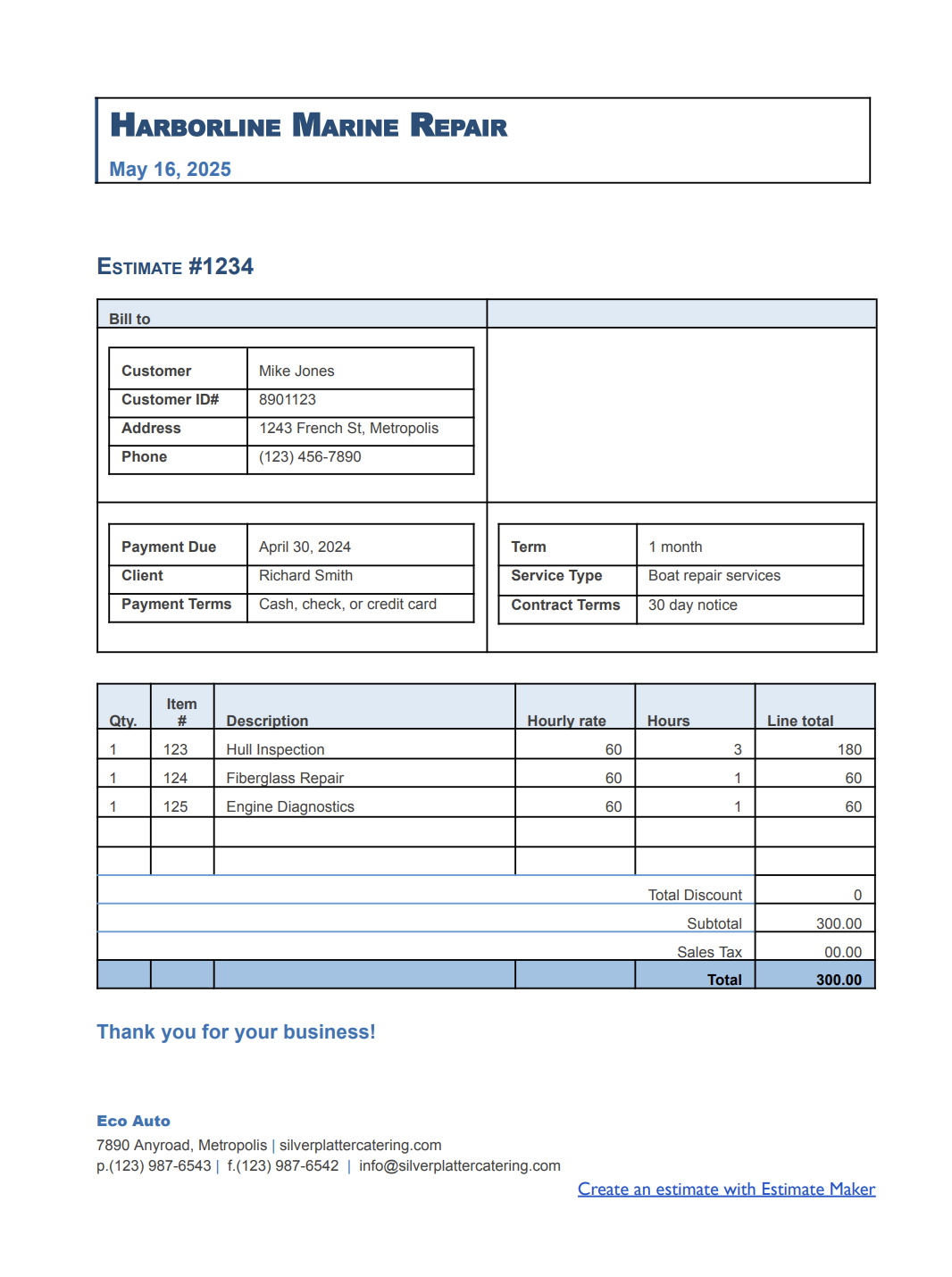
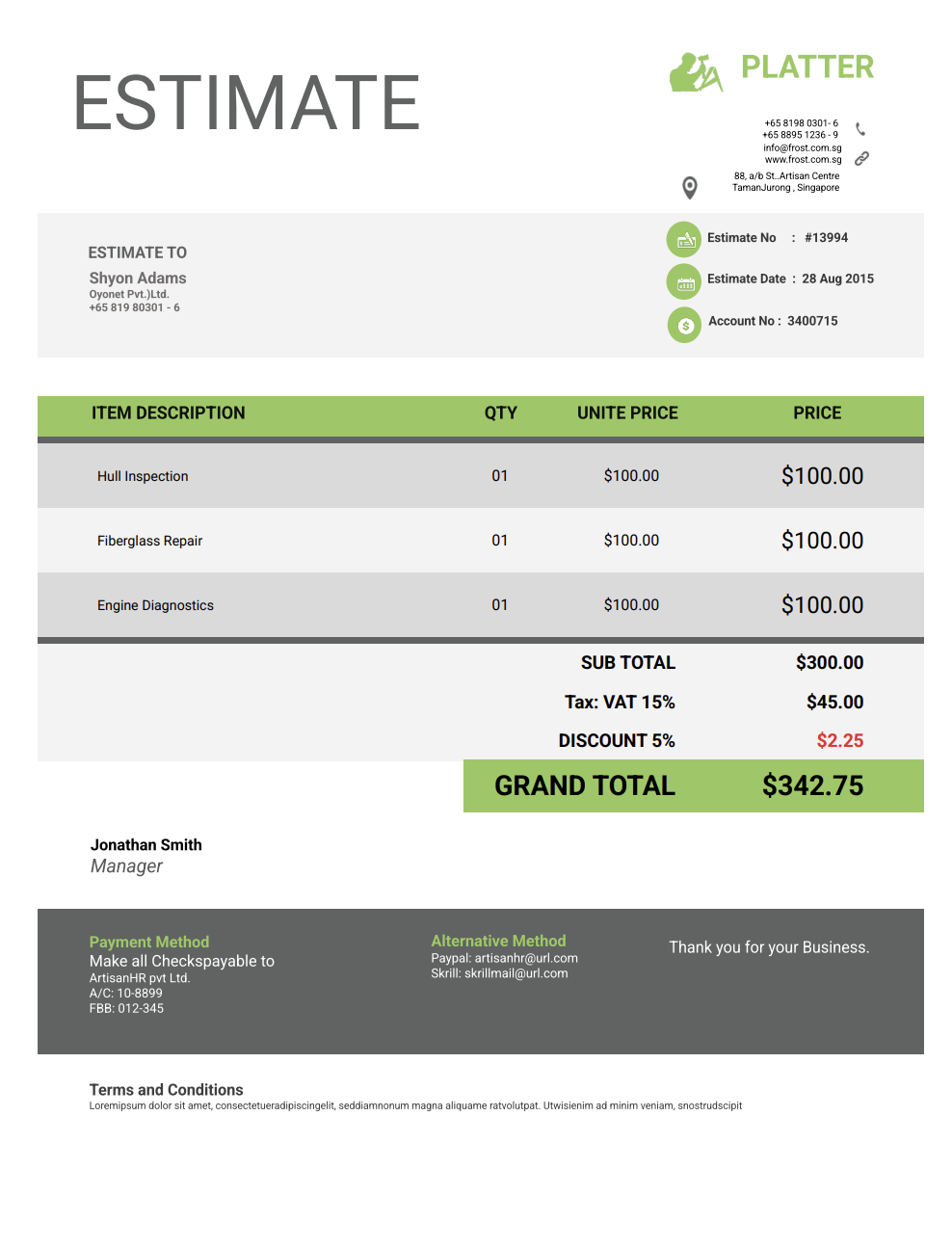
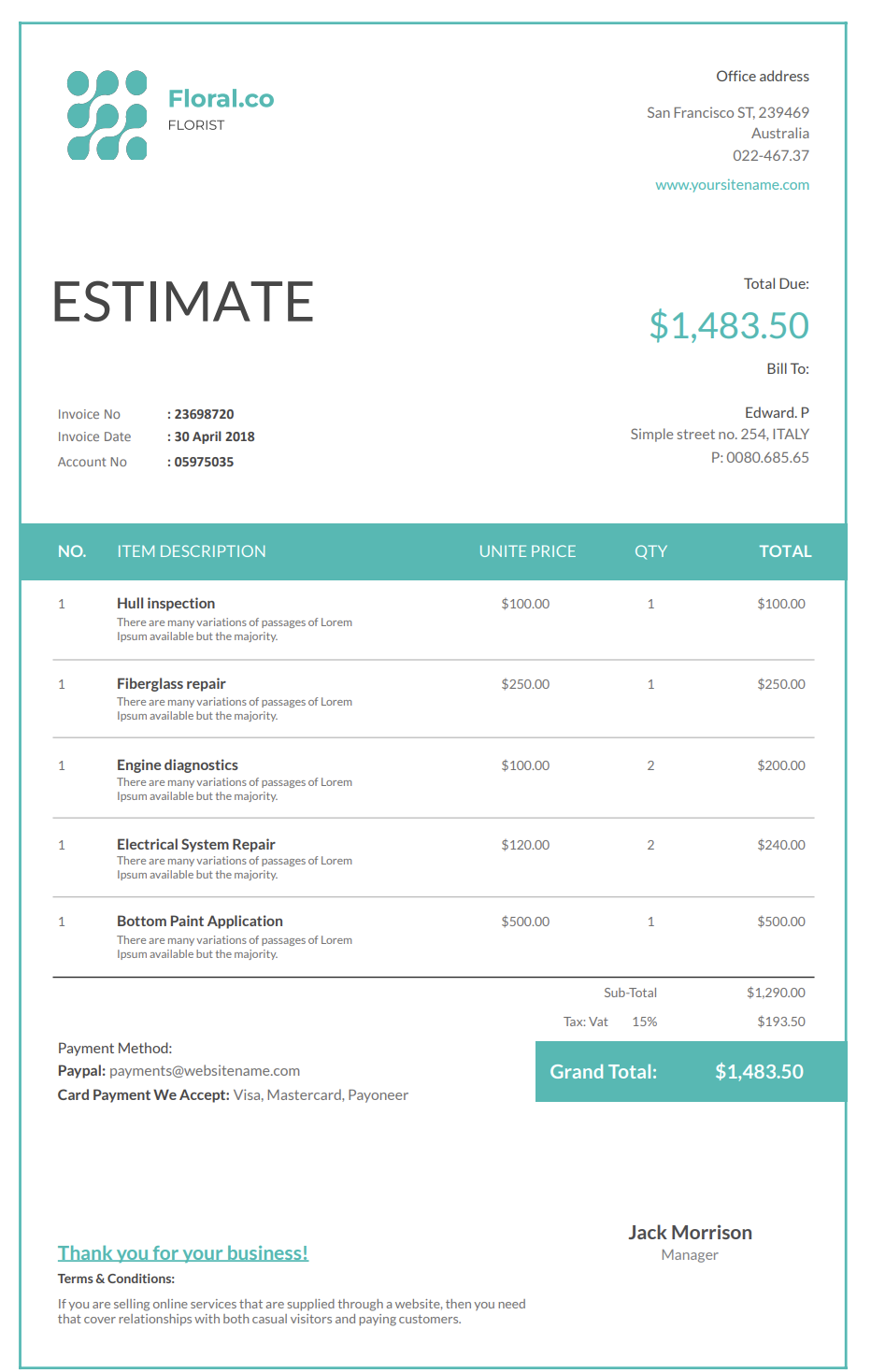
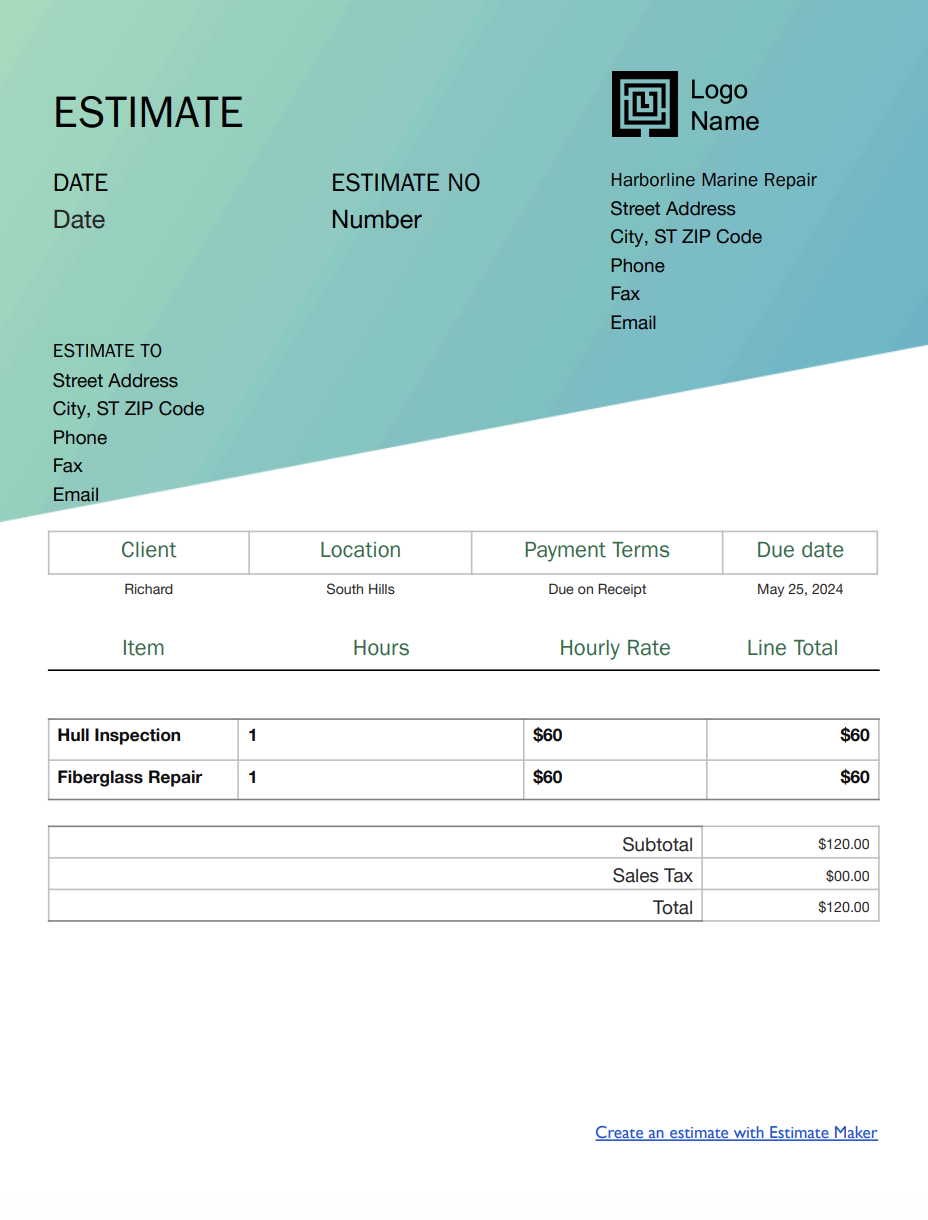
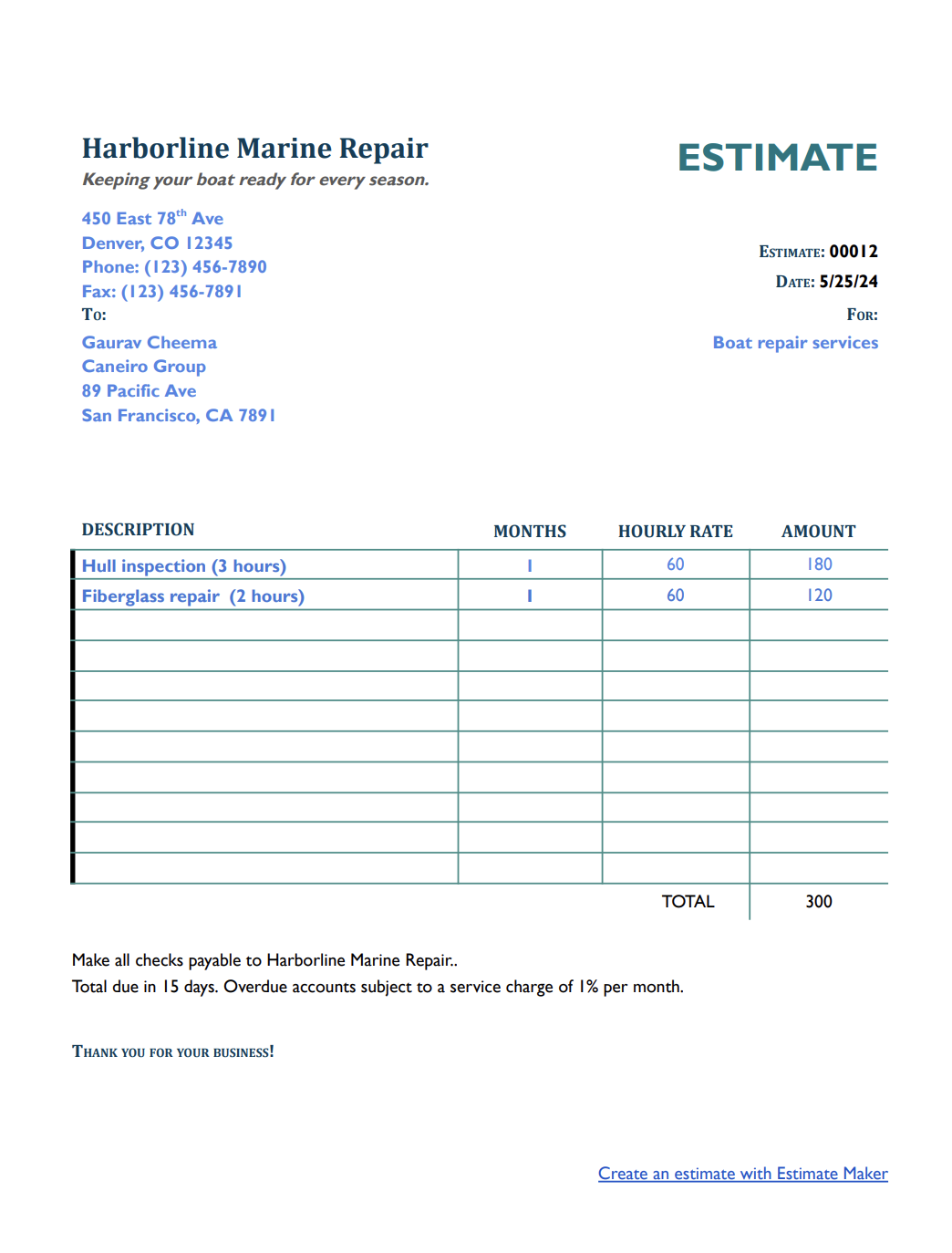
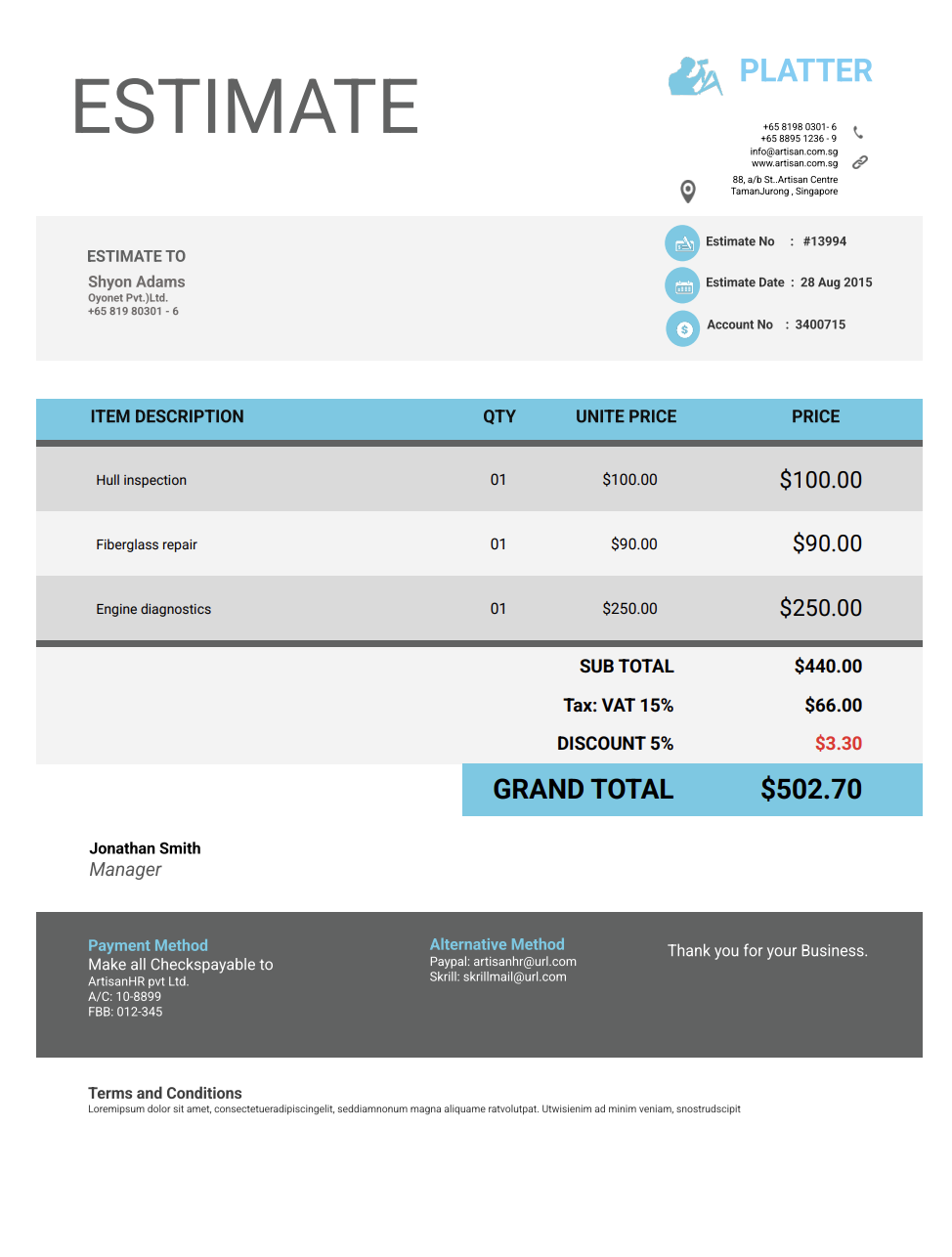
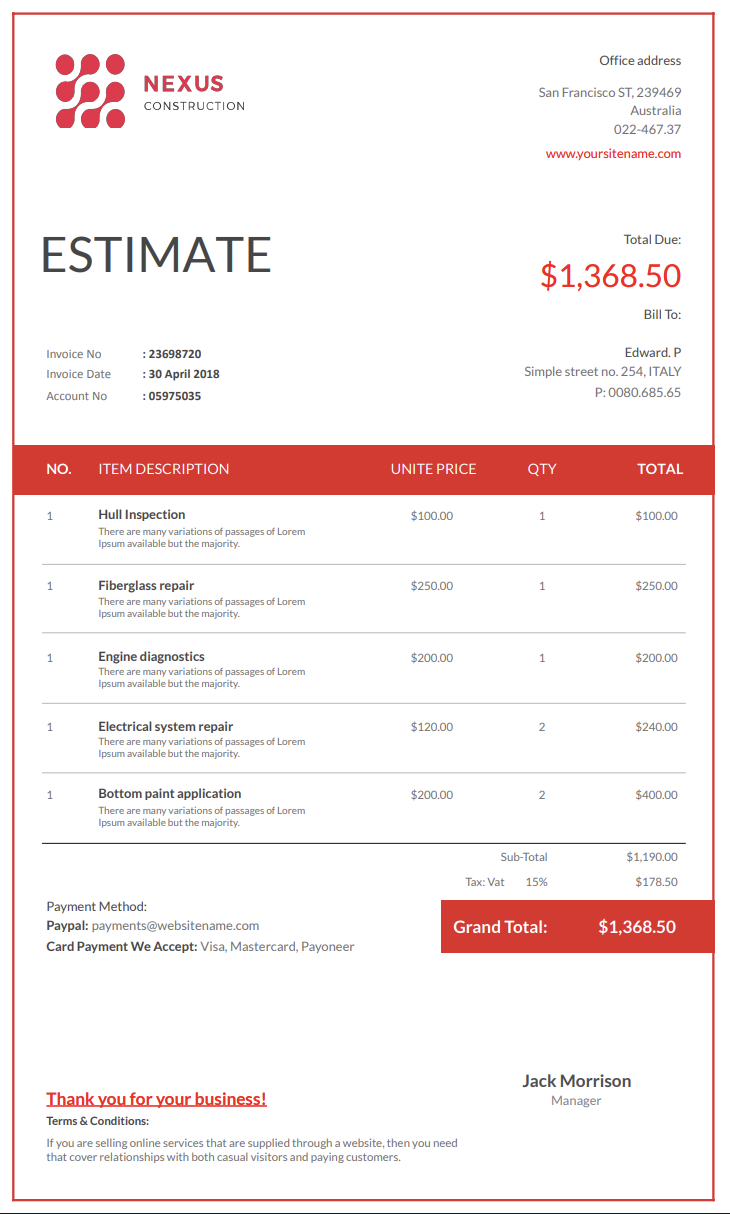
Or, send estimates to your clients with our free boat repair estimate templates.
Download for Microsoft Word, Excel, Google Docs, Sheets, PDF, and OpenOffice formats:


.png)
Choose from a variety of designs.
Or, use Invoicer to easily create an estimate.

Easy and intuitive estimate generator. Create invoices from estimates in one click.

Clear and simple process for your clients to approve. Automatically create invoices from approved estimates.

Easily customize with your brand and colors.
Need a clear way to quote boat repair work without confusing customers or risking underpricing? This guide walks you through everything that goes into professional boat repair estimates so owners know what to expect and your shop stays protected.
Boat repairs are rarely straightforward. A job that sounds simple — like "the engine won't start" or "the hull has a crack" — can lead to a long list of hidden issues once the boat is lifted, opened, or tested on the water. Materials vary, labor varies, and certain repairs depend on weather, tide access, and how long the boat has been sitting.
Most boat owners don't know much about the mechanics behind hull repairs, marine engines, electrical systems, or fiberglass restoration. That makes clear communication essential. A strong estimate explains the repairs in plain language, outlines what you'll inspect, and gives the owner a realistic range for both cost and timeline.
A detailed estimate isn't just to keep customers informed. It also protects your shop, your technicians, and your schedule.
A boat repair estimate template is a pre-organized document that helps marine repair shops provide clear, consistent price breakdowns for inspections, diagnostics, labor, parts, materials, and haul-out fees.
Instead of building a quote from scratch every time, a template ensures you cover every detail — whether you're working on a small fishing boat, a sailboat, or a full-size yacht.
A good template reminds you to include things like water testing, fiberglass materials, engine parts, shop labor, environmental fees, and project timelines. It keeps your workflow organized and helps boat owners understand exactly what's included before approving the work.
Boat owners want to feel confident that they're getting honest, skilled service, especially when the repairs start adding up. An estimate helps make the whole process easier for everyone.
When you break down the work, from diagnostics to materials to labor, owners can see exactly how you arrived at the price, which makes them much more comfortable moving forward. A good estimate also sets expectations early, since marine repairs often change once the boat is hauled out or you start removing parts.
Explaining what's included, what might shift, and why certain costs could rise helps prevent surprises later. And for your business, a signed estimate is essential. It protects you from disputes about pricing or unauthorized work, and if new issues come up mid-repair, updated estimates ensure that every step is clearly approved before your team continues.
Different repairs require different kinds of estimates. Having several templates ready helps you move faster and quote accurately.
Used when the owner isn't sure what's wrong. Covers haul-out inspections, system checks, hull assessments, and electrical or engine diagnostics.
Covers things like crack repairs, blister removal, gelcoat restoration, structural reinforcement, sanding, and repainting.
For outboard, inboard, or diesel marine engines. Includes parts, labor, tests, fluids, and potential troubleshooting if deeper issues are found.
Covers wiring issues, lighting repairs, battery replacements, shore power troubleshooting, and navigation electronics.
Includes sanding, priming, paint application, haul-out fees, environmental fees, and materials.
Used for bigger projects such as deck restoration, full paintwork, interior upgrades, or hardware replacements.
For urgent issues that require same-day or high-priority service. Includes rush fees, emergency haul-out, and temporary fixes until permanent repairs can be made.
A well-created estimate helps owners understand what the job really involves. Every boat repair estimate should include the following:
Shop name, address, contact details, business license, and marine certifications.
Owner name, contact info, boat type, model, length, year, registration number, and current condition.
Keeps all revisions and approvals organized.
Use simple, straightforward language to describe the issue or what the owner requested.
List hull inspections, electrical tests, engine checks, leak detection, or water trials required to fully understand the problem.
Separate labor for haul-out, sanding, fiberglass repair, engine work, electrical work, or structural repairs.
Itemize everything relevant:
Include lift charges, blocking, dry storage, and re-launch fees.
Many marinas require documentation of waste disposal, sanding dust control, and chemical handling.
List whether the repair requires post-service testing.
Boat repairs often depend on weather, material availability, or drying/curing times. Give a realistic range.
Provide a clear total or range when variables exist.
Prices for materials can fluctuate. Protect yourself by adding an expiration date.
Payment terms, deposits, liability limitations, and policies for unforeseen damage found during repair.
A signature or digital sign-off so work doesn't begin without clear consent.
Estimate templates are a practical and efficient tool for any business because they save time, reduce errors, and can be fully customized to match specific needs.
The easiest way to create a professional boat repair estimate is by using a pre-made estimate template. Ready-to-use templates help professionals include all necessary project details without the hassle of building an estimate from scratch every time.
All they need to do is download an estimate template for boat repair services, fill it out, customize it with company branding, and send it to the client.
A solid boat repair estimate template saves time, improves clarity, and makes your proposals look more professional. Here's how to create one that works.
1. Find a Reliable Estimate Template – Look for an estimate template that suits your needs. You can find free boat repair estimate templates in Word, Google Docs, Excel, or Google Sheets.
2. Select the Right Template – Choose a boat repair estimate template that allows you to include all necessary details, such as labor, materials, and project timelines.
3. Fill in Basic Information – Enter essential details like your shop name, logo, contact information, client details, vessel information, reported issue, inspection notes, and repair summary.
4. Customize and Brand Your Estimate – Adjust the template's color scheme, fonts, and layout to match your company's branding. Add your website URL, business license number, and any other relevant details.
5. Fine-Tune the Cost Breakdown – Make sure the itemized list includes all necessary categories, such as labor costs, material costs, subcontractor fees, and permit costs.
6. Review the Format and Layout – Before sending the boat repair estimate to your client, double-check for accuracy by:
These platforms offer customizable boat repair estimate templates that professionals can quickly adjust to meet the needs of different projects.
With estimating software, all you need to do is enter business details, adjust the layout, and input the required cost breakdown.
Once the estimate template is set up, it can be saved for future use, allowing boat repair estimates to be generated in just a few clicks.
Using estimate templates or our Estimate Maker speeds up the process and assures that every boat repair estimate is professional, accurate, and easy to understand.
You can also create estimates for boat repair services using our AI Estimate Generator. Just write a simple prompt and it builds the estimate for you, giving you an even faster way to get accurate, professional results.
You can stick with templates if that's your style, let AI take care of the setup when you want something quick, or always create estimates manually for a hands on approach.
Every boat has its own history, wear, and quirks. Customizing each estimate helps you set realistic expectations with the client and avoid confusion later.
Ask about recent issues, maintenance history, and any past repairs. A little context often helps you spot potential complications.
Take pictures of visible damage, corrosion, loose hardware, or cracks.
Some owners want the most economical fix, while others prefer long-term solutions. Showing both helps them choose comfortably.
Hull damage, electrical issues, and engine failures often reveal more once disassembled. Let clients know where costs may change.
Avoid overly technical marine jargon unless the owner is familiar with it. Clear explanations build trust.
Visuals help owners understand the problem and why certain repairs are needed.
Timing plays a big role in how quickly repairs are approved and how smooth the process feels for the owner.
Once you know what's wrong, send the estimate while everything is fresh.
Any job involving structural work, engine components, or expensive materials should require written approval.
If deeper problems appear mid-repair, stop the work and send an updated estimate before continuing.
Boat owners often return yearly for maintenance. Sending updated estimates upfront helps them plan for the season.
Small oversights can lead to big misunderstandings. Here are some pitfalls to avoid:
Diagnosing marine issues takes time and specialized tools. Always list diagnostics clearly.
Hull work, fiberglass repairs, and marine engine jobs often take longer than expected.
Water intrusion, corrosion, and internal cracks are common. Always warn clients that deeper issues may appear.
List upgrades (like repainting or polishing) separately so clients don't misunderstand what's required vs. optional.
Marine repairs often depend on weather, drying time, or delivery of materials — let clients know this upfront.
While estimate templates are very helpful, Estimate Maker offers a more efficient and accurate way to create estimates for boat repair services. Instead of manually entering details into a template, it automates the process, saving time and reducing errors.
1. Faster and More Efficient – Pre-built templates require manual entry, while an estimate maker allows you to generate estimates with just a few clicks.
2. Automated Calculations – Reduces human error by automatically applying tax rates, labor costs, and material pricing.
3. Customization Without Hassle – Easily adjust branding, payment terms, and cost breakdowns without needing to modify a static template.
4. Better Organization – Stores past estimates in one place, making it easy to track and update them when needed.
5. Quicker Conversions to Invoices – Convert approved estimates into invoices instantly, reducing the time between estimation and payment.
6. Professional Appearance – Generates polished, client-ready estimates that look more professional than a basic boat repair estimate template.
7. Time-Saving Templates – Save custom estimate formats and reuse them without starting from scratch each time.
Clear and accurate boat repair estimates help set expectations, prevent disputes, and keep projects on track.
For a faster, more automated approach, Estimate Maker offers built-in calculations, easy adjustments, professional estimate templates, and much more! Plus, you can try it free for 14 days.