
You've just finished a project, and now it's time to send a payment request to your customer. You know you need to invoice them but aren't sure how, because you don't want to sound demanding while still getting paid.
In some situations, an invoice can feel more like a formal document or part of an ongoing client arrangement, while in other cases, it can feel more like a stronger request for payment, especially if it's overdue.
An invoice is mainly a request for payment and documentation showing what the client owes. Although it isn't a contract by itself, it often includes the terms that both parties already agreed to.
That said, an invoice's role depends on the stage of the client relationship, the terms they agreed to, and the payment status.
Let's look at each role separately.
An invoice isn't the same as the formal agreement between two parties. It usually comes later, after a signed contract, accepted quote, email, purchase order, or another type of agreement.
The invoice is basically what comes after the agreement and the service provided, and it asks for payment.
While an invoice isn't a contract, it does often include information previously agreed in a contract, such as services or products, price, due date, payment terms, and other relevant details.
So, an invoice should always match what you and the client have already agreed to rather than adding brand-new information that could confuse the client.
Always keep a copy of an invoice you sent a client because it creates a written record of what you provided and what you charged. Keeping invoice records is also important for bookkeeping and taxes. The IRS lists invoices as supporting business documents that should be kept to support entries in your books and tax return.
However, the legal effect of an invoice can vary depending on local law and your individual agreement.
If you're not sure where an invoice fits compared with other supporting documents like a receipt or quote, check out our guide to understand the difference between an invoice, estimate, receipt, and quote.
While an invoice isn't a literal back-and-forth conversation, it does communicate several things to the customer. It tells them what you're charging them for, how much they owe you, when they need to pay, how they can pay, and what happens next.
The invoice tone can vary depending on your relationship with the customer. For example, if you have a long-term relationship with them and charge monthly or weekly for the services provided, the tone can feel more friendly and casual.
For a first-time customer, the tone might be more formal and straightforward, which is also fine.
Although an invoice isn't the same as a formal contract, it should still include all relevant information to avoid questions or payment delays.
If your invoice is vague, the customer might come back asking what the charge is for, which project it relates to, when payment is due, or how they can pay. Your invoice should answer these questions before you're asked.
The role of a regular invoice is to request payment according to the agreed terms. It doesn't need to sound demanding or aggressive. However, if the due date passes and the customer still doesn't pay, the tone often becomes firmer.
You might send a friendly payment reminder, and if they still don't pay, you might move to an overdue invoice notice and then a final payment request.
For example, you might send an invoice with the terms, "Payment is due within 14 days." If the customer doesn't settle the payment by then, you might send them something like, "Invoice #1042 was due on September 10 and is now overdue. Please arrange payment at your earliest convenience."
If you need help choosing the right wording for billing requests, take a look at the simple invoice wording for delicate billing issues to help you find the right tone.
Whether your invoice feels more like a casual request or a more formal record of services provided, it still needs to include all relevant details, like your business name, address, email, phone number, and logo (if used).
For the customer, include their name, company, billing address, contact details, and anything else you think is relevant.
You should also always provide a unique invoice number for every invoice you issue so it can be tracked or referenced later if needed.
The invoice date is the date the invoice was issued to the customer, and the due date is the payment deadline.
Your invoice should make it easy for the customer to understand what they're paying you for. Mention the product or service description, rate, quantity, and total amount on your invoice.
Your customer should always be able to understand how you reached the final amount on your invoice.
The payment terms can vary based on your agreement. They could be due on receipt, Net 7, Net 14, Net 30, a deposit already paid, or late-payment terms if applicable.
Most importantly, explain how the customer should pay you.
An invoice serves as a formal request for payment and a record of what your customer owes you. It also includes important information about the work you've done, payment terms, due date, and next steps.
It's kind of a little bit of all three, depending on your relationship with the customer and what stage you're at with them.
You don't need to create every invoice yourself from scratch. If you're someone who frequently creates invoices and needs to know when clients viewed or paid your invoice, you can benefit from invoicing software like Invoicer.ai.
There, you can add your customer, services, prices, payment terms, and due date in one place and create a professional invoice in minutes. If a client delays payment, the software can also automatically send them late-payment reminders.
The finished invoice will look something like this:
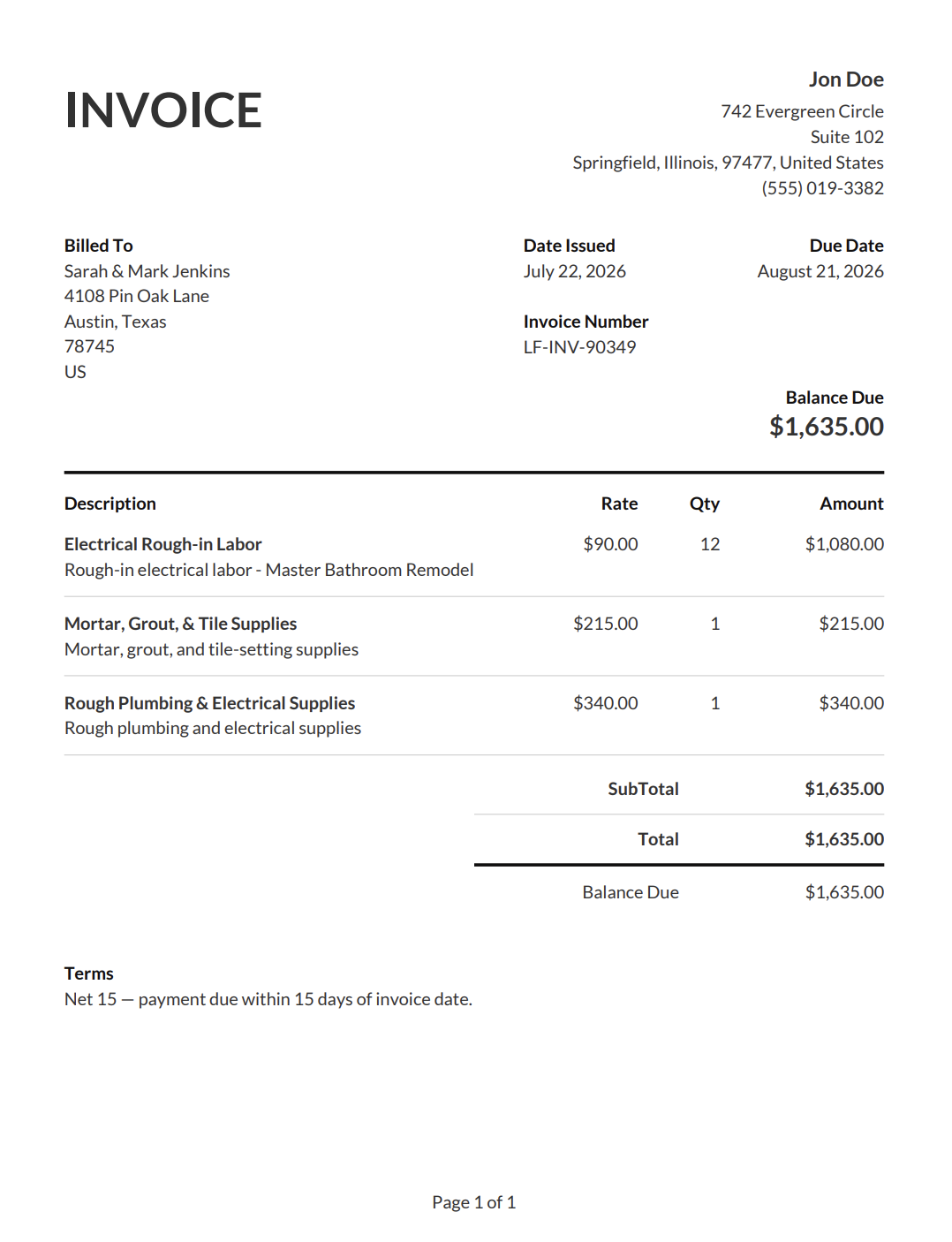
If you want to create invoices even faster, you can use the AI assistant with a simple prompt and then review or edit the final result if needed. You can type the prompt out or use the voice feature, whichever you prefer.
Here's how you can use the AI Assistant:
Create an invoice with Invoicer.ai. Try it free for 14 days first to see how you like it.



-2.png)
-3.png)