
If you run a business, freelance, or do client work of any kind, you've probably come across all four of these terms at some point.
They're not all the same thing, though. An invoice, quote, estimate, and receipt all have a different purpose at a specific point in the payment process.
Below, you'll find a simple and practical explanation of what each document actually does and which business scenarios to use it in.
A quote is a price businesses give before they start the work. Through the quote, they tell clients, "This is what the job will cost you."
Once a client accepts a quote proposed by the provider, that price is usually considered binding unless the scope changes and both sides agree to update it.
Quotes help because they set expectations before anyone commits time or money.
Use a quote when the scope is well-defined, you know exactly what needs to be done, and you want price certainty for both sides.
For example, you could quote for a fixed website build, a one-time service with no variables, or explicitly packaged services.
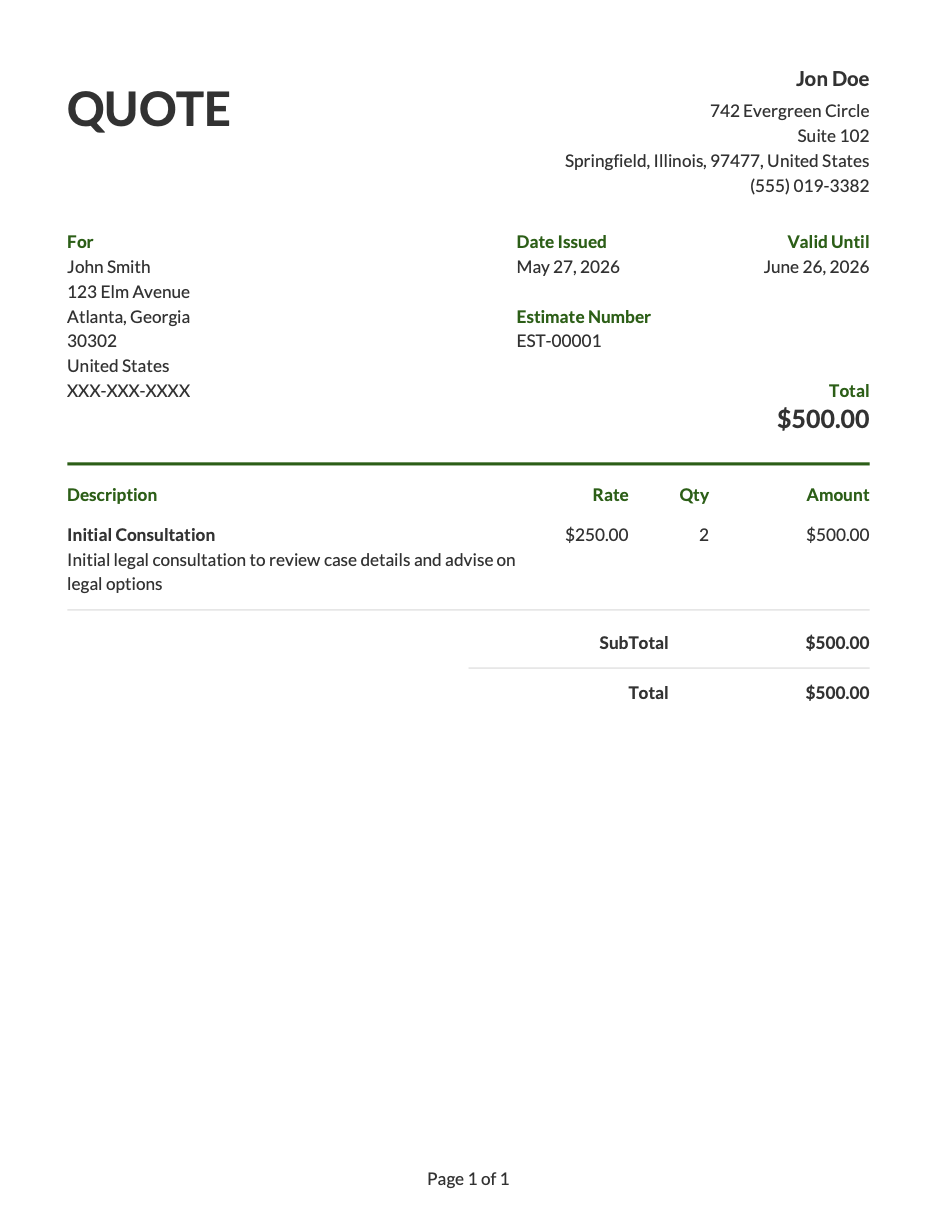
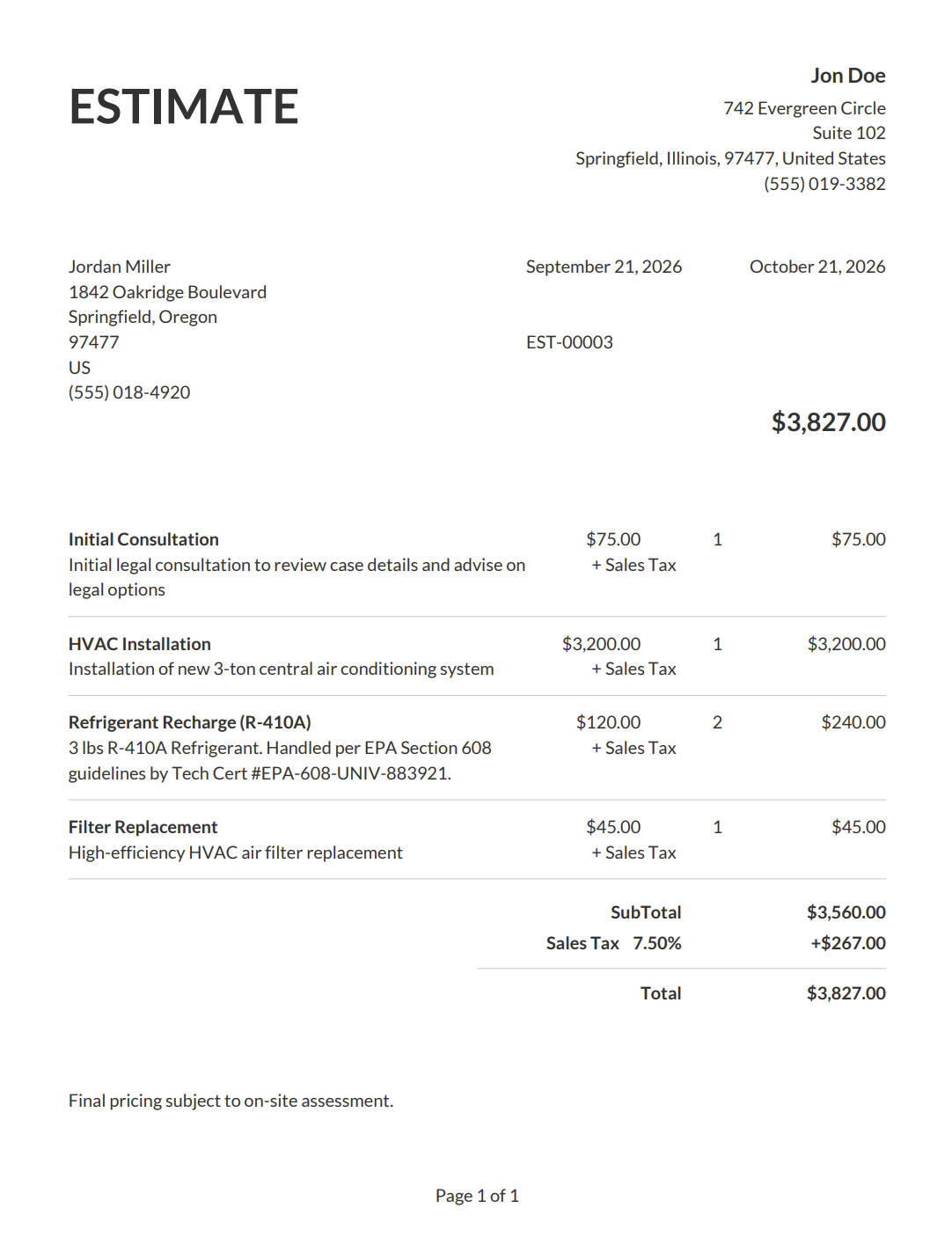
An estimate is an educated approximation of cost, which is also given before you start work.
It tells the client, "Based on what we know right now, this is roughly what it will cost."
However, the important word here is roughly. Estimates acknowledge uncertainty instead of pretending it doesn't exist.
They're useful when you can't see the full picture yet or when the work is likely to evolve once you start.
Estimates are useful when the project has unknowns, time or effort might change later, or you need flexibility as the work unfolds.
Common examples are repairs or renovations, consulting or advisory work, or projects that start with discovery, audits, or diagnostics.
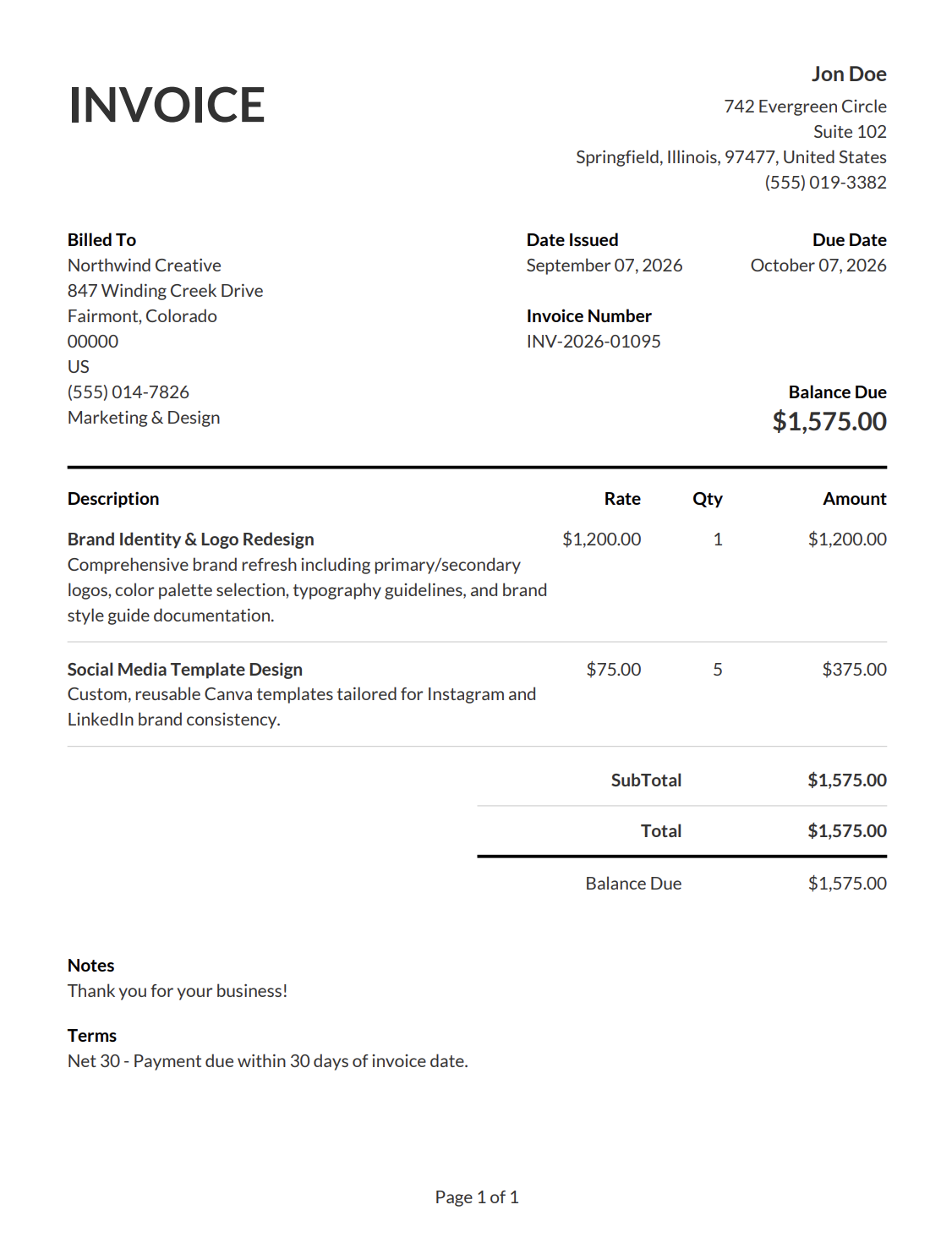
An invoice is what you send when it's time to get paid for your work. It shows what was done, how much it costs, the payment terms, and when payment is due.
This document requests payment, while everything before it was preparation.
Invoices are often used after completing a project, at the end of a billing period, or at agreed milestones.
Common examples are monthly retainers for services provided, project completion billing, or hourly or milestone-based work.
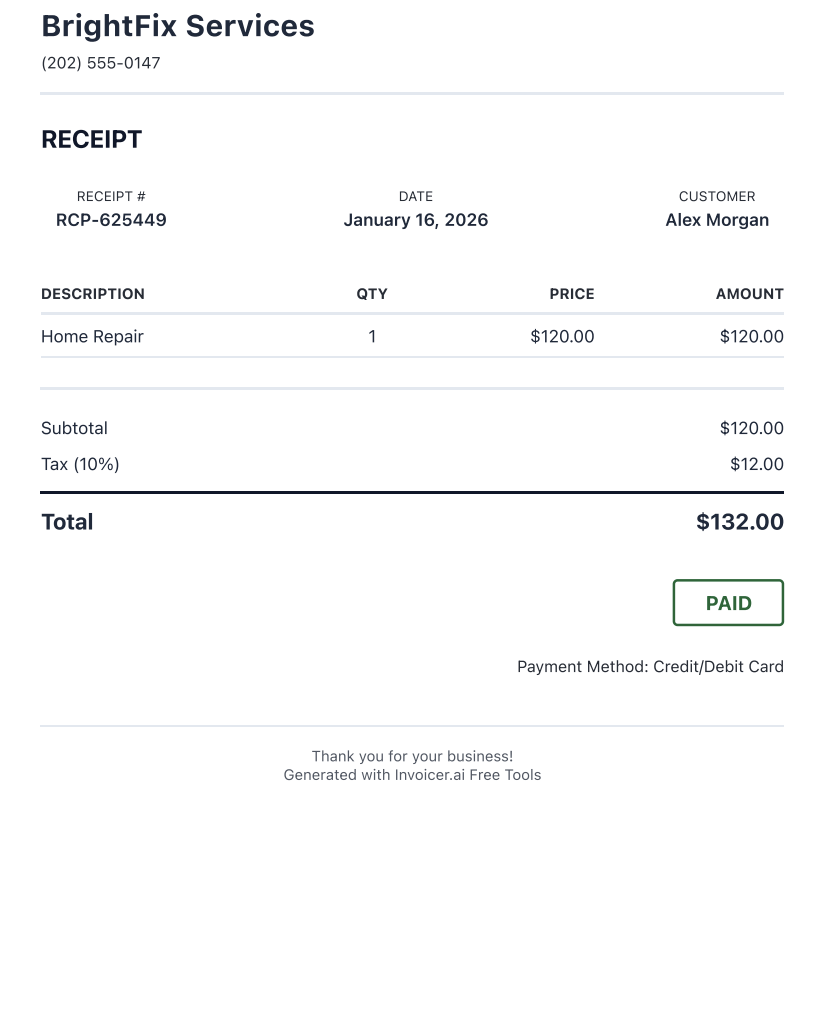
A receipt is a document that confirms that payment has already been made and acknowledges that money was received.
Receipts are important for accounting, taxes, reimbursements, audits, and the general human need for confirmation that something has actually been done.
Receipts are often used after a payment is completed, for deposits or upfront payments, or for same-day or instant payments.
In simple terms, an invoice is what asks for payment, while a receipt proves it happened.
A quote is a fixed price before work. An estimate is a rough, approximate price before work. An invoice requests payment. A receipt proves payment has been made.
In many cases, all of these documents show up at different stages of the same project. For example, you might use a quote or estimate to set expectations, an invoice to request payment, and a receipt once payment is made.
Not every project needs all four, but knowing which one belongs where makes the process easier for everyone involved.
Now that you know the difference between the four, you're ready to create the document you need. Create an invoice, quote, or estimate with Invoicer.ai in seconds. You can also try it free for 14 days. To create a receipt, try our Free Receipt Generator.



-2.png)
-3.png)