"With Invoicer, it's so fast and easy I never have to worry about how I'd like it to feel. Rather, it does the job I need it to do and I love it!"


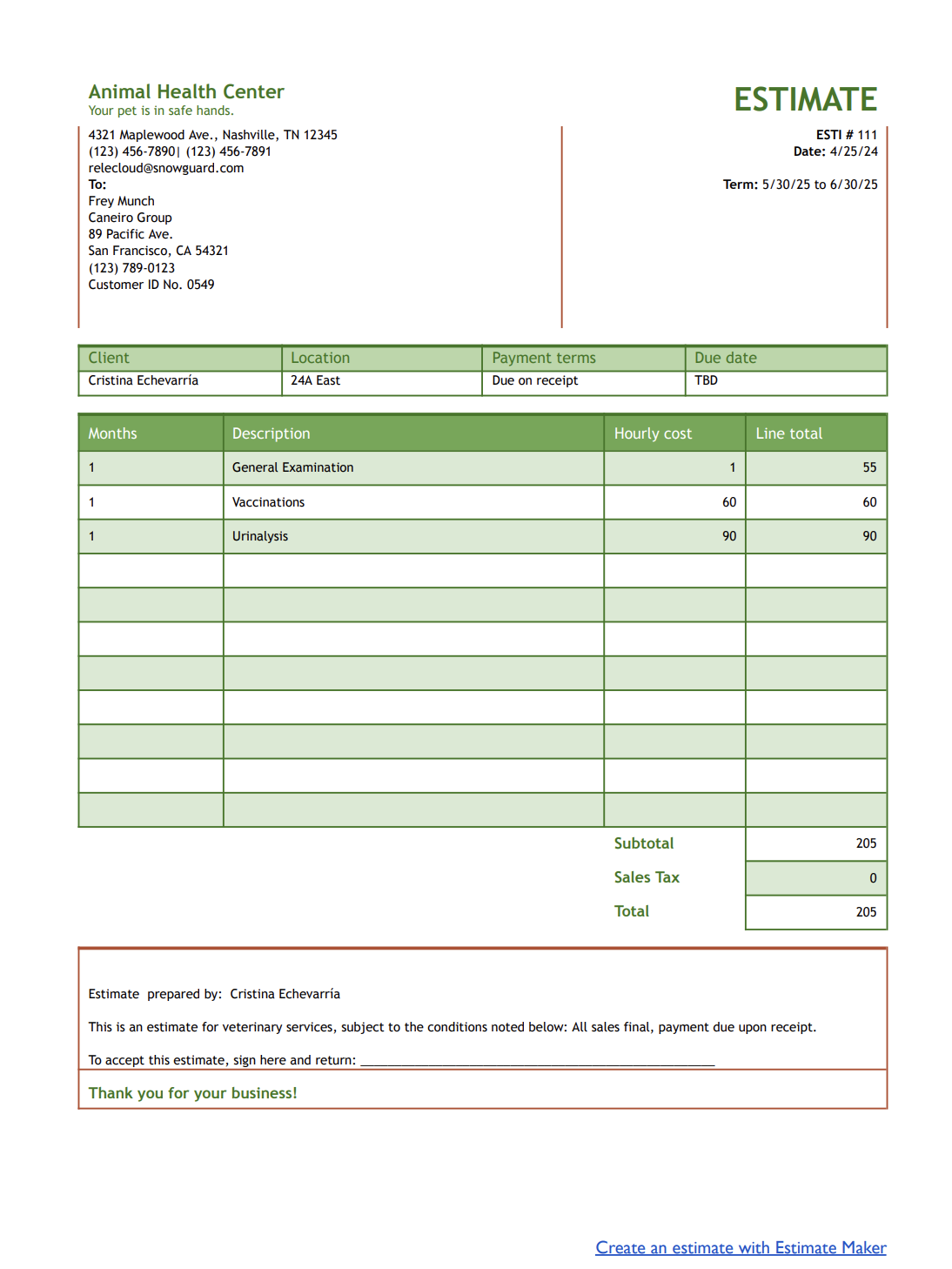
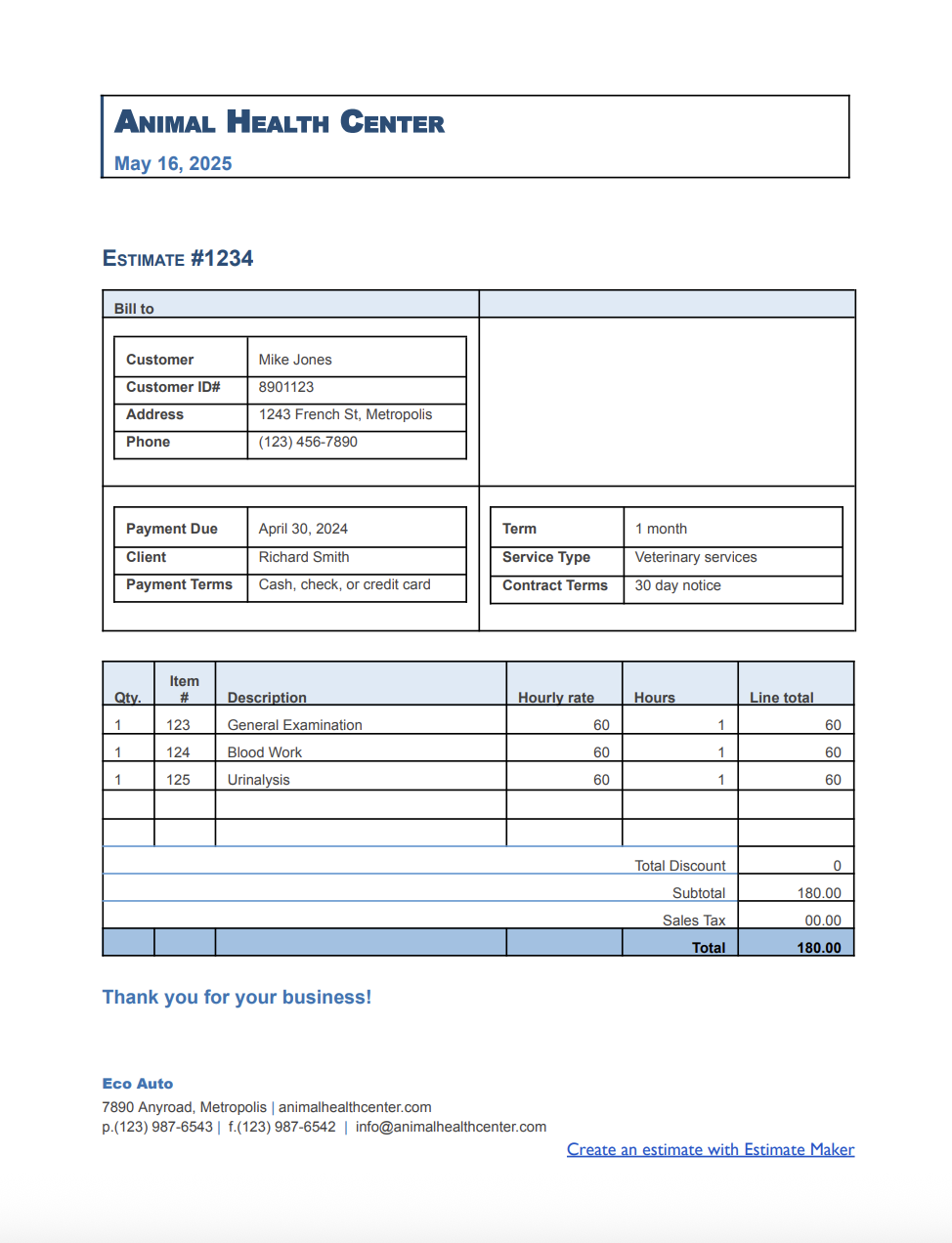
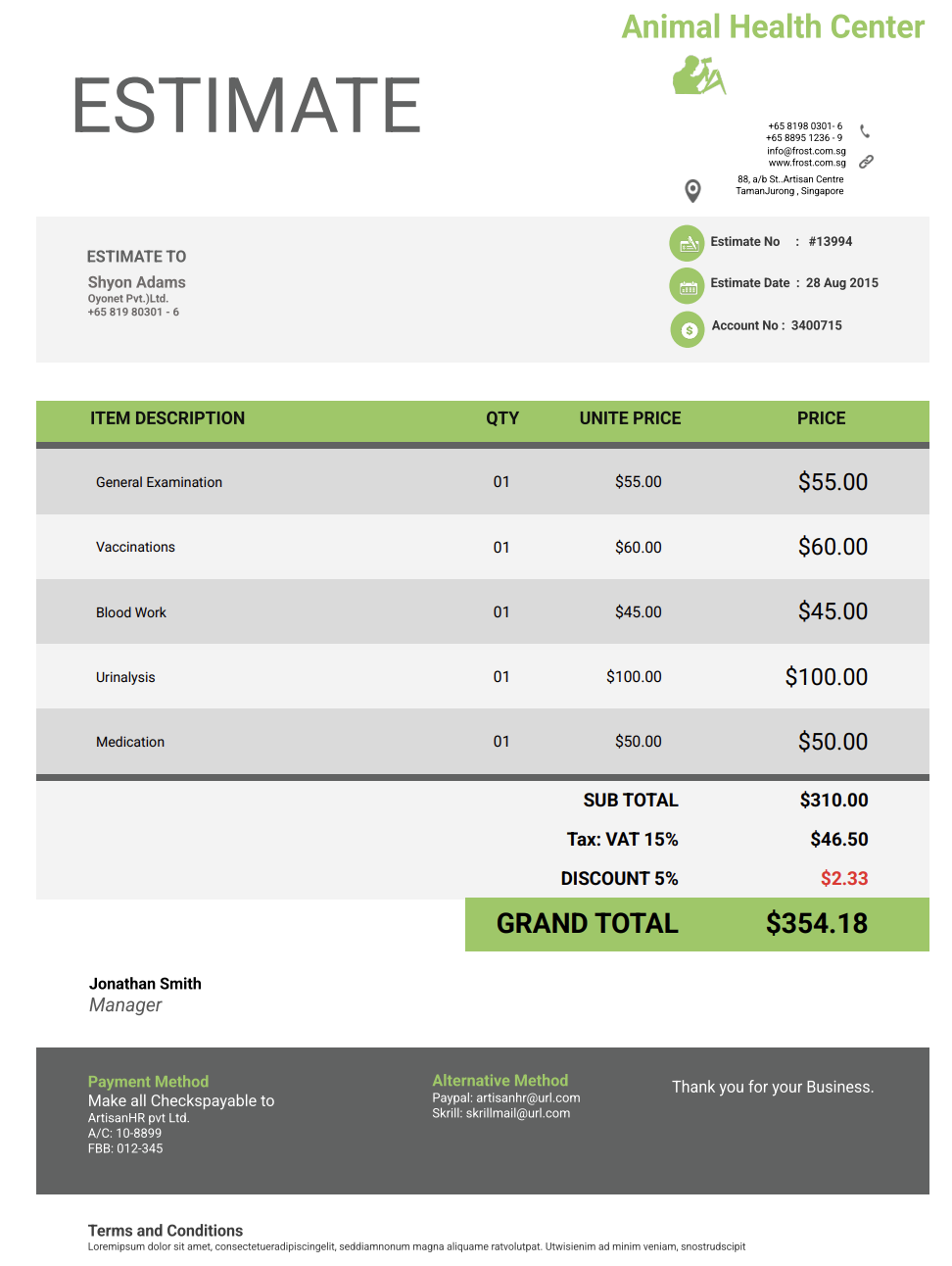
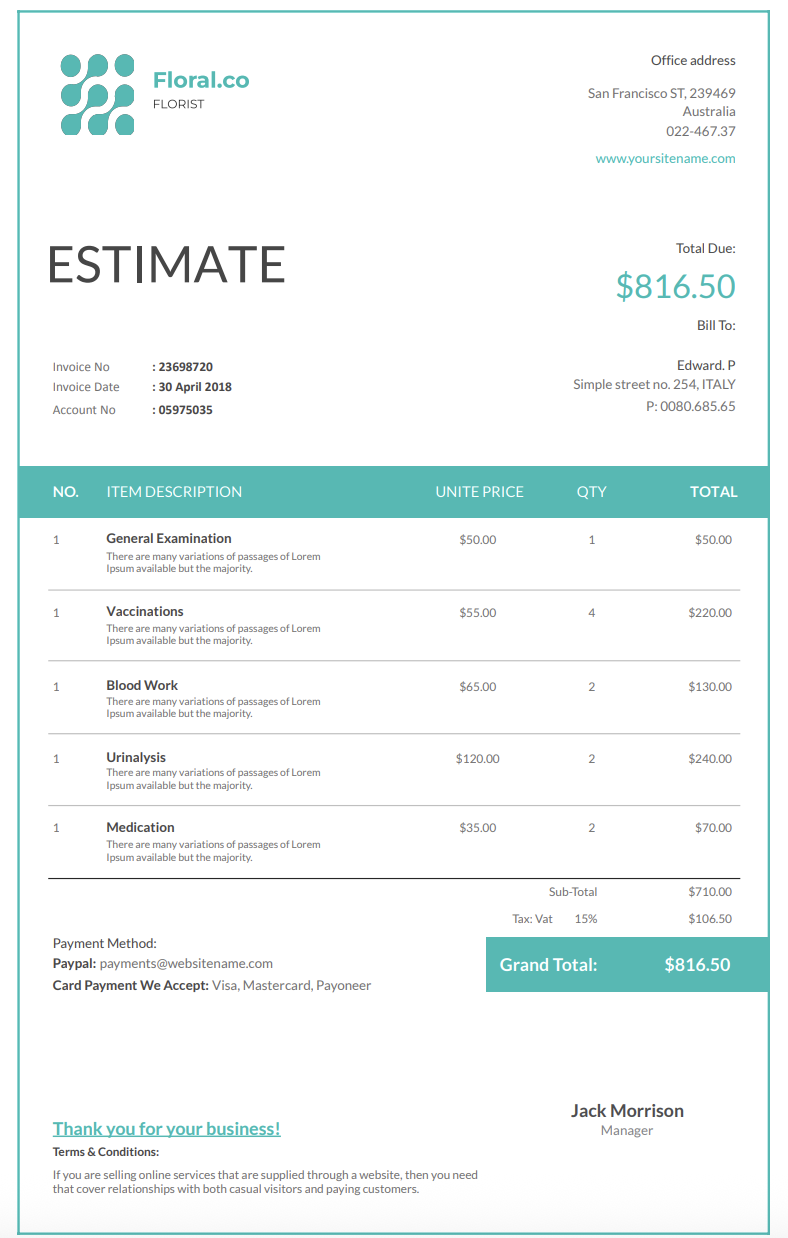
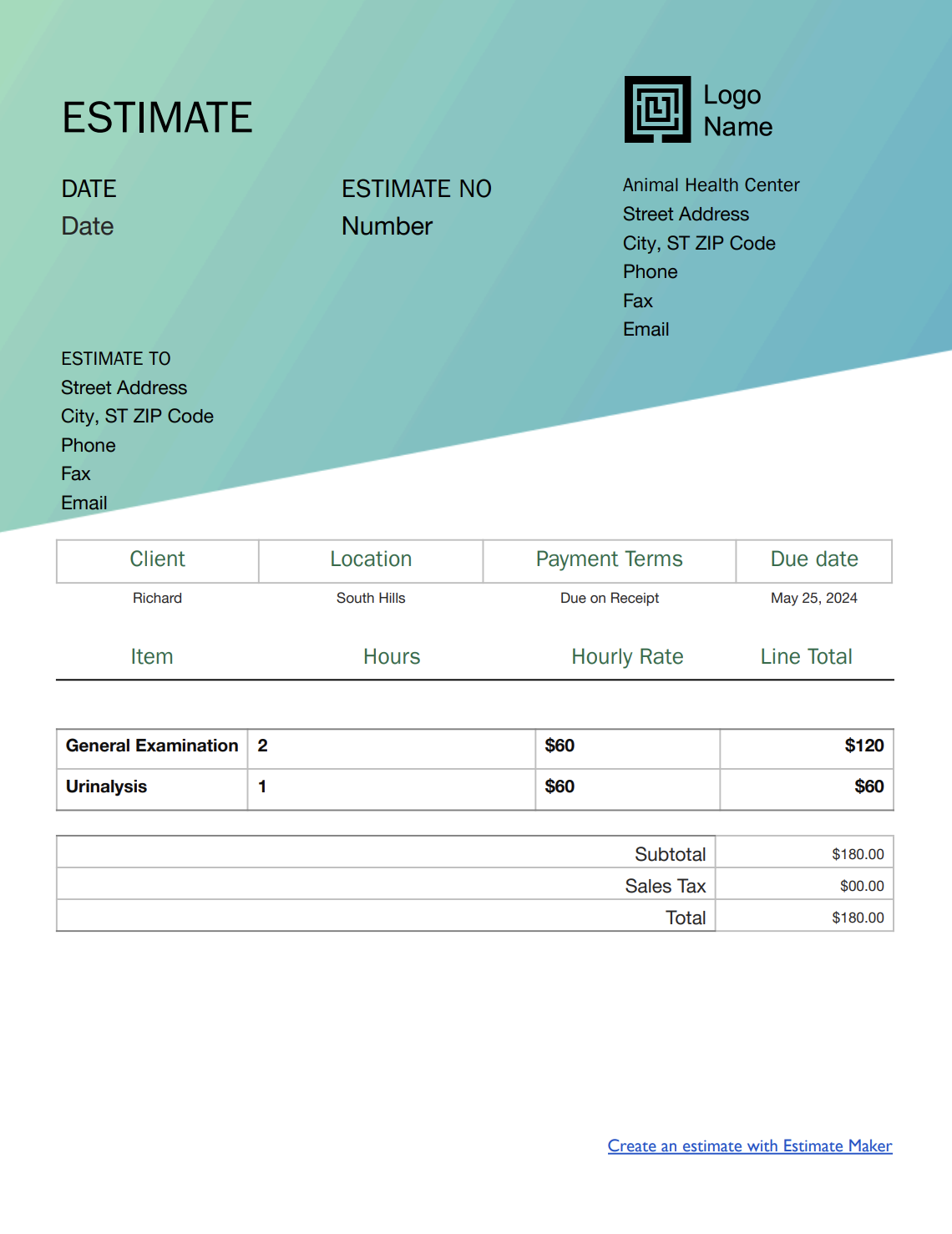
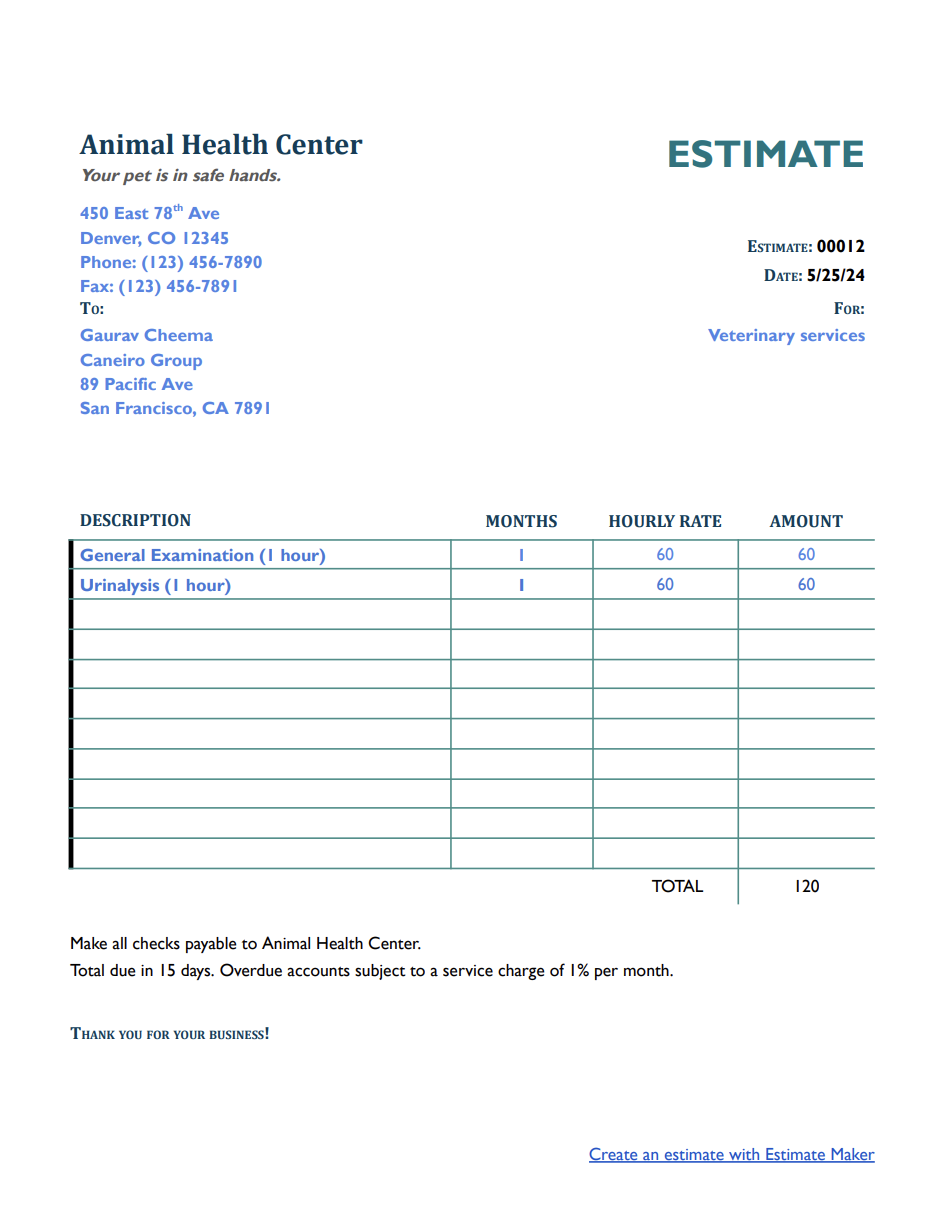
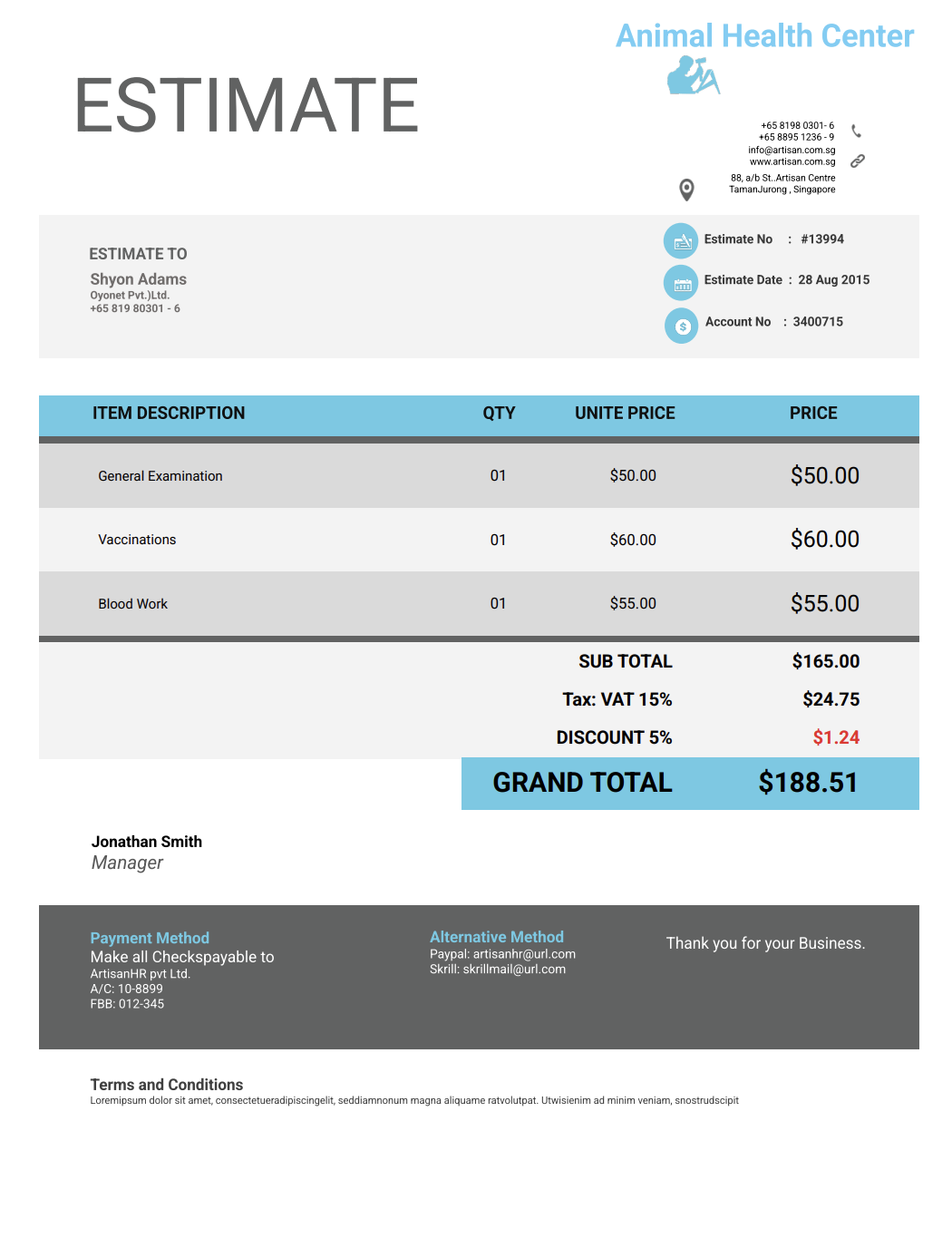
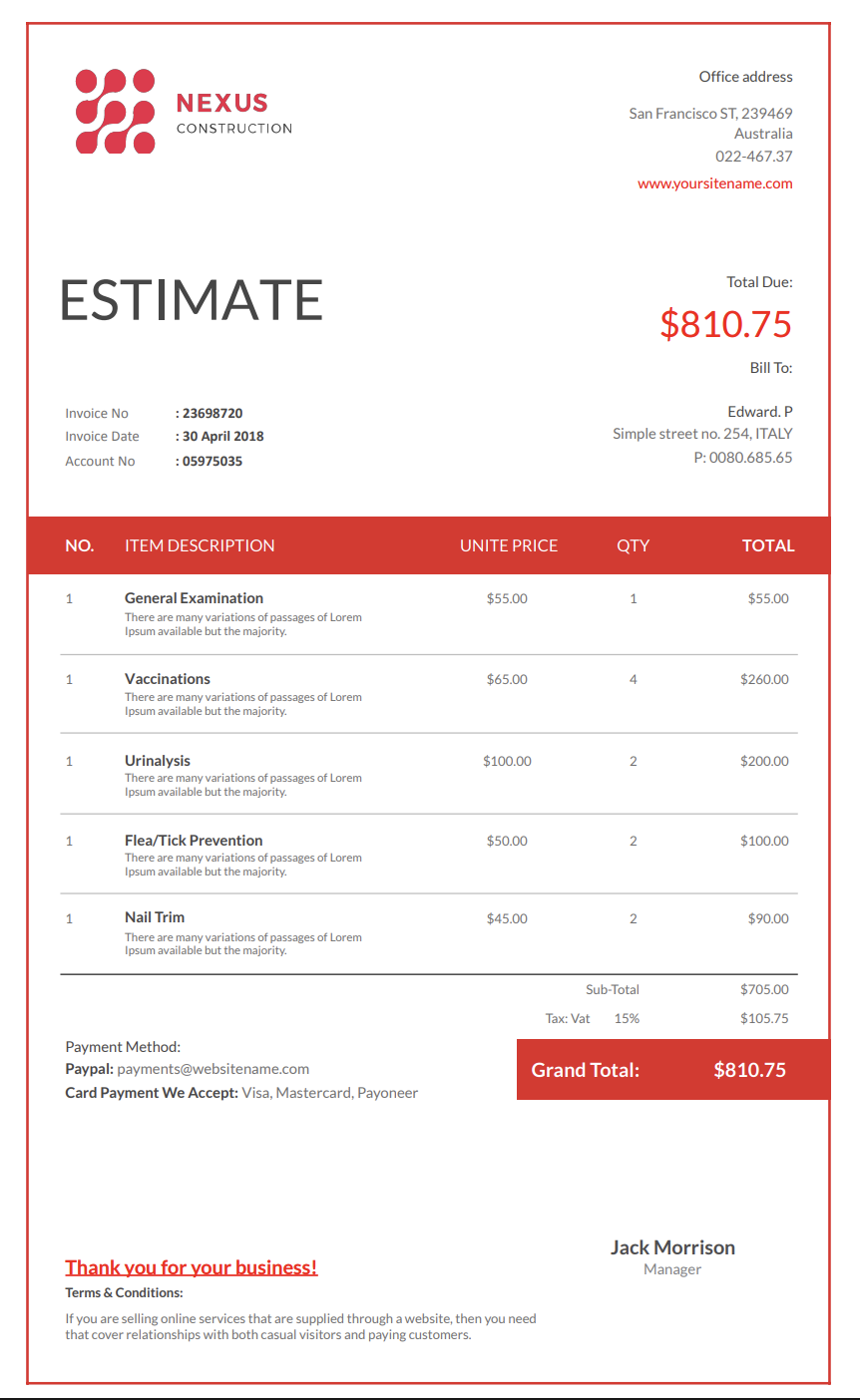
Or, send estimates to your clients with our free veterinary estimate templates.
Download for Microsoft Word, Excel, Google Docs, Sheets, PDF, and OpenOffice formats:


.png)
Choose from a variety of designs.
Or, use Invoicer to easily create an estimate.

Easy and intuitive estimate generator. Create invoices from estimates in one click.

Clear and simple process for your clients to approve. Automatically create invoices from approved estimates.

Easily customize with your brand and colors.
Want to quote veterinary services with clarity and compassion? This guide walks you through how to create professional estimates that help pet owners make informed decisions, build trust in your clinic, and protect your practice's profitability.
Quoting veterinary services is rarely straightforward. Every patient's needs are unique, and costs can vary significantly depending on the pet's species, size, health status, and the complexity of the treatment or procedure.
A wellness check for a healthy, middle-aged cat might involve only a physical exam, vaccines, and parasite prevention. But for an older cat showing signs of kidney disease, that same appointment could also include blood tests, urinalysis, blood pressure measurement, and dietary counseling. The difference in time, resources, and cost between these two scenarios is substantial.
Even for similar procedures, costs can shift based on individual circumstances. A spay for a young, healthy dog with no complications is predictable, but performing the same surgery on a senior dog may require additional diagnostics, longer anesthesia monitoring, and increased post-operative care.
Veterinary clients are often under emotional strain when faced with medical decisions for their pets. A thorough estimate helps them understand the costs and benefits of each option so they can make informed choices without surprises.
For clinics, a well-prepared estimate serves as both a communication tool and a financial safeguard, reducing misunderstandings and ensuring that all services provided are billed appropriately.
A veterinary estimate template helps clinics create consistent, transparent, and complete cost outlines for pet care. It contains essential sections such as clinic information, client and patient details, diagnosis or planned procedures, itemized services, medications, hospitalization costs, timelines, and terms.
Instead of building each estimate from scratch, you work from a framework that prompts you to cover every relevant cost, like pre-op exams, diagnostic tests, anesthesia, surgery, monitoring, pain management, and follow-up visits. You can then customize it based on the patient's condition and the owner's preferences.
A good template does more than save time. It makes sure important costs aren't forgotten, maintains professional presentation across all cases, and supports compliance with veterinary-informed consent requirements.
It also creates a clear record of what was discussed and agreed upon, which is critical for avoiding disputes later.
Estimates are essential in veterinary care, as they set expectations, and protect your practice. Pet owners want transparency, and a clear estimate helps them feel confident that you’re being open about both care and costs.
By detailing exactly what is included and what is not, you avoid misunderstandings with your clients. For example, a spay estimate might cover pre-anesthetic testing, anesthesia, the surgery, pain medication, and an e-collar, while excluding overnight hospitalization.
A dental cleaning estimate may specify that extractions are not included to prevent surprise charges later. Providing this level of clarity not only keeps clients informed but also protects your clinic from financial losses, billing disputes, or confusion about what was or wasn’t approved.
Creating accurate estimates is a vital part of running a veterinary practice. As you already know, different situations call for different types of templates, and having the right one ready helps you communicate costs effectively, and keep your workflow smooth.
Here are the most common types of veterinary estimate templates used in clinics.
Used for predictable, repeatable services like annual exams, vaccinations, parasite prevention, and microchipping. Even though these services are routine, an itemized estimate shows clients the value in what they're paying for.
Covers planned surgeries such as spays, neuters, mass removals, orthopedic procedures, or dental work. Includes all related costs—pre-op diagnostics, anesthesia, surgical time, supplies, post-op medication, and follow-up care.
For urgent situations like trauma, poisoning, or sudden illness, these estimates may cover stabilization, diagnostics, surgery, hospitalization, and intensive monitoring. Often provided as a range due to the unpredictable nature of emergencies.
For chronic conditions such as diabetes, kidney disease, arthritis, or cancer, these estimates outline the ongoing costs for medication, rechecks, monitoring tests, and periodic adjustments to the treatment plan.
A good veterinary estimate template does more than list prices. It helps pet owners understand what their animal needs and what the visit will cost, and it gives your team a clear plan to follow. When all the important details are included, everyone starts on the same page and there’s far less room for confusion.
Here’s what every veterinary estimate should cover:
Include your practice name, address, phone number, email, and veterinary license number. This way, you'll demonstrate that you're professional and comply with local regulations.
Record the owner's name, contact details, and the pet's name, species, breed, age, and weight. Include the medical record number if applicable.
Assign a unique reference number and date for tracking and version control.
Provide a plain-language description of the planned treatment. Example: "Dental cleaning and polishing under general anesthesia with extractions as needed, including pre-anesthetic blood work, IV fluids, and post-procedure pain control."
List each step of the treatment plan, including pre-treatment exams, lab tests, anesthesia induction, surgical or procedural time, medications, and recovery monitoring.
Specify all medications—names, dosages, durations—whether administered in-clinic or dispensed for home use.
Detail the cost per day, including the type of ward, special monitoring, and nursing care.
Itemize all diagnostic services, such as x-rays, ultrasounds, blood work, urinalysis, cytology, or advanced imaging like CT or MRI if applicable.
Include recheck visits, suture removals, additional tests, or rehabilitation sessions anticipated as part of recovery.
Present all costs clearly, with subtotals by category and a total at the end. For uncertain cases, provide a range with an explanation of what might cause costs to vary.
Indicate how long the estimate is valid, usually 30 days, to account for changes in prices or patient condition.
Include payment terms, deposit requirements, and a statement noting that additional charges may apply if complications arise or treatment plans change.
Provide space for the owner to sign, confirming both consent for treatment and acceptance of the costs outlined.
Estimate templates are a practical and efficient tool for any business because they save time, reduce errors, and can be fully customized to match specific needs.
The easiest way to create a professional veterinary estimate is by using a pre-made estimate template. Ready-to-use templates help professionals include all necessary treatment details without the hassle of building an estimate from scratch every time.
All they need to do is download an estimate template for veterinary services, fill it out, customize it with company branding, and send it to the client.
A solid veterinary estimate template saves time, improves clarity, and makes your proposals look more professional. Here's how to create one that works.
1. Find a Reliable Estimate Template – Look for an estimate template that suits your needs. You can find free veterinary estimate templates in Word, Google Docs, Excel, or Google Sheets.
2. Select the Right Template – Choose a veterinary estimate template that lets you include patient details, diagnosis, planned procedures, diagnostics, medications, anesthesia, hospitalization, follow-up care, estimate ranges, and approval terms.
3. Fill in Basic Information – Enter essential details like your clinic name, logo, contact information, client details, patient details, and treatment summary.
4. Customize and Brand Your Estimate – Adjust the template's color scheme, fonts, and layout to match your company's branding. Add your website URL, business license number, and any other relevant details.
5. Fine-Tune the Cost Breakdown – Make sure the itemized list includes exam fees, diagnostics, lab work, imaging, anesthesia, procedure fees, medications, hospitalization, nursing care, follow-up visits, taxes, and any optional or contingency costs.
6. Review the Format and Layout – Before sending the veterinary estimate to your client, double-check for accuracy by:
These platforms offer customizable veterinary estimate templates that professionals can quickly adjust to meet the needs of different projects.
With estimating software, all you need to do is enter business details, adjust the layout, and input the required cost breakdown.
Once the estimate template is set up, it can be saved for future use, allowing veterinary estimates to be generated in just a few clicks.
Using estimate templates or our Estimate Maker speeds up the process and assures that every veterinary estimate is professional, accurate, and easy to understand.
You can also create estimates for veterinary services using our AI Estimate Generator. Just write a simple prompt and it builds the estimate for you, giving you an even faster way to get accurate, professional results.
You can stick with templates if that's your style, let AI take care of the setup when you want something quick, or always create estimates manually for a hands on approach.
Every pet, every condition, and every treatment plan is a little different, which means estimates can’t always be one-size-fits-all. Customizing each veterinary estimate helps you give clients a clearer picture of what their pet specifically needs and what they can expect financially.
With a few simple adjustments, you can make every estimate feel accurate, personal, and easy for owners to understand.
The more you know about the pet's health status, the more accurate your estimate will be. Pre-existing conditions often influence the amount of monitoring, anesthesia time, and medication required.
Provide "good, better, best" options where applicable, explaining the differences in cost and expected outcomes. For example, offer a basic dental cleaning, a cleaning with digital x-rays, or a cleaning with advanced periodontal treatment.
Explain the benefits of additional monitoring, fluids, or pain management protocols, even if they add cost. Clients often appreciate knowing the value of these measures for their pet's comfort and safety.
Some clients may want to pursue every available option, while others may need a more budget-conscious plan. A flexible template allows you to adjust accordingly.
Attach diagrams of the procedure, example X-ray images, or a sample post-op care schedule to help owners understand the scope of treatment.
Knowing when to send your veterinary estimate is just as important as what it includes. Here's when you should send your veterinary estimate to your clients:
Provide the estimate early so clients can review, approve, and budget without feeling pressured.
Once a pet is stable, quickly prepare an estimate for ongoing treatment so owners can decide on the next steps.
Offer estimates for upcoming preventive care, such as dental cleanings or senior blood panels, so clients can plan ahead.
As a pet's needs change, update the estimate to reflect new medications, tests, or treatment frequencies.
Even the most experienced veterinary teams can run into issues when preparing estimates.
Knowing the most common mistakes ahead of time makes it easier to avoid them and helps ensure your estimates stay accurate, transparent, and easy for clients to understand.
Always note that unforeseen issues, such as additional tooth extractions, internal bleeding, or unexpected lab results, may require extra treatment and cost.
Blood work, urinalysis, and imaging can significantly increase the bill. Include them from the start if they're part of the plan.
Even small procedures often require rechecks or additional tests. Quote them upfront to avoid surprises.
Mark which services are essential for the pet's health, and which are elective or recommended but not mandatory.
Provide the estimate early so clients can review, approve, and budget without feeling pressured.
Once a pet is stable, quickly prepare an estimate for ongoing treatment so owners can decide on the next steps.
Offer estimates for upcoming preventive care, such as dental cleanings or senior blood panels, so clients can plan ahead.
As a pet's needs change, update the estimate to reflect new medications, tests, or treatment frequencies.
While estimate templates are very helpful, Estimate Maker offers a more efficient and accurate way to create estimates for veterinary services. Instead of manually entering details into a template, it automates the process, saving time and reducing errors.
1. Faster and More Efficient – Pre-built templates require manual entry, while an estimate maker allows you to generate estimates with just a few clicks.
2. Automated Calculations – Reduces human error by automatically applying tax rates, labor costs, and material pricing.
3. Customization Without Hassle – Easily adjust branding, payment terms, and cost breakdowns without needing to modify a static template.
4. Better Organization – Stores past estimates in one place, making it easy to track and update them when needed.
5. Quicker Conversions to Invoices – Convert approved estimates into invoices instantly, reducing the time between estimation and payment.
6. Professional Appearance – Generates polished, client-ready estimates that look more professional than a basic veterinary estimate template.
7. Time-Saving Templates – Save custom estimate formats and reuse them without starting from scratch each time.
Clear and accurate veterinary estimates help pet owners understand expected costs, approve care with confidence, and avoid billing surprises.
For a faster, more automated approach, Estimate Maker offers built-in calculations, easy adjustments, professional estimate templates, and much more! Plus, you can try it free for 14 days.