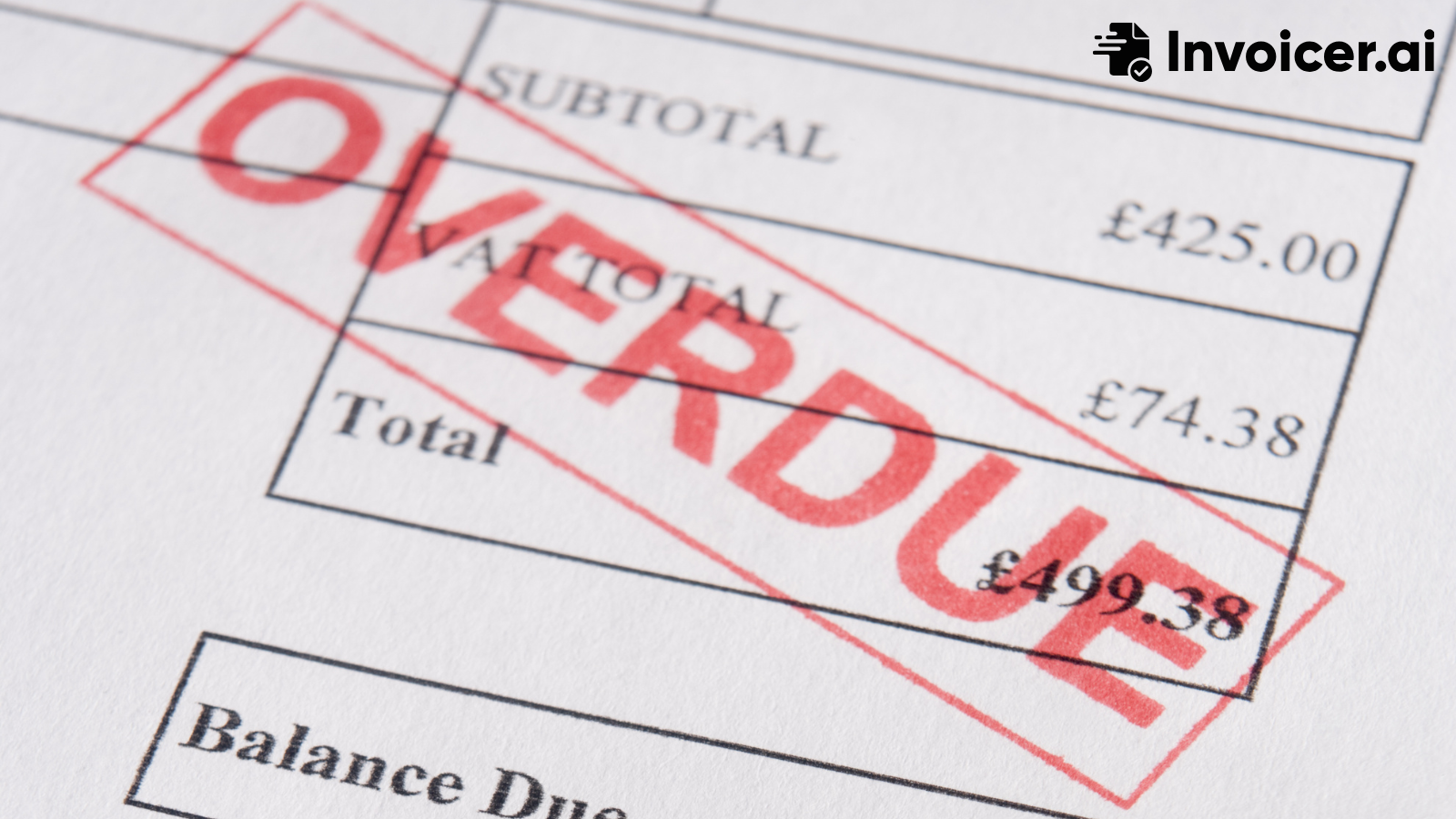
Realizing that a client isn't paying on time isn't a nice position to be in, but it does happen pretty often to self-employed individuals and business owners.
It doesn't necessarily mean the client is ignoring you on purpose or has no intention of paying. Still, you should always follow up instead of waiting and hoping they'll pay eventually.
Below, you'll learn what to do when an invoice becomes overdue, when to start sending payment reminders, what to say to your client at each stage, and what additional steps you can take to resolve the situation faster.
If a client hasn't paid by the due date, don’t panic. Follow these steps:
Before messaging the client to let them know their invoice is late, make sure there isn't a problem on your side first.
Check whether they might have already paid you, and you just haven't noticed the payment in your bank account or records yet. You don't want to remind someone about an invoice they've already paid.
Also, keep in mind that some payments can take time to reach your account, especially if you're receiving a bank transfer.
Check the following:
If everything looks right and the invoice is unpaid, send your client a polite payment reminder. You can try our free Payment Reminder Generator to create one.
Sometimes, especially with bigger companies, your main contact might not actually be responsible for paying invoices.
If you still haven't been paid after several reminders, double-check with them and ask whether they're the right person to speak to or if the invoice should be forwarded to someone else.
If you still don't receive a reply or payment after your first reminder, don't give up, but don't escalate the situation too quickly either.
Follow up with the client again, and this time be a little more direct about the overdue payment.
In general, you can send your first payment reminder as soon as the deadline passes.
However, if it's a client you've worked with for a while and they usually pay on time, you can be a little more flexible with them if you're comfortable doing so.
If you've sent several payment reminders and still haven't received the payment, you'll have to decide what you're willing to do next.
Before taking legal action or escalating the situation further, try contacting the client one more time through a different method. You could email them, send a message, call them, reach out to the accounts department, or contact someone else at the company who might be able to help.
You might feel tempted to be flexible and keep working, but it's usually better to pause further work until the overdue invoice is paid.
Continuing to work can leave you even more out of pocket if the client still doesn't pay.
Let the client know that you've paused any further work until the outstanding invoice is settled. You can also let them know that you're ready to continue as soon as the payment comes through.
Before escalating the situation, double-check the payment terms you agreed on with the client.
Review your contract or invoice to see whether if it includes payment due dates, late payment fees, deposit requirements, work suspension terms, or collection terms.
Keep in mind that you can't suddenly add new fees just because the payment is late if those fees weren't part of the original agreement. However, if late fees were agreed on from the beginning, you might be able to apply them according to the terms of your contract or invoice.
You could potentially charge late fees, but it depends on your agreement with the client and the laws that apply to the transaction.
If your contract or invoice terms already say that overdue payments may be subject to a late fee, you'll have a stronger basis for applying it.
If your client has already ignored several reminders, you can send a final notice before taking further action.
Keep it direct and include a deadline.
Sometimes an unpaid invoice isn't really a payment problem.
The client may disagree with something in your invoice, like the total or additional charges, for example.
If so, don't send generic payment reminders; address the dispute directly.
Ask the client exactly what they disagree with and take it from there. Try to resolve the issue in writing so you both have a record of what you agreed to.
If your client lets you know they can't settle the invoice right now, you have an important decision to make based on the relationship you have with them.
You might agree on a new payment date or come up with two or more payment installments to make it easier for them to pay the invoice. Another option is to accept a partial payment now and the rest later.
Whatever you agree on, make sure you put the new arrangement in writing so there's no confusion later or the client doesn't forget what was agreed.
Your written confirmation should include the amount of each payment and the date it needs to be made.
For example, if the outstanding balance is $1,500, you could agree that the client will pay $750 by October 15 and the remaining $750 by October 30.
If the invoice you're chasing is large or quite old, you might want to consider taking more formal action if you still want to recover the payment.
This could include sending a formal demand for payment, using a debt collection service, going through a small claims process, or even speaking with a lawyer.
Before taking any of these steps, gather all the relevant information and records.
You can't force someone to pay you, but you can reduce the chances of the same problem happening again.
Always agree on payment terms before starting the work. The client should know when payment is due before you begin working with them.
For example, your payment terms could be due upon receipt, Net 7, Net 14, or Net 30. You could also ask for 50% upfront and the remaining 50% upon completion.
For larger projects, taking a deposit is often a good idea. It reduces the amount of money you'll be waiting for at the end of the project and also confirms that the client is serious about the work and willing to pay before you invest a lot of time into it.
Don't wait several days after finishing the work before sending the invoice to your client. The sooner you send it, the sooner the payment process can begin.
The more complicated the payment process is, the easier it is for a client to put it off. Include payment instructions on the invoice, and consider offering an online payment option, if it makes sense.
You don't need to remember every due date yourself, especially if you're invoicing several clients. It can get complicated pretty quickly. Invoicing software can help you keep track of outstanding invoices and send payment reminders for you.
If a client doesn't pay an invoice on time, one of the worst things you can do is simply wait and hope they eventually pay. Follow up with them.
You can start with a friendly reminder. If they still don't pay, ask them to confirm a new payment date and continue following up. Your messages can become more direct as more time passes and the invoice remains unpaid.
If you regularly send invoices, you can also try Invoicer.ai to keep your invoices, estimates, clients, and payments in one place. As mentioned earlier, you can also use it to send late payment reminders.
You can try Invoicer.ai free for 14 days to see if it works for you before committing.