"With Invoicer, it's so fast and easy I never have to worry about how I'd like it to feel. Rather, it does the job I need it to do and I love it!"

Or, invoice your clients with our free painting invoice templates.
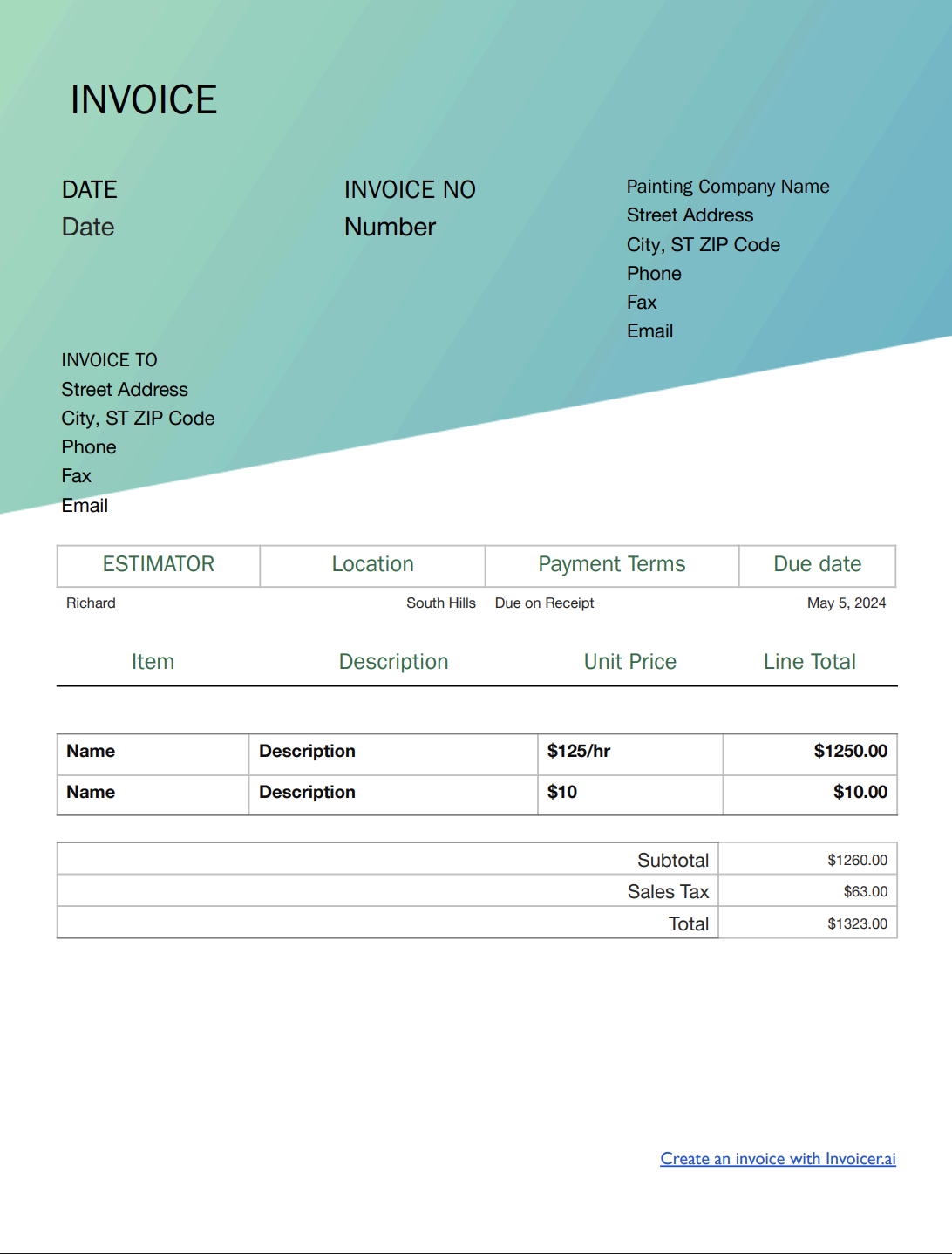
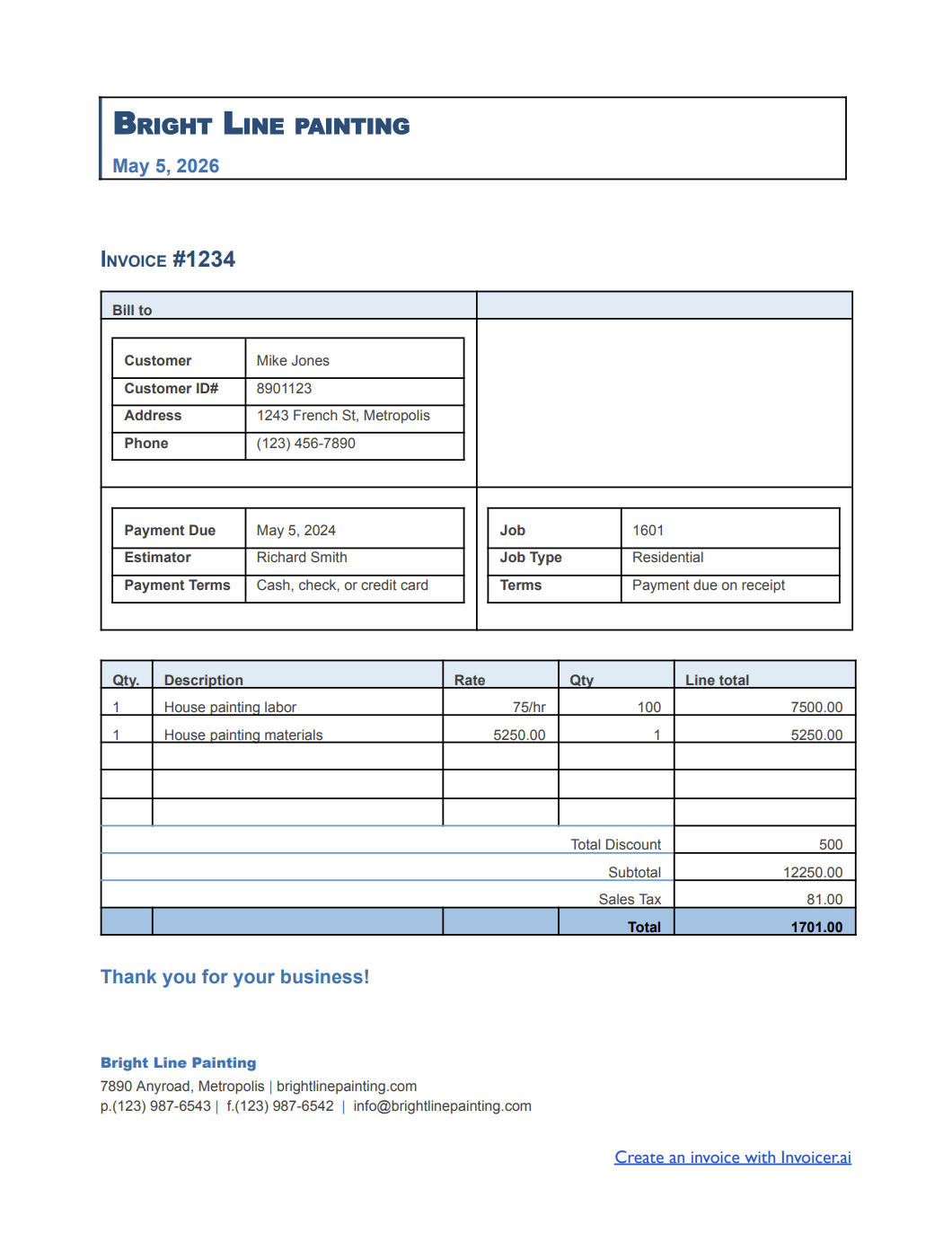
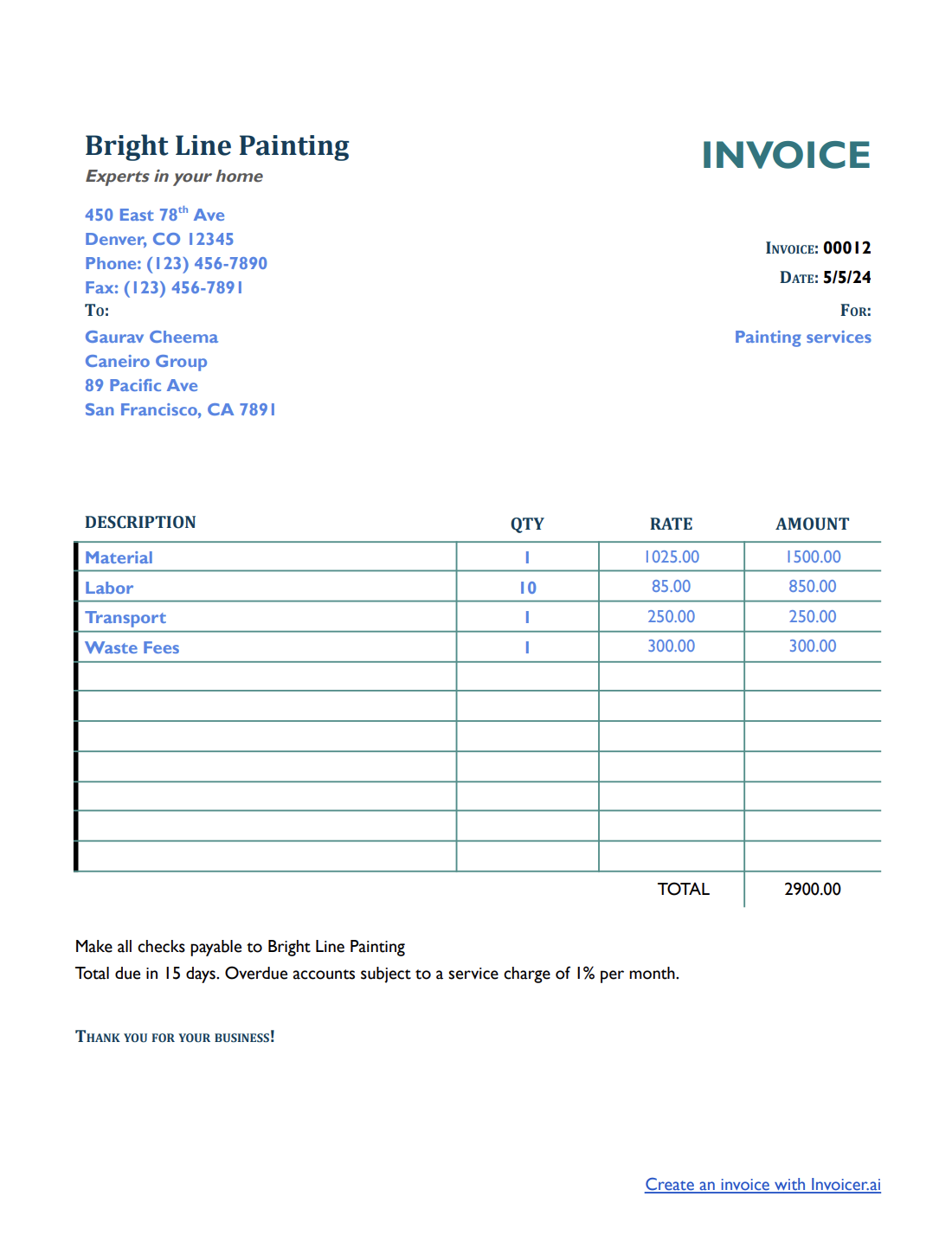
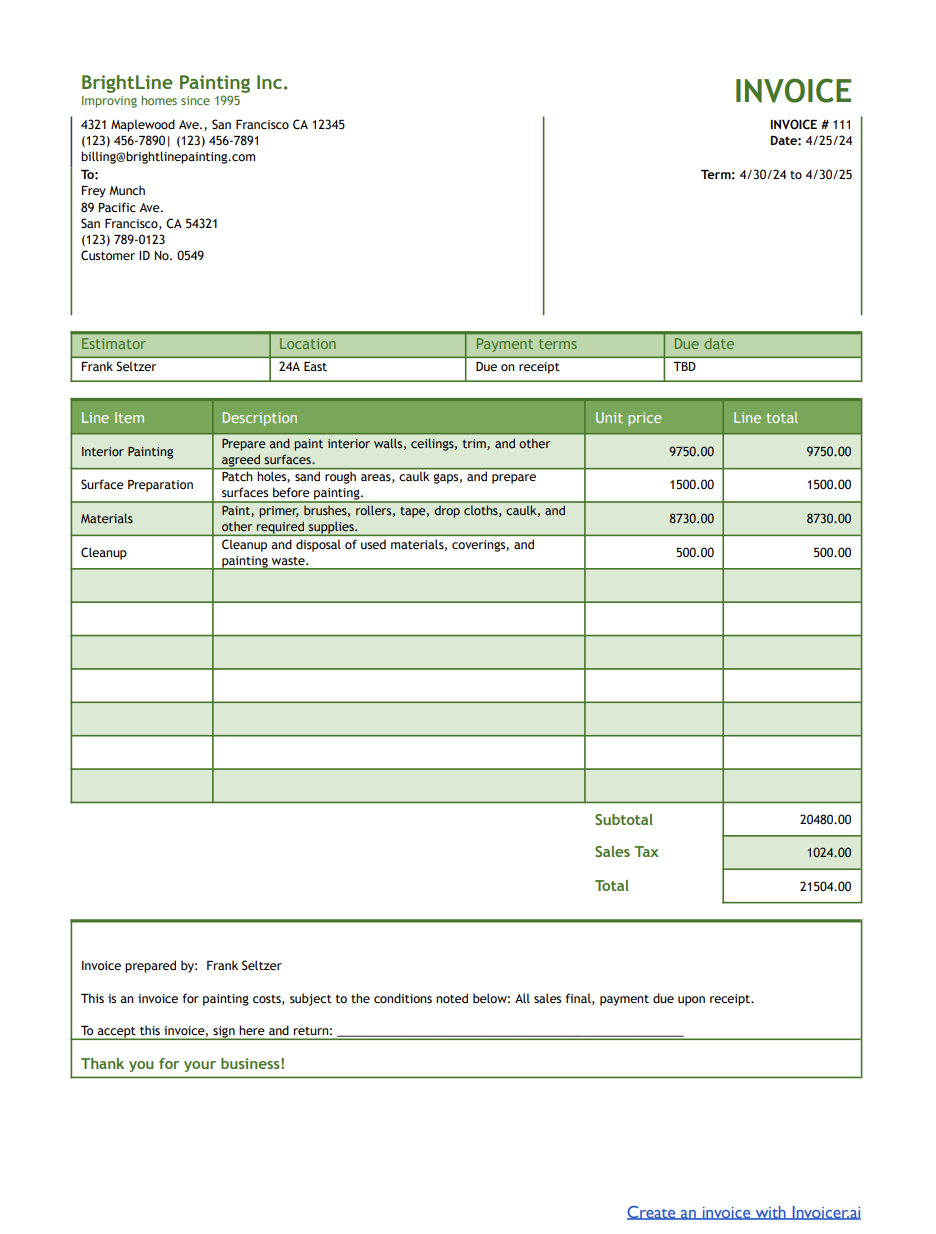
Download for Microsoft Word, Excel, Google Docs, Sheets, PDF, and OpenOffice formats:


Choose from a variety of designs. You can download these free invoice templates and edit them in Google Docs or Microsoft Word by following the steps below:
1. Select a template
2. Click File > Make a Copy, Save as Google Docs, or Download
3. Edit as needed
Or, use Invoicer to easily create a painting invoice.

Easy and intuitive invoice generator.

Clear and simple process for your clients to pay.

Easily customize with your brand and colors.
Are you a painting professional facing difficulties with invoicing? Discover the types of invoices tailored specifically for painting projects. Learn how to create and send professional invoices, plus a better alternative to invoice templates.
Painting contractors and freelancers often need to manage different service rates, material costs, labor hours, deposits, and payment follow-ups across each job. This guide explains how invoice templates can help you create clear, professional invoices for interior painting, exterior painting, wall preparation, drywall repair, staining, cabinet painting, trim work, touch-ups, paint supplies, labor, and other painting services.
Let’s look at how invoice templates can make billing easier for painting professionals.
If you’re still pricing the job, start with our painting estimate templates to outline the scope of work, paint, materials, labor, and expected costs before you send an invoice.
Painting invoice templates give contractors a ready-made format for billing clients without building each invoice from scratch.
They help you present key details clearly, including the customer’s information, painting services completed, labor and material costs, payment terms, taxes, and the total amount due.
Painting professionals can save a lot of time using an invoice template and make sure their invoices are clear and accurate if they know how to write an invoice. So, do you know how to write an invoice? It's okay if you don't. We will show you how to create an invoice!
Invoices play an important role in managing painting projects and payments. They provide a record of the work completed, materials used, costs charged, and payment terms.
They also help keep communication clear between the contractor and the client, reducing the risk of confusion over project costs, completed work, deposits, balances due, or payment deadlines.
By using invoice templates, painting professionals can create invoices that are consistent, professional, and easy for clients to understand.
Painting contractors may use different invoice types depending on the size of the job, how the customer is billed, and whether the work is a one-time project or part of an ongoing service agreement. Here are some common invoice types used for painting projects:
Standard Painting Invoice. A standard invoice is used after a painting job is completed or ready to be billed. It can include interior painting, exterior painting, wall preparation, drywall repair, staining, cabinet painting, trim work, touch-ups, labor, paint, supplies, equipment, taxes, and the total amount due.
Deposit Invoice. A deposit invoice is used when you need to collect an upfront payment before starting the work. This is common for larger painting projects, exterior painting jobs, commercial painting, cabinet refinishing, or jobs that require ordering paint, materials, or special supplies in advance.
Progress Invoice. For larger painting projects, you may not want to wait until the end of the job to bill the customer. A progress invoice lets you bill in stages, such as after preparation work is complete, primer is applied, part of the property is painted, or a specific project milestone is reached.
Recurring Invoice. Recurring invoices can be useful for ongoing painting or maintenance agreements, such as property management work, commercial touch-ups, repainting schedules, apartment turnovers, or regular maintenance services. Instead of creating a new invoice each time, you can bill the customer on a set schedule, such as monthly, quarterly, or after each service period.
Touch-Up or Repair Invoice. A touch-up or repair invoice is used for smaller painting jobs, such as fixing scuffs, repainting damaged areas, repairing small drywall patches, repainting trim, matching paint, or correcting minor surface damage. It should describe the work clearly and list labor, materials, supplies, and any service fees.
When creating an invoice template for painting projects, be sure to include these vital details:
Invoice templates are an excellent billing solution for any painting professional because they are time-saving, affordable, and completely customizable.
The easiest way to create an invoice template for a painting business is to download a premade template. Invoicer's ready-made invoice templates make it easy for painting professionals to include all the necessary billing information without any hassle—because that part has already been taken care of.
All you need to do is download the invoice template, fill it out, customize and brand it, and then send it.
Follow these steps to create a professional painting template:
Now, take the time to review the layout and format, including:
Painting professionals can create invoices faster by using invoicing software. These platforms offer customizable invoice templates that they can easily change to meet business needs.
All they need to do is enter their business information, customize the layout, and add the necessary fields. Once the template is created, it can be saved for future use, and professional painting invoices can be generated with just a few clicks.
Send an invoice when the painting work is complete or when an agreed payment stage is reached. For smaller jobs, such as touch-ups, trim painting, drywall patch painting, or minor repainting work, you can usually invoice right after the job is finished.
For larger painting projects, send a deposit invoice before work begins to cover paint, supplies, equipment, or preparation costs. When the project is complete, send a final invoice showing the full job cost, any deposit already paid, and the remaining balance.
For longer projects, you can send progress invoices at the main stages, such as after surface preparation is complete, primer is applied, one area of the property is finished, or another agreed project milestone is reached. If you provide ongoing painting maintenance, commercial touch-ups, or property management painting services, recurring invoices can be sent on a set schedule.
Besides using invoice templates, painting professionals can make billing easier by building a consistent process for every job.
Agree on payment details early. Before the painting work starts, explain when payment is due, whether a deposit is required, which payment methods you accept, and what happens if payment is late.
Send reminders when needed. If an invoice hasn’t been paid on time, follow up with a short, professional reminder that includes the invoice number, outstanding amount, due date, and payment link or instructions.
Track job and payment details. Keep records of invoices, estimates, deposits, paint purchases, supplies, labor hours, equipment costs, and customer information so each project is easier to review later.
Make payment simple for customers. Online payment options can help customers pay faster and reduce back-and-forth after the invoice is sent.
Update your prices as costs change. Review labor rates, paint prices, materials, travel costs, equipment fees, and other expenses regularly so your invoices stay accurate and profitable.
While invoice templates can be helpful, there is a better alternative to traditional templates for painting professionals.
Invoicing software, like Invoicer.ai, is specifically designed to improve invoicing processes, improving efficiency and accuracy. But what makes an invoice generator better than an invoice template? Here are some key features and benefits of the invoicing software that painting professionals will benefit from:
Invoicing software offers numerous benefits, including time-saving, improved accuracy, better cash flow, and enhanced client satisfaction.
Invoicing is critical to running a successful painting business. Individuals can simplify the invoicing process by using invoice templates tailored specifically for painting projects, ensuring accuracy and maintaining healthy cash flow.
Painting professionals should include all the necessary details in their invoice templates and follow best practices for invoicing.
Invoicer.ai is a superior alternative to traditional invoice templates. It allows professionals to further enhance their invoicing process, saving time and resources.
This invoicing software offers several benefits, including invoice tracking, payment tracking, document management, customization, automation, reporting and analytics, and many more! Also, once the invoice is ready, you can schedule it to send when it makes the most sense for the job or your billing routine.
Let Invoicer.ai deal with your billing so you can focus on the important parts of your painting business!